<!doctype html>
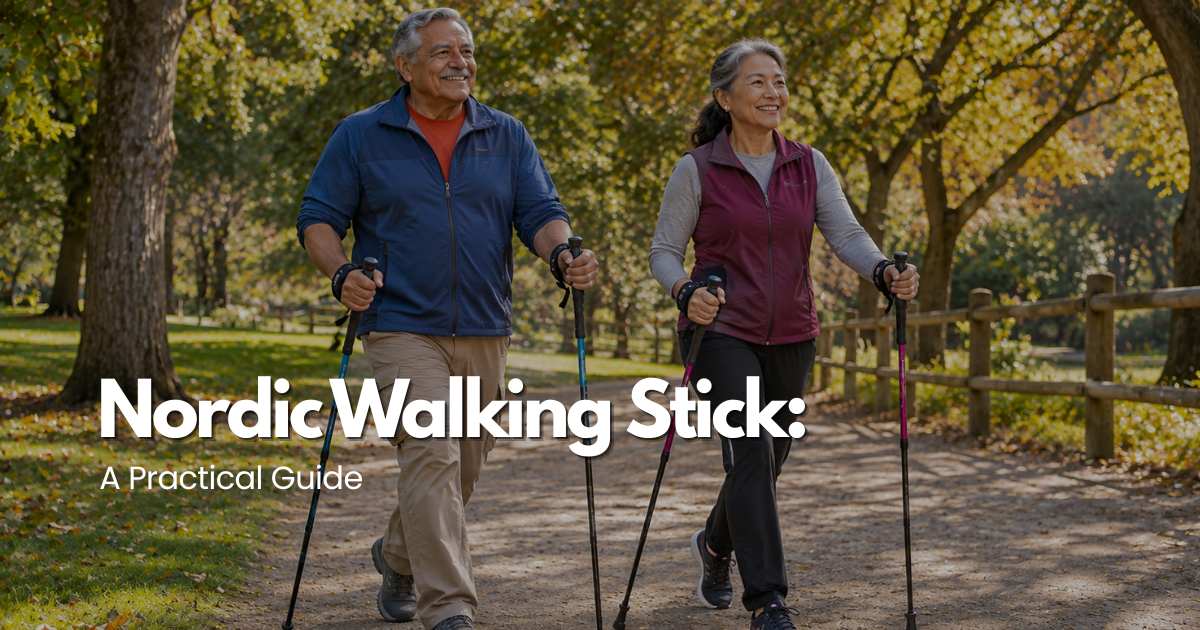
For older adults interested in remaining physically active, Nordic walking may offer an enjoyable way to involve the upper body during regular walks. However, choosing the right Nordic Walking Stick requires more than selecting an attractive pair of poles. Proper length, strap comfort, tip design, grip technique, physical abilities, and walking conditions all influence whether the activity is appropriate.
This guide explains how Nordic walking poles work, how they differ from traditional walking canes, and what to consider before starting. It also covers pole fitting, basic technique, footwear, terrain, maintenance, exercise pacing, caregiver support, purchasing considerations, and when another mobility aid may be more suitable.
Safety note: Nordic walking poles are primarily designed for active walking and propulsion, not substantial weight-bearing support. They do not replace a medically prescribed cane or walker. People with significant balance problems, recent injuries, new dizziness, or medical conditions affecting exercise tolerance should obtain appropriate professional guidance before starting or changing their activity routine.
Quick Answer: How to Choose a Nordic Walking Stick
The best Nordic Walking Stick is one that matches the user’s height, hand comfort, walking technique, intended surfaces, and physical abilities. Most Nordic walking activities use a pair of poles rather than a single stick, allowing the arms to move in coordination with the opposite legs.
The correct pole length and technique should be assessed together. A properly selected pole should support natural arm movement without forcing awkward shoulder positions or excessive wrist strain.
Before choosing a Nordic Walking Stick, verify:
- Whether Nordic walking is appropriate for the person’s activity goals.
- Whether the user needs exercise poles or a medical mobility aid.
- Manufacturer and exact pole model.
- Fixed-length or adjustable construction.
- Suitable pole length for the user’s height and technique.
- Ergonomic handle design.
- Properly fitting Nordic walking straps.
- Easy strap release when needed.
- Appropriate tips for pavement, trails, or other approved surfaces.
- Shaft material and overall pole weight.
- Reliability of adjustment locks.
- Compatibility of replacement tips and straps.
- Planned walking routes and surface conditions.
- Appropriate footwear and weather preparation.
- Access to qualified instruction.
- Walking pace, endurance, and rest requirements.
- Purchase price, warranty, and service arrangements.
- An alternative activity or mobility plan when conditions are unsuitable.
A beginner may benefit from professional Nordic walking instruction to learn correct pole placement, arm movement, and a manageable walking rhythm.
What Is a Nordic Walking Stick?
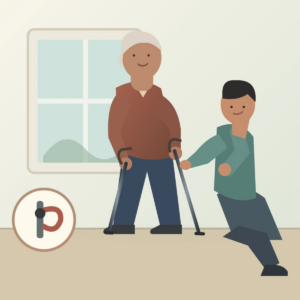
A Nordic Walking Stick is a purpose-designed pole that helps a walker apply controlled backward pressure during an active walking motion. The poles are normally used as a pair, with alternating arm and leg movements similar to the natural rhythm of walking.
Unlike a conventional cane, Nordic walking poles commonly have specialized straps that allow the walker to release and regrip the handle during the arm swing.
Nordic Walking Poles
Nordic walking poles are built for coordinated propulsion and whole-body movement. Their construction may include fixed or adjustable shafts, ergonomic handles, fitted straps, and replaceable tips.
Why Two Poles Are Used
Using a pair allows the left arm to move with the right leg and the right arm with the left leg. This alternating rhythm is an essential feature of traditional Nordic walking technique.
The Role of the Wrist Straps
Specialized straps help maintain contact with the pole when the hand opens during the backward part of the movement.
Exercise Versus Physical Support
Nordic walking is primarily an activity technique. Its poles should not be treated as equivalent to medically prescribed canes or walkers for significant balance and weight-bearing needs.
Nordic Walking Stick Versus a Walking Cane
A Nordic Walking Stick and a medical walking cane can look similar, but their functions are different.
A standard cane usually provides limited assistance with walking support or balance. Nordic walking poles are used actively as part of a coordinated exercise pattern.
Traditional Walking Cane
A mobility cane may be recommended for people with one weaker or painful leg. It is commonly used in the hand opposite the affected leg.
Nordic Walking Poles
Nordic walking uses two poles and emphasizes an alternating arm-and-leg rhythm, active propulsion, and comfortable walking posture.
Trekking Poles
Trekking poles are commonly designed for hiking and may have different handles, straps, and intended techniques. Not every trekking pole is an appropriate replacement for specialized Nordic walking equipment.
Quad Canes and Walkers
A quad cane or walker may provide a more appropriate support arrangement for certain people with physical mobility limitations.
Choose According to the Actual Need
Someone seeking exercise equipment may benefit from Nordic walking poles. Someone needing reliable assistance to stand or walk safely may require a clinical mobility assessment and different equipment.
| Feature | Nordic walking poles | Medical walking cane |
|---|---|---|
| Typical use | Active walking exercise | Walking assistance |
| Number normally used | Two | One |
| Hand movement | Coordinated swing and push | Support during gait |
| Specialized straps | Common | Not usually required |
| Main purpose | Active propulsion | Limited physical support |
| Replacement for walker | No | Not automatically |
Assessment Before Starting Nordic Walking
Before beginning Nordic walking, evaluate the person’s health, activity goals, and ability to use the poles.
Age alone does not determine suitability. Physical conditioning, balance, coordination, joint comfort, vision, endurance, and the selected route can all influence the experience.
Balance and Coordination
Nordic walking requires the individual to coordinate both arms and legs while controlling two poles. People with significant balance concerns may need professional assessment before participating.
Shoulder and Wrist Comfort
Repeated arm movement and pole contact can place demands on the shoulders, elbows, wrists, and hands.
Cardiovascular Fitness
Walking intensity should be appropriate for the individual’s current health and exercise tolerance.
Walking Environment
A smooth, uncrowded route may be more suitable for early practice than a busy or uneven trail.
Personal Goals
Some people want a recreational activity, while others hope to increase their regular walking routine. The equipment and instruction should reflect those goals.
Professional Guidance
A qualified Nordic walking instructor can teach the technique. A healthcare professional may be needed when medical conditions or physical limitations affect exercise suitability.
Nordic Walking Stick Length and Body Position
Correct length is important when choosing a Nordic Walking Stick because it influences the arm swing, pole angle, and overall walking posture.
Many Nordic walking programs use a starting estimate based on the person’s height, but a general formula should not replace an actual fitting.
Starting Pole Length
One commonly used starting estimate is approximately 68% of the person’s height, expressed in the same units. The final length depends on technique, individual proportions, and instructor guidance.
Elbow Position
When checking fit, the elbow often forms an angle near 90 degrees with the pole placed vertically and the handle held appropriately.
Upright Posture
Nordic walking should allow a relaxed, upright walking position rather than requiring excessive forward leaning.
Shoulder Movement
The arms should swing naturally from the shoulders without forcing an exaggerated motion.
Adjustable Poles
Adjustable models can help beginners experiment with suitable lengths under instruction.
Fixed-Length Poles
Fixed-length models may be lightweight and straightforward, but the user needs to select the correct size before purchasing.
Reassess While Walking
A pole that seems comfortable while standing may feel different during active movement. A supervised trial can reveal whether the length needs adjustment.
Nordic Walking Stick Straps and Grips
The strap system is one of the distinctive features of a Nordic Walking Stick.
Many specialized Nordic walking straps resemble a small glove or fitted hand loop. They help the user maintain contact with the pole during the backward arm movement.
Ergonomic Handles
The handle should allow a comfortable grip without requiring excessive finger pressure.
Nordic Walking Straps
A specialized strap supports controlled hand opening and regripping during the walking cycle.
Proper Strap Fit
A strap that is too tight may cause discomfort. One that is too loose may not support the intended technique.
Easy Release
The user should understand the manufacturer’s approved method of releasing or removing the strap.
Hand Dexterity
People with reduced hand function may find certain fastening systems difficult to use.
Avoid Excessive Gripping
Constantly squeezing the handle may increase hand fatigue and interfere with the natural technique.
Replace Damaged Straps
Worn, torn, or unreliable straps should be replaced with compatible components.
Nordic Walking Stick Tips for Pavement and Trails
Nordic walking poles can have different ground-contact tips depending on the intended surface.
Tip compatibility matters because pavement, grass, gravel, and natural trails have different traction characteristics.
Rubber Pavement Tips
Rubber attachments, often called paws, may be used on suitable paved surfaces according to the manufacturer’s instructions.
Pointed Trail Tips
Certain poles use pointed tips intended for contact with appropriate outdoor terrain.
Smooth Indoor Flooring
A tip designed for outdoor use should not automatically be considered suitable for polished indoor flooring.
Wet Pavement
Rain and moisture can affect traction, regardless of tip style.
Gravel and Grass
Loose or uneven terrain may require different pole contact and additional caution.
Replacement Compatibility
Use tips approved for the exact pole model. Check the attachment and contact surfaces for wear.
Surface-Specific Choice
The most useful tip is the one suited to the actual walking environment and the technique being taught.
Nordic Walking Stick Technique: The Basics
Learning proper technique is central to using Nordic walking poles effectively.
The activity combines natural walking with coordinated opposite arm-and-leg movement and a controlled backward push through the poles.
Begin With Natural Walking
The first priority is maintaining a comfortable and familiar walking rhythm. The poles should not force the person into unusually long steps or awkward arm positions.
Coordinate Opposite Arms and Legs
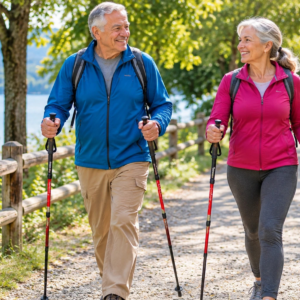
As the right leg moves forward, the left arm swings forward. The opposite pairing follows on the next step.
Use Appropriate Pole Placement
During a traditional Nordic walking pattern, pole contact generally occurs near the body with the pole angled backward rather than planted far ahead as a support device.
Push Through the Movement
The backward arm swing allows the walker to apply controlled propulsion through the pole and strap.
Release and Regrip
Depending on the specific technique and strap, the hand opens during the backward phase and closes again as the arm returns forward.
Maintain Comfortable Posture
Keep the shoulders relaxed, look along the route, and avoid unnecessary tension in the arms.
Learn From a Qualified Instructor
A trained instructor can correct pole length, arm timing, grip, placement, and walking pace. This is especially useful for beginners.
Starting Slowly and Managing Pace
Beginning a Nordic walking routine should involve a manageable level of activity.
A person unfamiliar with the technique may need time to develop coordinated movements and adjust to the additional use of the arms.
Start With Familiar Surfaces
Choose an appropriate, level area where the person can focus on pole control.
Use a Comfortable Pace
The walking speed should allow the individual to maintain a natural rhythm and controlled technique.
Build Gradually
Exercise duration and intensity can increase according to personal tolerance and appropriate professional advice.
Allow Rest
Fatigue may reduce coordination and make pole placement less consistent.
Plan an Easy Return
A short loop or a route with convenient return options can help avoid unexpected overexertion.
Review Progress
New discomfort, unusual fatigue, or difficulty controlling the poles may indicate that the activity needs to be modified.
Nordic Walking Stick for Older Adults
Nordic walking can be one way for older adults to participate in regular outdoor physical activity.
However, the benefits and appropriate intensity vary from person to person. Nordic walking is not a guaranteed treatment for balance problems, cardiovascular conditions, or joint pain.
Active Aging
A Nordic Walking Stick may support an enjoyable recreational walking routine when the person has the physical abilities required for the activity.
Upper-Body Engagement
The active use of paired poles involves arm and shoulder movements that are less prominent during ordinary walking.
Social Participation
Some people enjoy Nordic walking in organized classes or small recreational groups.
Individual Comfort
Pole weight, grip fit, walking pace, and route conditions should match the participant.
Recognizing Limitations
New dizziness, unusual breathlessness, chest discomfort, or significant pain should lead to stopping activity and obtaining appropriate medical advice.
Avoid Unsupported Claims
More poles or increased upper-body activity do not mean the exercise automatically prevents falls or replaces prescribed rehabilitation.
Nordic Walking Stick Indoors and Outdoors
Most Nordic walking routines take place outdoors, but selected indoor areas may be appropriate for instruction or controlled practice.
The suitability of an environment depends on available space, floor characteristics, and the expected movement of the poles.
Indoor Practice Areas
A spacious exercise room may provide room to learn pole handling without nearby furniture.
Narrow Hallways
Confined spaces can interfere with normal arm swing and pole placement.
Crowded Locations
Pole tips and backward arm movements require awareness of people nearby.
Public Paths
Sidewalks and shared-use trails may be suitable when the walker can maintain adequate clearance and follow local rules.
Doorways and Entrances
The person may need to pause or modify activity when moving through narrow entrances.
Evaluate Before Walking
A location that works for ordinary walking may not provide enough space for an active two-pole technique.
Nordic Walking Stick on Stairs, Slopes, and Curbs
Stairs, curbs, and inclines require additional attention because they change both foot placement and pole contact.
Nordic walking poles should not be assumed to provide the support of a secure handrail or medically prescribed mobility aid.
Staircases
A person with mobility concerns should receive individualized guidance about stairs rather than applying the ordinary Nordic walking pattern automatically.
Curbs
Changes in ground level may interrupt the coordinated pole movement and require a different approach.
Uphill Routes
Inclines can increase exercise intensity and change the pole angle.
Downhill Routes
Descents may require additional balance and control, particularly on loose or wet terrain.
Use an Appropriate Alternative
When a route cannot be managed safely, consider an accessible path or another suitable mobility arrangement.
Do Not Force the Technique
A Nordic Walking Stick should not be used as an improvised substitute for equipment designed for significant weight-bearing support.
Nordic Walking Footwear, Clothing, and Weather
Footwear and weather conditions can influence the comfort and safety of a Nordic walking session.
The poles are only one part of the activity. Shoes, clothing, surface conditions, and visibility deserve equal attention.
Walking Shoes
Choose suitable shoes that provide comfort and appropriate traction for the intended route.
Clothing
Wear comfortable clothing that allows natural movement without catching on pole straps or handles.
Rain
Wet pavement and slippery surfaces may affect foot and pole traction.
Heat
Hot weather can increase physical demands and make hydration and rest planning more important.
Cold Weather
Cool temperatures may affect hand comfort, and icy conditions can make walking unsuitable.
Visibility
Plan routes and walking times that provide adequate visibility for the intended activity.
Weather Changes
When conditions become unsuitable, postpone the walk or choose a safer alternative.
Nordic Walking Stick Storage and Transportation
Some Nordic walking poles are designed for convenient transport, while others use fixed-length shafts.
The correct storage method depends on the construction and manufacturer’s instructions.
Fixed-Length Poles
These poles may be straightforward to use but can require more storage space.
Adjustable Poles
Telescoping models should have their locking mechanisms checked after any length change.
Folding Poles
Folding connections should be securely engaged before the poles are used.
Vehicle Transportation
Secure poles so that pointed tips and handles do not interfere with passengers or vehicle controls.
Home Storage
Keep them in a dry, accessible location where they cannot become household tripping hazards.
Inspect After Travel
Check the straps, shaft joints, handles, and tips before resuming activity.
Used Nordic Walking Poles and Replacement Parts
Used Nordic walking poles may reduce initial expenses, but their condition and compatibility should be assessed before purchase.
The previous owner may have used the poles on demanding terrain or made adjustments that are not suitable for the next user.
Shaft Condition
Look for bends, cracks, dents, and other structural irregularities.
Adjustment Mechanisms
An adjustable pole should lock securely according to its manufacturer instructions.
Strap Condition
Inspect stitching, fasteners, and other components for wear or damage.
Grip Condition
Handles should remain securely attached and comfortable to hold.
Worn Tips
Replace damaged or heavily worn tips with compatible parts.
Availability of Replacements
Before purchasing used poles, check whether the manufacturer still provides appropriate straps, tips, and other components.
Compare Total Value
A low purchase price may offer little savings if replacement components are unavailable or costly.
Nordic Walking Stick Reviews and Product Claims
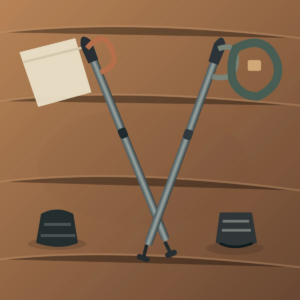
Product reviews may help shoppers compare comfort, pole weight, adjustable length, strap design, and durability.
However, reviews rarely establish whether the equipment suits a particular person’s height, physical abilities, and walking technique.
Compare Intended Use
A hiking-pole review may not address the needs of traditional Nordic walking.
Evaluate Straps
A specialized strap can influence the comfort and technique of the activity.
Check Actual Dimensions
Advertised size ranges should be compared with the user’s measurements.
Consider Materials
Aluminum, carbon-composite, and other shaft materials have different product characteristics, but the material alone does not determine suitability.
Review Replacement Parts
Availability of compatible tips and straps may influence long-term ownership costs.
Avoid Universal Rankings
The best Nordic Walking Stick is the one that matches the person’s needs, rather than the most expensive or highest-rated model.
Pain, Recovery, and Physical Limitations
Nordic walking involves repeated movements of the shoulders, elbows, wrists, legs, and trunk.
Discomfort may be related to pole length, technique, exercise intensity, equipment fit, or an underlying health concern.
Shoulder and Elbow Discomfort
Excessive tension or unsuitable pole movement may contribute to discomfort.
Wrist or Hand Pain
Poor grip fit or incorrect strap adjustment may require equipment or technique reassessment.
Back or Hip Discomfort
Posture, walking rhythm, and exercise tolerance should be reviewed when symptoms develop.
Recovery After Injury
A Nordic Walking Stick should not automatically replace crutches, a walker, or other prescribed equipment following an injury.
Changes in Balance
New instability requires appropriate assessment rather than relying more heavily on the poles.
Know When to Stop
If pain, dizziness, or unusual symptoms interfere with walking, stop the activity and obtain appropriate advice.
Rest, Hydration, and Route Planning
A successful Nordic walking routine depends on more than poles and technique.
Choosing a manageable route and preparing for changing energy levels can make recreational walking more practical.
Select the Route
Begin with an appropriate path that matches the person’s current abilities and experience.
Plan Rest Opportunities
Consider benches or other suitable places to pause.
Carry Water When Appropriate
Hydration needs vary with activity, weather, and individual circumstances.
Review Walking Distance
A shorter, familiar route may be preferable to an unfamiliar route with limited options for returning.
Communicate Plans
When appropriate, let a trusted person know the planned route and expected arrangements.
Prepare Alternatives
Weather changes, discomfort, or fatigue may make it necessary to shorten or cancel a walk.
Nordic Walking With Caregivers and Groups
Some older adults enjoy Nordic walking as a social activity with family members, friends, or organized walking groups.
The group should match its pace and route to the abilities of the participants.
Agree on a Comfortable Pace
Group participation should not create pressure to walk faster or farther than someone can comfortably manage.
Respect Independence
A companion should not automatically grab the person’s poles or interfere with their arm movements.
Maintain Safe Spacing
Pole swings and ground-contact tips require appropriate space between participants.
Establish Communication
Agree on how participants will request a rest, a change in pace, or assistance.
Plan a Return Option
The group should know how to shorten the walk if conditions become difficult.
Consider Qualified Instruction
A beginner-friendly Nordic walking group led by an experienced instructor may provide more appropriate technique guidance than informal imitation.
Questions to Ask Before Choosing a Nordic Walking Stick
Before purchasing Nordic walking poles, ask:
- Are these poles designed specifically for Nordic walking?
- What is the recommended length range?
- Are the poles fixed-length, adjustable, or folding?
- What shaft materials are used?
- What type of Nordic walking straps are included?
- Can the straps be adjusted and released comfortably?
- What handles are provided?
- Are rubber pavement tips included?
- Are replacement tips available?
- Are the poles appropriate for the intended surfaces?
- How much does each pole weigh?
- How are the adjustable sections locked?
- What maintenance is recommended?
- Does the seller offer fitting assistance?
- Is instruction available locally?
- What warranty applies?
- What is the written return policy?
- What is the total price for the pair and any necessary accessories?
Written answers can help buyers compare different models without relying solely on promotional claims.
Final Nordic Walking Stick Checklist
Before beginning a regular Nordic walking routine, confirm:
-
Nordic walking matches the person’s physical abilities and activity goals.
-
A pair of appropriate Nordic walking poles has been selected.
-
Pole length has been properly evaluated.
-
Handles feel comfortable.
-
Straps fit and release appropriately.
-
Adjustment locks are secure.
-
Tips match the intended walking surfaces.
-
Both shafts are free from visible damage.
-
The walking technique has been demonstrated.
-
Opposite arm-and-leg coordination is understood.
-
A manageable pace has been selected.
-
Suitable footwear is available.
-
The planned route provides appropriate clearance.
-
Weather and surface conditions have been checked.
-
Rest and return arrangements are realistic.
-
Replacement parts are available.
-
Equipment maintenance requirements are understood.
-
Professional guidance is available when needed.
-
The poles are not being used as substitutes for prescribed mobility support.
-
An alternative plan exists when conditions change.
Research Findings That Change the Nordic Walking Stick Decision
Several considerations are especially important when evaluating Nordic walking equipment.
First, Nordic walking requires more than carrying two sticks. The specialized pole design, fitted straps, and alternating movement pattern distinguish it from ordinary walking or hiking with poles.
Second, the correct length is only one part of equipment selection. Strap design, hand comfort, tips, terrain, and the user’s technique can all influence how the poles function.
Third, an active Nordic walking routine is not equivalent to medical mobility assistance. Someone who needs substantial support may require a cane, walker, or another prescribed device.
Finally, appropriate technique and exercise intensity matter. A well-designed pole cannot compensate for an unsuitable route, excessive exertion, or a walking pattern that the person cannot control.
Applied Decision Scenarios for Nordic Walking Stick
Nordic Walking Stick During a First Pole Fitting
An older adult tries two adjustable Nordic walking poles during an introductory class. An instructor evaluates length, grip comfort, strap fit, and natural arm movement before the participant begins regular exercise.
Nordic Walking Stick During Indoor Practice
A beginner practices arm coordination in a spacious fitness studio. The session focuses on comfortable pole handling without nearby furniture or obstacles.
Nordic Walking Stick on a Sidewalk Route
A walker plans a route through a local park. The correct rubber pavement tips and adequate space for arm movement are considered before starting.
Nordic Walking Stick on Wet Pavement
Rain makes a familiar pathway slippery. The walker postpones the activity rather than assuming that the poles will provide dependable traction.
Nordic Walking Stick Near a Curb
A change in pavement height interrupts the ordinary Nordic walking rhythm. The individual follows appropriate instruction or chooses another accessible route.
Nordic Walking Stick During a Group Walk
A small group includes participants with different walking speeds. The group agrees on a comfortable pace, suitable spacing, and opportunities to rest.
Nordic Walking Stick During Strap Adjustment
A walker notices pressure from a wrist strap. The instructor checks its fit and the manufacturer’s adjustment system before the activity continues.
Nordic Walking Stick When Fatigue Increases
A participant becomes tired and begins losing coordination. The walking session is shortened and the exercise plan reviewed.
Nordic Walking Stick During Recovery
A person recovering from an injury wants to resume Nordic walking. A healthcare professional evaluates whether the activity is appropriate for the current recovery stage.
Nordic Walking Stick During a Used-Pole Inspection
A secondhand pair has worn rubber tips and an unreliable shaft lock. The buyer compares the replacement costs and considers another model.
Nordic Walking Stick During Transportation
Folding poles are packed for a short trip. Their sections and locks are inspected after unpacking and before use.
Nordic Walking Stick During Route Replanning
A familiar trail becomes blocked by construction. The walker selects a suitable alternative rather than attempting an unfamiliar or obstructed path.
Frequently Asked Questions About Nordic Walking Stick
Is a Nordic Walking Stick the Same as a Cane?
No. Nordic walking usually uses two specialized poles for active propulsion and coordinated exercise. A medical cane is typically used to provide limited walking support.
How Do I Use a Nordic Walking Stick Correctly?
Traditional Nordic walking uses coordinated opposite arm-and-leg movement, suitable pole placement, and active backward propulsion. Instruction from a qualified Nordic walking professional can help establish the correct technique.
Can Nordic Walking Help With Balance?
Nordic walking may be an appropriate physical activity for some people, but it does not guarantee better balance or prevent falls. Individuals with significant instability should obtain professional assessment.
Can I Use Nordic Walking Sticks on Stairs?
Do not assume that Nordic walking poles are suitable for stair support. Stairs require individualized assessment, and a secure handrail or alternative route may be more appropriate.
Do You Need Two Nordic Walking Sticks?
Traditional Nordic walking generally uses two poles to coordinate the movement of both arms with the opposite legs.
What Length Should Nordic Walking Poles Be?
A common starting estimate is around 68% of the user’s height, but actual fitting should consider arm position, walking technique, and professional guidance.
Are Nordic Walking Poles Suitable for Seniors?
They may be suitable for older adults whose balance, strength, coordination, and exercise tolerance match the activity. Age alone does not determine suitability.
What Is the Difference Between Nordic Walking and Trekking Poles?
Nordic walking poles generally use specialized straps and are designed for an active arm-and-leg walking technique. Trekking poles may have different grips and intended uses.
Are Adjustable Nordic Walking Poles Better?
Adjustable poles can offer flexibility, particularly for beginners, but their locking mechanisms must remain secure. Fixed-length poles may also be appropriate.
What Tips Should I Use on Pavement?
Many Nordic walking poles use compatible rubber pavement tips. Follow the manufacturer’s instructions for the exact model and surface.
Do Nordic Walking Poles Have Wrist Straps?
Many purpose-designed Nordic walking poles include specialized wrist or glove-style straps that support the intended technique.
Can Nordic Walking Replace Physical Therapy?
No. Nordic walking is a physical activity and should not replace prescribed rehabilitation or medical mobility equipment without professional guidance.
Does Medicare Cover Nordic Walking Sticks?
Original Medicare Part B may cover certain medically necessary walking canes under its durable medical equipment rules. Recreational Nordic walking poles should not be assumed to qualify for that coverage.
Can I Buy Used Nordic Walking Poles?
Used poles may be worth considering when their shafts, locks, grips, straps, and tips can be appropriately inspected and compatible replacement parts are available.
When Should I Stop Nordic Walking?
Stop when symptoms, fatigue, terrain conditions, or equipment problems make the activity unsuitable. Seek medical advice for concerning symptoms and professional reassessment when mobility changes.
Conclusion: Choosing a Nordic Walking Stick With Confidence
A Nordic Walking Stick can be part of an enjoyable and active walking routine when the equipment, technique, and environment match the user’s abilities. Unlike an ordinary mobility cane, Nordic walking poles are normally used as a pair to support coordinated upper- and lower-body movement.
Before choosing a Nordic Walking Stick, consider pole length, strap fit, handle comfort, tip compatibility, walking surfaces, and the availability of appropriate instruction. Beginners should prioritize controlled technique and manageable activity rather than speed or distance.
The best Nordic Walking Stick is one that fits the individual, supports the intended exercise technique, and remains reliable through proper inspection and maintenance. With realistic expectations, suitable routes, and appropriate guidance, older adults and caregivers can make informed choices about Nordic walking as part of an active lifestyle.
Neutral nordic walking stick decision table
| Decision area | What can go wrong | Evidence to verify |
|---|---|---|
| Person or rider | Wrong fit, control, posture, or participation assumption | Measurements and supervised assessment |
| Environment or route | Clearance, surface, slope, parking, or transfer failure | Complete route test and measurements |
| Provider or seller | Missing service, repair, documentation, or return support | Written terms and named contact |
| Fallback | Delay, malfunction, fatigue, weather, or coverage denial | Backup route and escalation plan |
Official sources and limitations
These sources were consulted for the nordic walking stick research map. They establish general U.S. safety, access, equipment, or coverage boundaries; they do not endorse a product, converter, seller, provider, ranking, or individual outcome.
- Medicare.gov — Durable medical equipment coverage — General DME coverage framework; exact plan rules control.
- ADA — Mobility devices — Mobility access context; not a product or technique endorsement.
- NIA — Exercise and physical activity — Older-adult activity and safety context; not a prescription for a device.
- NIA — Falls and fractures — Fall-risk and walking-aid context; not a pole recommendation.
- NIA — Staying active — Gradual activity and injury-reduction guidance.
- MedlinePlus — Mobility aids — General mobility-aid education and professional-guidance boundary.