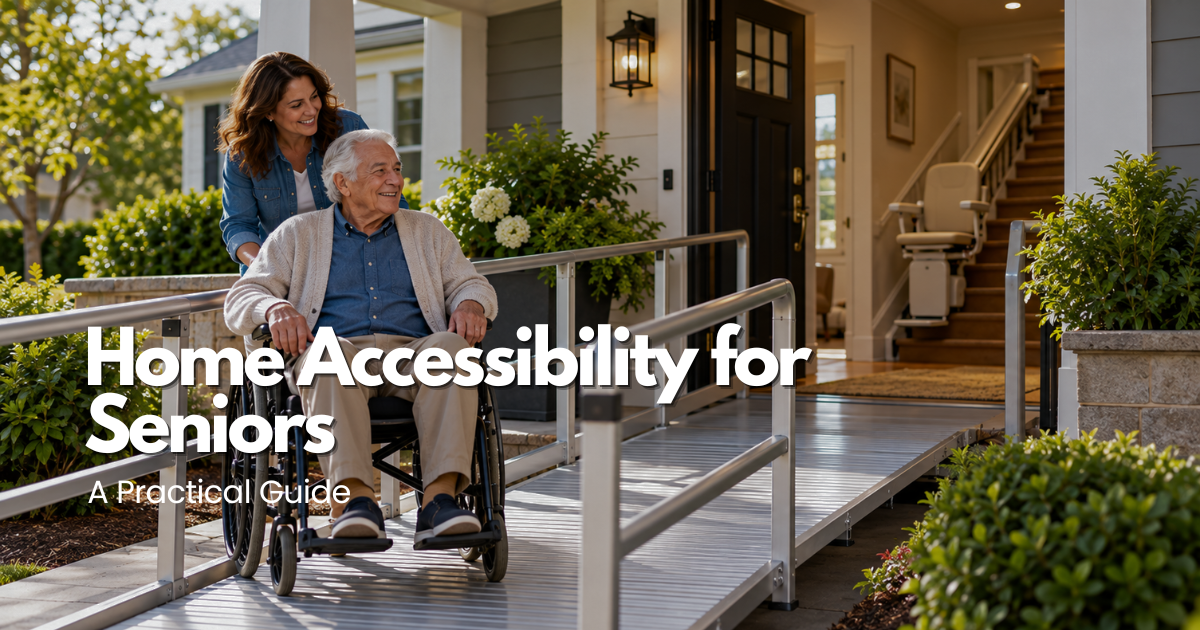
home accessibility for seniors | SeniorTechLife home safety guide
A practical home accessibility for seniors plan considers the entire living environment rather than focusing on one product. Wheelchair ramps, stair lifts, bathroom grab bars, accessible kitchens, and appropriate flooring serve different purposes. The right combination depends on the older adult’s abilities, preferences, home layout, and available support.
This comprehensive guide explains how to evaluate household accessibility, compare modification options, identify common barriers, and develop a sustainable plan for aging in place.
Safety note: Home accessibility modifications must match the individual’s needs and the property’s structural conditions. Stair lifts, wheelchair ramps, platform lifts, grab bars, and electrical modifications may require professional assessment and installation. Consult qualified healthcare and construction professionals when appropriate, and verify applicable local building requirements before beginning structural work.
Quick Answer: How to Improve Home Accessibility for Seniors
Improving home accessibility for seniors begins with identifying which daily activities are difficult and where those challenges occur. Walk through the home with the older adult, examining entrances, hallways, bathrooms, bedrooms, kitchens, and stairways. Look for narrow doorways, raised thresholds, poor lighting, limited turning space, and surfaces that interfere with safe movement.
Prioritize improvements according to actual needs rather than purchasing equipment based on advertising. Small adjustments may include rearranging furniture, improving lighting, or replacing difficult door hardware. More extensive modifications might involve installing an appropriately designed ramp, adapting a bathroom, or evaluating a stair lift.
A practical home accessibility checklist includes:
- Evaluate entrances, exterior steps, and doorway thresholds.
- Check hallway width and space for mobility equipment.
- Improve lighting in bedrooms, bathrooms, and stairways.
- Review bathroom access, support points, and floor surfaces.
- Keep frequently used kitchen items within comfortable reach.
- Examine whether stairs require an alternative access solution.
- Consider the person’s mobility, reach, grip strength, and endurance.
- Verify installation requirements, maintenance, and emergency access.
- Review modifications after changes in health or household routines.
The goal is to create a home that remains practical for everyday activities while respecting the older adult’s independence and preferences.
Home Accessibility for Seniors: What Belongs in This Guide
Home accessibility for seniors includes the physical features, equipment, and household arrangements that allow older adults to use their homes with fewer unnecessary barriers. Accessibility involves more than wheelchair access. It also includes the ability to reach controls, enter rooms, use bathrooms, prepare meals, and move between different levels of a home.
A complete accessibility assessment should consider the person and environment together. For example, a wider doorway may improve movement with a walker, but it does not solve a poorly positioned bathroom fixture. Similarly, a stair lift may provide access between floors without addressing obstacles at the top or bottom of the staircase.
Main Categories of Home Accessibility Improvements
Entrance accessibility: Wheelchair ramps, threshold modifications, accessible door hardware, and suitable outdoor pathways can make entering and leaving the home easier.
Indoor mobility: Wider circulation areas, stable flooring, clear hallways, and appropriate furniture arrangements help accommodate everyday movement and mobility aids.
Stair accessibility: Stair lifts, alternative routes, and certain lifting systems may be considered when stairs limit access between levels.
Bathroom modifications: Grab bars, accessible showers, appropriate seating, and improved layout can help address bathing and toileting difficulties.
Kitchen and bedroom accessibility: Reachable storage, suitable furniture heights, accessible controls, and clear circulation space can support everyday independence.
Support technology: Lighting controls, communication devices, and other systems may complement physical modifications when their operation is reliable and understandable.
Why Home Accessibility Starts With the Person and Setting
Older adults have different physical abilities, preferences, and living arrangements. Some may walk independently but experience difficulty using stairs, while others rely on walkers, wheelchairs, or caregiver assistance. A useful accessibility plan begins by understanding what the person can currently do and which activities create challenges.
Home accessibility for seniors should also consider daily routines. The route between the bedroom and bathroom may be more important than access to an infrequently used storage room. Likewise, a kitchen modification should reflect how the older adult prepares meals rather than an assumed ideal layout.
Evaluate Mobility and Physical Abilities
Consider walking endurance, balance, grip strength, standing tolerance, and the ability to sit or rise comfortably. These factors influence which modifications may be useful and whether specialized equipment is appropriate.
An occupational therapist can help identify functional limitations and evaluate potential improvements. Medical and rehabilitation assessments become particularly important when the person has experienced falls or significant changes in mobility.
Understand the Home’s Physical Limitations
Every property has structural characteristics that affect accessibility options. Door widths, stair geometry, available floor space, wall construction, and exterior elevations can influence which modifications are feasible.
Measure the actual locations where equipment will be used and obtain qualified assessments when necessary. A product that fits the advertised dimensions may still be unsuitable for a particular home or user.
Home Accessibility: Eight Decisions That Matter More Than Marketing
1. Person and Task
Begin with a specific everyday activity, such as entering the home, using the bathroom, or moving between floors. Identify what prevents the person from completing that activity comfortably and determine whether the difficulty involves reach, balance, movement, visibility, or available assistance.
This approach helps families avoid buying equipment that addresses the wrong problem. A senior stair lift may be useful for certain stair-access difficulties, but it does not automatically improve wheelchair access or bathroom transfers.
2. Fit and Access
Accessibility equipment must fit both the user and the physical setting. Measure the width of entrances, available turning space, stair dimensions, and the clearance required for the person’s mobility aid.
Verify the exact manufacturer’s requirements before installation. When measurements are close to a device’s stated limits, a qualified assessment is preferable to assuming that it will work.
3. Control and Usability
Controls should be easy for the older adult to understand, see, reach, and operate. A powered device may have sophisticated features but remain impractical if the person cannot reliably use its controls or maintain the required position.
Evaluate daily use under appropriate supervision. Consider how fatigue, limited dexterity, or changes in eyesight may affect control and operation.
4. Power and Equipment Limitations
Motorized stair lifts, platform lifts, and connected devices may depend on electricity, rechargeable batteries, or control systems. Verify what happens during an outage and which functions remain available.
Backup features vary by model and should never be assumed. Keep the manufacturer’s instructions, service contacts, and appropriate alternative access arrangements available.
5. Privacy and Consent
Home modifications should respect the older adult’s preferences and sense of control. Discuss the purpose of each proposed change and whether monitoring or connected equipment collects personal information.
Accessibility improvements are more likely to remain useful when the person understands and accepts them. Privacy, dignity, and independence should be considered alongside technical requirements.
6. Caregiver Support
Caregivers may assist with equipment preparation, maintenance checks, arranging service, and navigating unfamiliar environments. However, home accessibility should not depend on untrained lifting, unsafe transfers, or assumptions about a helper’s physical abilities.
Document the tasks that require assistance and identify who can provide it. Professional training may be necessary for specialized transfer equipment or other safety-critical activities.
7. Service and Cost
The initial purchase price is only one component of an accessibility project. Installation, permits when required, repairs, annual maintenance, replacement parts, and future modifications may contribute to long-term ownership costs.
Compare written estimates and service arrangements before committing to major equipment. A lower purchase price may not represent better value when installation or support is excluded.
8. Backup Planning
A practical accessibility plan should explain what happens when equipment becomes unavailable or the older adult’s abilities change. For example, households relying on a powered lift should understand the manufacturer’s emergency procedures and any restrictions during an outage.
Backup arrangements should be realistic and should not involve improvised transfers or unsafe equipment substitutions.
Entrance Accessibility for Seniors: Doors, Steps, and Thresholds
Entering and leaving the home is one of the most important considerations in home accessibility for seniors. Exterior stairs, heavy doors, raised thresholds, uneven walkways, and limited landing space can make ordinary trips more difficult.
Begin by evaluating the route from the driveway or sidewalk to the entrance. Look at surface condition, elevation changes, lighting, weather exposure, and whether the person can open and close the door while using their mobility equipment.
Accessible Doorways and Door Hardware
Doorways should provide sufficient clearance for the actual person and mobility aid. Hinges, door swings, furniture, and thresholds may reduce usable space even when the opening appears wide enough.
Lever-style hardware may be easier for some individuals to operate than round knobs. However, changes should match the person’s abilities, the door construction, and any applicable building requirements.
Doorway Threshold Ramps
Small raised thresholds can interrupt smooth movement between rooms or at exterior entrances. A suitable threshold ramp may help address certain transitions when properly selected and installed.
Check the exact height change, available landing space, surface conditions, and intended mobility equipment. A ramp that moves, slips, or creates an abrupt transition may introduce additional hazards.
Exterior Paths and Entry Landings
Outdoor routes should provide appropriate traction, drainage, illumination, and usable space. Consider whether rain, seasonal conditions, or exterior furniture affect access.
Structural changes should be reviewed with qualified professionals. Local building requirements and the property’s construction determine whether a proposed solution is appropriate.
Wheelchair Ramps for Home Accessibility
Wheelchair ramps may help provide an accessible route where steps or raised entrances prevent wheeled mobility. However, the correct design depends on the elevation change, available space, wheelchair type, user needs, and whether assistance is required.
Home accessibility for seniors should treat ramp selection as an individualized decision rather than a comparison based only on advertised length or portability. Slope, landings, stability, surface traction, and load requirements must be evaluated together.
Portable Wheelchair Ramps
Portable ramps are designed for particular applications, including some small elevation changes and temporary access needs. Their suitability depends on the exact product instructions and the user’s equipment.
Never assume that a portable ramp is appropriate for a full staircase or every entrance. Verify the manufacturer’s permitted uses and obtain professional advice when the height or environment presents significant challenges.
Modular Aluminum Wheelchair Ramps
Modular ramp systems may offer configurable access for certain homes. Their components can include ramp sections, platforms, handrails, and transitions selected for the property.
Installation requires an appropriate assessment of the elevation, available layout, support conditions, and applicable requirements. Families should review the full route, including the starting and ending landings.
Permanent Home Ramps
Permanent ramp installations may be considered for long-term accessibility needs. Their design should account for the home’s structure, local regulations, environmental exposure, and ongoing maintenance.
A qualified contractor can help evaluate feasibility and installation requirements. The finished route should be assessed with the person and their actual mobility equipment before regular use.
Stair Lifts for Seniors: Understanding the Main Options
Stairs can become a significant barrier when an older adult experiences reduced mobility, endurance, or balance. A stair lift for seniors may provide an alternative way to travel between floors when the person can use the device according to its intended design.
Home accessibility for seniors requires more than choosing a seat that moves along a rail. Families must evaluate transfer ability, staircase geometry, seat fit, controls, landing access, and available maintenance support.
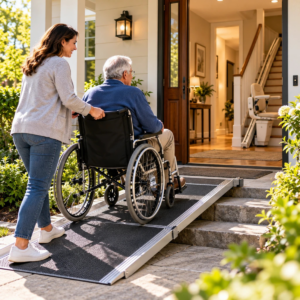
Straight Stair Lifts
Straight stair lifts are intended for staircases with a suitable straight configuration. The rail and seat system must match the specific staircase and manufacturer requirements.
Families should consider seat dimensions, transfer locations, rail placement, controls, and clear passage for other household members. Professional measurements are important before purchasing equipment.
Curved Stair Lifts
Curved stair lifts are designed for certain staircases with turns, intermediate landings, or more complex shapes. Their rail systems are typically configured for the specific installation.
Because requirements vary, families should obtain a detailed site evaluation and written proposal. Installation complexity, maintenance, and the availability of replacement components deserve attention.
Outdoor Stair Lifts
Outdoor stair lifts are designed for certain exterior applications, but weather tolerance and operating limitations vary. Not every indoor model is suitable for outdoor installation.
Review exposure conditions, power requirements, servicing arrangements, and manufacturer-approved use. Outdoor access should also include suitable landings and safe routes to and from the equipment.
Standing Stair Lifts
Certain products may accommodate alternative user positions, but suitability depends on the exact design and a person’s ability to maintain the required posture safely.
Do not select a standing configuration simply because a conventional seated model appears inconvenient. Obtain qualified clinical and equipment guidance before considering specialized options.
Stair Lifts Versus Wheelchair Platform Lifts
A typical seated stair lift and a wheelchair platform lift serve different purposes. A seated lift generally requires the person to transfer onto its seat, while a suitable platform lift may allow access while remaining in compatible mobility equipment.
Selecting between them requires an assessment of transfer ability, wheelchair dimensions, structural conditions, space, and installation requirements. The terms should not be used interchangeably.
Bathroom Accessibility for Seniors
Bathrooms are especially important in home accessibility for seniors because they combine limited space, wet surfaces, and movements between standing and sitting. A bathroom may appear functional but still be difficult to use with a walker, wheelchair, or caregiver assistance.
Assess the complete routine, including entering the room, reaching fixtures, using the toilet, and accessing the shower. The layout should support the person’s actual needs rather than relying on a single modification.
Grab Bars and Support Features
Properly installed grab bars may provide designated support points near toilets or bathing areas. Positioning should reflect the individual’s movement pattern, reach, and transfer needs.
Ordinary towel bars should not substitute for purpose-designed support equipment. Installation must be suitable for the wall construction and intended loads.
Accessible Showers and Bathing Areas
Walk-in or low-threshold shower designs may improve access for some individuals, depending on the layout and their mobility. Appropriate shower seating, controls, and support equipment can also be considered.
A qualified occupational therapist can help evaluate transfer needs, while appropriate contractors can assess structural and plumbing requirements.
Toilet Access and Transfers
Toilet height, available side clearance, grab bar positioning, and wheelchair or walker maneuvering space may influence usability.
Avoid making changes solely from generic dimensions. An individualized evaluation can help determine which features are appropriate and whether additional assistance is necessary.
Kitchen Accessibility: Reach, Storage, and Everyday Tasks
Kitchens should support comfortable access to frequently used appliances, utensils, food, and work surfaces. Limited reach, difficult cabinet hardware, or narrow circulation space can make ordinary meal preparation more demanding.
Home accessibility for seniors may be improved by reorganizing storage, making controls easier to reach, and ensuring that walking routes remain unobstructed. Larger modifications should be considered when the person uses a wheelchair or experiences significant mobility limitations.
Accessible Cabinets and Storage
Store frequently used items at heights that do not require uncomfortable stretching, climbing, or bending. Consider accessible drawer arrangements and hardware suited to the individual’s grip strength.
Avoid storing heavy items in locations that are difficult to reach. A simple storage change can sometimes provide substantial practical benefit.
Countertops and Work Areas
Countertop height and available space affect meal preparation and kitchen activities. Seated users may require different working arrangements from people who prepare meals while standing.
Evaluate the person’s real tasks before making permanent adjustments. Professional guidance is useful when modifications involve cabinetry, plumbing, or electrical systems.
Kitchen Flooring and Lighting
Clear flooring, appropriate traction, and consistent lighting support safer kitchen movement. Remove unnecessary obstacles and address spills promptly.
Use lighting that helps illuminate preparation areas without causing uncomfortable glare. Keep electrical cords away from common walking routes.
Bedroom Accessibility and Comfortable Daily Living
Bedrooms should allow the older adult to move between the bed, doorway, storage, and nearby bathroom with sufficient space. Furniture placement, lighting, and bed access can influence daily independence.
Consider whether the person can reach essential items without awkward movements and whether mobility equipment fits the available routes. Changes in sleeping arrangements or physical ability may require reassessment.
Bed Height and Transfer Access
An unsuitable bed height can complicate sitting and standing. The appropriate arrangement depends on the person’s abilities and any professional transfer guidance.
Bed rails and similar products should not be added without considering their intended use, compatibility, and possible safety risks. Seek clinical advice when transfers or nighttime mobility are difficult.
Bedroom Lighting and Controls
Accessible bedside lighting can help the person recognize furniture and navigate familiar routes. Switches should be easy to locate and operate.
Consider nighttime access to the bathroom, particularly when the person uses a walker or other mobility aid. Clear walking routes remain important even when lighting is improved.
Flooring, Lighting, and Door Hardware for Accessible Homes
Small environmental details can make a significant difference in home accessibility for seniors. Uneven flooring, loose rugs, poorly positioned lamps, and difficult handles may introduce barriers that are easy to overlook during a major renovation.
Examine how these features interact throughout the house. An accessible bathroom is less useful if the route leading to it includes a difficult threshold or narrow hallway.
Flooring and Surface Transitions
Floors should provide stable walking surfaces appropriate to their intended environment. Damaged materials, abrupt transitions, and loose coverings can interfere with mobility equipment.
Slip resistance varies by material, moisture, maintenance, and footwear. Verify the suitability of any proposed flooring rather than relying only on product labels.
Lighting and Visual Contrast
Good lighting helps older adults recognize steps, obstacles, switches, and changes in elevation. Avoid strong shadows and excessive glare that make surfaces difficult to distinguish.
Contrasting colors may help some people identify important features, but visual needs vary. Evaluate the actual lighting conditions and individual preferences.
Door Hardware and Controls
Handles, switches, thermostats, and other frequently used controls should remain visible and accessible.
Consider alternatives when a person has difficulty gripping or turning traditional hardware. Electrical and structural modifications should be completed by qualified professionals when required.
Home Accessibility: Ownership, Service, and Maintenance
Accessibility improvements must remain usable after installation. Ramps, stair lifts, grab bars, doors, and powered equipment may require periodic inspection or service depending on their construction and intended use.
A practical home accessibility for seniors plan should include maintenance responsibilities, service contacts, replacement-part availability, and procedures for equipment problems. Families should understand these requirements before making major purchases.
Setup and Installation
Confirm that the installed equipment matches the approved configuration and manufacturer’s documentation. Record relevant model details, settings, and the responsible installation provider.
For structural or powered systems, obtain any required inspection or professional sign-off. Do not assume that a device is ready for use solely because installation appears complete.
Daily Use and Equipment Checks
Observe whether equipment operates normally and whether routes remain accessible. Changes in noise, movement, stability, or control behavior may require service.
Stop using equipment that behaves unexpectedly and follow the manufacturer’s guidance rather than improvising repairs.
Power and Battery Considerations
Some accessibility systems rely on electrical power or batteries. Verify maintenance requirements, charging procedures, and documented outage behavior.
Keep service information accessible and ensure that any emergency-use features are understood before they are needed.
Cleaning and Environmental Maintenance
Appropriate cleaning helps preserve flooring, ramps, and frequently handled equipment. Follow manufacturer instructions and avoid products that could damage surfaces or interfere with traction.
Exterior access routes also require attention to drainage, weather exposure, debris, and changing environmental conditions.
Professional Service and Repairs
Stair lifts and other specialized systems may require qualified technicians for maintenance or repairs. Use compatible parts and approved service procedures.
Maintain a record of inspections, repairs, and recurring issues. This information can help families recognize changes and communicate accurately with service providers.
Home Accessibility: Real-World Trial Scenarios
Evaluating accessibility equipment in a showroom does not necessarily demonstrate how it will work in a particular home. The complete activity should be assessed, including approaching the equipment, operating it, moving through the route, and reaching the destination.
Use the exact intended configuration and professional supervision when the task involves significant safety concerns. Record observable results rather than relying on general impressions.
An Ordinary Day at Home
Follow the person’s usual route between the bedroom, bathroom, kitchen, and living room. Observe whether furniture, floor transitions, doorways, or controls create difficulties.
Consider whether the routine remains practical when the person is tired or carrying ordinary personal belongings. Small barriers that occur repeatedly may deserve early attention.
A Difficult Route or Entrance
Review the most challenging doorway, exterior step, hallway, or staircase. Record relevant dimensions and identify where control or movement becomes difficult.
A safer alternative may involve a different route, structural changes, or professionally selected mobility equipment. Do not attempt untested workarounds to force an unsuitable configuration.
A Caregiver Handoff
If several people assist the older adult, clarify which activities require help and how equipment should be prepared. Keep important instructions in a consistent location.
The plan should respect the older adult’s preferences and avoid relying on one caregiver’s memory. Professional training may be appropriate for specialized equipment.
An Unexpected Equipment Failure
Consider how the household will respond if a lift stops working or an accessible entrance becomes unavailable. Follow the manufacturer’s instructions and use the agreed alternative plan.
Never bypass safety features, attempt untrained transfers, or modify powered equipment to restore operation. Contact qualified support when necessary.
Costs and Budget Planning for Home Accessibility Improvements
Accessibility projects vary widely in scope. Rearranging furniture and improving lighting may require relatively modest resources, while stair lifts, major bathroom renovations, and structural entrance modifications can involve significant expenses.
Rather than relying on generalized price ranges, request itemized estimates for the exact property and proposed equipment. Installation complexity, local labor rates, building conditions, and required approvals can affect the total.
Compare Total Ownership Costs
Include purchase, delivery, installation, permits when applicable, training, maintenance, repairs, and replacement parts in the financial assessment.
Ask whether service is included and what happens if equipment becomes unavailable after the warranty expires.
Insurance and Medicare Considerations
Coverage for accessibility equipment and home modifications depends on the exact benefit, eligibility requirements, and applicable program rules. Do not assume that a product is covered simply because it supports mobility or independent living.
Original Medicare generally does not cover stair lifts as ordinary home modifications, although individual circumstances and other funding programs may differ. Verify current requirements directly with the appropriate payer before making financial commitments.
Temporary Versus Permanent Modifications
Temporary equipment may be appropriate for certain short-term situations, but it still requires suitable fit and permitted use. Permanent modifications may be more appropriate when accessibility needs are expected to continue.
Consider installation, future maintenance, available space, and the possibility of changing mobility needs before selecting either approach.
Questions to Ask Before Buying Home Accessibility Equipment
Families should verify important details before purchasing mobility or accessibility equipment. Product labels such as heavy-duty, senior-friendly, compact, or easy installation do not replace exact specifications and professional evaluation.
Ask the seller, installer, or appropriate healthcare professional:
- Which specific activity or barrier is this equipment intended to address?
- Is the product appropriate for the person’s current abilities?
- What measurements and structural conditions are required?
- Are professional installation, permits, or inspections necessary?
- What are the user weight limits and operating restrictions?
- Can the older adult operate the equipment reliably?
- What happens during power loss or equipment malfunction?
- Who provides maintenance, repairs, and replacement parts?
- What are the total purchase, installation, and ownership costs?
- What alternative arrangement is available if the solution becomes unsuitable?
Keep written answers with the equipment documentation, particularly when they affect installation, compatibility, warranty, or ongoing service.
Common Home Accessibility for Seniors Mistakes
Choosing a Product Before Assessing the Home
A product may look suitable online but fail to fit the actual entrance, staircase, or room. Buying before measuring can lead to unnecessary expenses or impractical installations.
Begin with the activity, person, and physical setting. Obtain appropriate measurements and professional guidance before selecting major equipment.
Assuming All Seniors Have the Same Needs
Older adults have different mobility abilities, physical conditions, preferences, and household routines. A modification helpful to one person may be unnecessary or unsuitable for another.
Home accessibility for seniors should therefore be individualized rather than based on age alone.
Confusing Product Availability With Suitability
Equipment that is easy to purchase may still require specialized installation, training, or maintenance. Delivery availability does not prove that a device is safe or practical for the intended application.
Verify the complete ownership and service arrangement before purchase.
Ignoring Future Maintenance
Powered lifts, ramp surfaces, door hardware, and other accessibility features may deteriorate or require service over time.
A maintenance plan helps ensure that modifications remain reliable and appropriate for everyday use.
Forgetting Emergency Access
An accessibility improvement should not obstruct exits, narrow essential routes, or create problems for other household members.
Review emergency access and evacuation needs when planning major modifications, particularly when the person depends on mobility equipment.
Home Accessibility: Delivery, Follow-Up, and Reassessment
First Setup
After installation, verify the exact equipment, placement, operating instructions, and professional inspection requirements. Confirm that the older adult understands how the modification is intended to be used.
Record settings, service contacts, warranty information, and any restrictions communicated by the installer or healthcare professional.
Monthly Accessibility Review
Periodically inspect frequently used routes, equipment condition, lighting, flooring, and household obstacles. Ask whether the older adult has experienced new difficulties.
Routine reviews can identify changes before they significantly interfere with daily activities.
Travel and Temporary Changes
Visiting relatives or staying in unfamiliar accommodations can create different accessibility challenges. Review routes, bathroom access, stairs, and any equipment limitations in advance.
Do not assume that portable equipment or temporary modifications are appropriate without checking their permitted use.
Changes in Health or Mobility
Falls, surgery, illness, changes in endurance, or new mobility devices may affect the suitability of previous home modifications.
Seek qualified reassessment when an important activity becomes difficult or when the person can no longer use equipment as intended.
Emergency and Backup Planning for Accessible Homes
A complete home accessibility for seniors plan should include realistic arrangements for equipment failures, power interruptions, and emergency situations.
Keep communication devices and essential contact details accessible. If the household depends on a stair lift or another powered system, understand its specific emergency procedures and service requirements.
A backup plan should not involve improvised lifting, unsafe transfers, or bypassing equipment controls. Discuss evacuation needs and suitable alternatives with qualified professionals when mobility limitations are significant.
Applied Home Accessibility Planning
Define Accessibility by the Person and the Home
Accessibility should reflect the older adult’s abilities, preferences, and daily activities. A home that works well for one person may present serious barriers for another.
Observe ordinary tasks and identify the specific changes that would make the greatest practical difference.
Review Entrances, Bathrooms, Kitchens, Bedrooms, and Circulation Areas
Assess each important room and the routes connecting them. A well-designed modification in one area may have limited usefulness if the person cannot reach it comfortably.
Prioritize the spaces used most frequently and address barriers that affect essential daily activities.
Compare Access, Reach, Transfer, and Control Requirements
Accessibility involves more than available floor space. Consider whether the person can reach controls, operate handles, position mobility equipment, and complete necessary transfers.
Professional assessment is especially important when transfers or significant balance limitations are involved.
Consider Stair Lifts Without Reducing the Whole Home to One Product
A stair lift for the elderly may address one specific challenge while leaving other accessibility barriers unchanged.
Evaluate the staircase, landings, bathrooms, entrances, and household routines together before investing in specialized equipment.
Check Lighting, Contrast, Flooring, and Door Hardware
Improved visibility and easier-to-operate controls may complement larger structural modifications.
Review the practical function of each feature rather than choosing products solely for appearance.
Plan for Visitors, Caregivers, and Emergency Access
An accessible home may need to accommodate family members, professional caregivers, and emergency responders.
Ensure that modifications preserve necessary circulation and do not create avoidable obstacles.
Balance Independence, Privacy, Dignity, and Supervision
Older adults should participate in decisions about their living environment whenever possible. Accessibility improvements should support their goals rather than introduce unnecessary restrictions.
Discuss privacy and comfort before installing connected or monitoring technology.
Review Temporary Versus Permanent Modifications
Temporary solutions may be useful in selected circumstances, while long-term needs may justify permanent changes.
Compare safety, usability, cost, maintenance, and the expected duration of the accessibility requirement.
Measure the Route Before Choosing Equipment
Record dimensions at doorways, thresholds, turns, stairs, and landings. Consider the actual equipment and assistance needed throughout the route.
Qualified measurements are especially important when modifications involve structural installation.
Coordinate Technology With Physical Changes
Smart controls and automated devices can supplement accessibility improvements, but their usefulness depends on reliable operation and the person’s ability to use them.
Do not allow technological convenience to replace essential physical access.
Document Cost, Maintenance, and Ownership
Keep estimates, receipts, manuals, warranties, inspection records, and service information together.
Clear documentation helps families understand ongoing responsibilities and compare future options.
Use Qualified Help for Structural or Electrical Work
Major home modifications may affect building safety and require permits or inspections.
Choose appropriately qualified professionals and verify current local requirements before starting work.
Test the Changed Space With the Actual Person
A completed installation should be evaluated in ordinary use under appropriate conditions. Observe whether the person can approach, operate, and leave the equipment comfortably.
If the arrangement does not work as expected, pause and obtain professional advice before relying on it.
Keep Accessibility Recommendations Location-Aware
Construction requirements, available services, and housing conditions vary across locations.
Verify applicable local regulations and property restrictions rather than assuming that one installation standard applies everywhere.
Reassess After Health or Home Changes
Changes in mobility, medical condition, furniture arrangement, or household support can affect accessibility.
Review the plan after meaningful changes and update modifications when appropriate.
Reserve Detailed Cost and Model Reviews for Specialized Guides
A broad accessibility guide helps families identify the right categories of solutions, but exact model comparisons require current specifications and individual circumstances.
Specialized guides can examine stair lift costs, wheelchair ramp configurations, product reviews, and service providers in greater detail.
Final Home Accessibility for Seniors Checklist
A practical home accessibility for seniors checklist should cover mobility needs, structural conditions, equipment suitability, and ongoing maintenance.
-
Entrances and exterior walking routes have been evaluated.
-
Doorways and hallways accommodate the intended mobility equipment.
-
Bathroom accessibility and support features have been reviewed.
-
Kitchen storage and controls are comfortably reachable.
-
Bedroom furniture and walking routes support daily activities.
-
Stair access has been assessed for suitability and safety.
-
Flooring and lighting conditions are appropriate.
-
Accessibility equipment meets documented manufacturer requirements.
-
Structural or electrical work uses qualified professionals when required.
-
Equipment maintenance and service contacts are documented.
-
Emergency access and backup arrangements are understood.
-
The accessibility plan is reviewed after important changes.
Frequently Asked Questions About Home Accessibility for Seniors
What is home accessibility for seniors?
Home accessibility for seniors refers to modifications, equipment, and household arrangements that help older adults use their homes more comfortably and with fewer unnecessary barriers. It can include changes to entrances, bathrooms, kitchens, bedrooms, stairs, and everyday walking routes.
What are the most important home modifications for older adults?
The most important modifications depend on individual needs. Common priorities include accessible entrances, suitable bathroom support, clear walking routes, improved lighting, reachable controls, and appropriate stair access.
Are wheelchair ramps suitable for every home?
No. Ramp suitability depends on elevation changes, available space, structural conditions, mobility equipment, and applicable requirements. Professional assessment may be necessary, particularly for permanent or complex installations.
Are stair lifts safe for elderly adults?
A suitable stair lift may support access between floors when correctly selected, installed, maintained, and used according to its instructions. However, the person must be able to use the device safely, and professional evaluation may be appropriate.
Does Medicare pay for stair lifts?
Original Medicare generally does not cover standard stair lifts as home modifications. Coverage through other programs or benefits may differ, so households should verify their specific eligibility and current plan rules.
What is the difference between a stair lift and a platform lift?
A typical seated stair lift transports a person seated on the lift itself, while a compatible platform lift may accommodate someone remaining in a wheelchair. The correct choice depends on mobility needs, available space, and installation requirements.
How much do home accessibility modifications cost?
Costs vary according to the type of improvement, equipment, installation complexity, and local labor conditions. Families should request itemized estimates for the actual property rather than relying on generalized prices.
When should home accessibility be reassessed?
Review the plan after a fall, significant health change, new mobility equipment, home renovation, equipment failure, or change in caregiver arrangements. Routine checks help identify emerging barriers.
Conclusion: Building a Sustainable Home Accessibility Plan
Home accessibility for seniors is an ongoing process that connects everyday needs with practical environmental improvements. Accessible entrances, appropriate stair solutions, safer bathrooms, reachable storage, and dependable mobility equipment can help older adults remain more comfortable in familiar surroundings.
The most effective approach begins with the person and their actual home rather than a universal product recommendation. By combining thoughtful planning, qualified professional guidance, appropriate modifications, and regular reassessment, families can create living environments that support independence, dignity, and long-term usability.
Home accessibility: Sources used for this guide
Official sources support the planning framework; they do not endorse a company, contractor, or product.
- Unique Considerations in the Home — U.S. Food and Drug Administration.
- Aging in Place: Growing Older at Home — National Institute on Aging.
Continue exploring
Home accessibility: Build a safer plan
Return to the Home Safety Resource Center for broad planning; focused child assets remain inactive until reviewed.