
<!doctype html>
However, using a walking cane safely involves more than holding it and taking a few steps. The correct hand position, cane height, walking sequence, posture, footwear, and surrounding environment can all influence how effectively the device provides support.
This practical guide explains how to use a walking cane for everyday walking, stairs, sitting, standing, turning, and outdoor activities. It also covers choosing the right cane, recognizing common mistakes, inspecting rubber tips, caregiver assistance, and deciding when another mobility aid may be more appropriate.
Safety note: A walking cane is generally intended for people who need relatively modest support. It may not be suitable for severe balance problems, substantial weakness, or situations where a person cannot safely bear the required weight. New dizziness, sudden weakness, severe pain, or significant changes in walking ability require appropriate medical assessment. Follow individualized instructions from a healthcare professional, especially after surgery or injury.
Quick Answer: How to Use a Walking Cane Correctly
For a person with one weaker or painful leg, the usual walking cane technique is to hold the cane in the hand opposite that leg. The cane generally moves forward with the weaker leg, followed by the stronger leg.
The correct pattern depends on the person’s condition and the instructions provided by their physical therapist or other qualified clinician.
Before using a walking cane, check these essentials:
- Choose a cane that provides the appropriate level of support.
- Adjust the handle to approximately wrist-crease height when standing upright.
- Keep the elbow slightly bent while gripping the handle.
- Hold the cane opposite the weaker or painful leg unless instructed otherwise.
- Move the cane and weaker leg forward together.
- Step through with the stronger leg at a controlled pace.
- Keep the cane tip close enough to remain stable.
- Look ahead rather than continuously looking down.
- Use supportive, slip-resistant footwear.
- Keep rugs, cords, and other obstacles out of walking routes.
- Inspect the cane tip for wear or damage.
- Seek professional instruction before attempting stairs or unfamiliar routes.
Understanding how to use a walking cane begins with the right fit and a controlled walking pattern, not with trying to walk faster.
Start With a Professional Walking Cane Fit
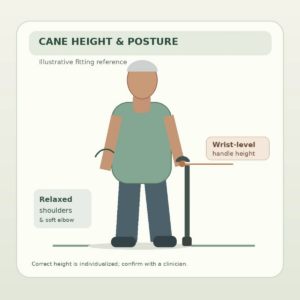
A proper fit is the foundation of learning how to use a walking cane. A cane that is too short may encourage forward leaning, while one that is too tall may cause an awkward arm position or interfere with walking.
The appropriate type of cane also depends on how much support the person needs. A single-point cane may be suitable for mild support, while a quad cane may be considered when additional contact points are helpful.
Confirm the Type of Cane
Single-point canes have one tip contacting the ground. Quad canes have a wider base with multiple tips, although their handling characteristics and suitability vary by model.
A physical therapist can help determine which design provides appropriate support for the user’s abilities.
Check the Handle
The handle should be comfortable to grip without excessive pressure or awkward wrist positioning. Different handle shapes may work better for different hand sizes and dexterity needs.
Check the Cane Height
With the person standing upright in normal walking shoes, the handle should generally align with the crease of the wrist when the arm hangs naturally at the side.
When holding the cane, the elbow should remain slightly bent rather than completely straight or excessively flexed.
Review the Person’s Posture
The cane should support a relatively upright walking posture. It should not require the person to bend forward or lean heavily sideways.
Arrange Individualized Guidance
A qualified professional should confirm the final fit, especially when the person has pain, weakness, balance difficulties, or recent surgical restrictions.
Which Hand Should Hold a Walking Cane?
One of the most common questions about how to use a walking cane is which hand should hold it.
When one leg is weaker or more painful, the usual recommendation is to hold the cane in the hand opposite that leg.
If the Right Leg Is Weaker
The cane is generally held in the left hand.
If the Left Leg Is Weaker
The cane is generally held in the right hand.
Why the Opposite Hand Is Commonly Recommended
Holding the cane opposite the affected leg allows the device to coordinate with the natural movement of the arms and legs. It can help provide support as the weaker leg moves forward.
What If Both Legs Are Weak?
A single walking cane may not provide enough stability when weakness affects both sides. A walker or another mobility aid may be more suitable.
Do Not Change Sides Without Considering the Reason
Certain medical conditions or individual needs may require different guidance. Follow the prescribed technique rather than switching hands simply because one side feels more familiar.
Walking Cane Height and Posture
An important part of learning how to use a walking cane is positioning the body correctly.
A properly adjusted cane should allow comfortable arm movement and a controlled walking pattern.
Stand Upright
Keep the shoulders relaxed and avoid leaning heavily on the cane.
Maintain a Slight Elbow Bend
A small bend in the elbow helps position the arm comfortably while holding the handle.
Keep the Wrist Comfortable
The wrist should not have to bend sharply to reach or grip the handle.
Position the Cane Near the Body
Placing the cane excessively far ahead or out to the side can make the movement less controlled.
Look Forward
Avoid looking down continuously at the cane tip. Instead, maintain awareness of the walking route while keeping an upright posture.
Review the Fit if Discomfort Develops
Hand, wrist, shoulder, or back discomfort may indicate that cane height, handle shape, technique, or the overall mobility plan needs reassessment.
The Basic Walking Cane Sequence
A consistent walking pattern is central to understanding how to use a walking cane effectively.
For someone with one weaker leg, the usual pattern coordinates the cane with that leg and allows the stronger leg to follow.
Step 1: Begin in a Stable Position
Stand in an appropriate position with the cane in the instructed hand. Make sure the cane tip is in contact with a suitable surface and that there is enough space ahead.
Step 2: Move the Cane and Weaker Leg Forward
Advance the cane and weaker leg together by a comfortable distance. Avoid reaching excessively far with either the cane or the foot.
Step 3: Establish Support
The cane tip should contact the ground securely before the person relies on it for the next part of the movement.
Step 4: Move the Stronger Leg Forward
Bring the stronger leg through in a comfortable step while maintaining the instructed balance and walking pattern.
Step 5: Repeat at a Comfortable Pace
Continue the sequence without rushing. The aim is controlled, consistent movement rather than speed.
Common Walking Cane Mistakes
Common problems include holding the cane on the wrong side, placing it too far forward, leaning excessively, and taking steps that are too long for the person’s abilities.
A physical therapist can observe the walking pattern and correct problems that are difficult to identify without feedback.
Using a Walking Cane on Stairs
Stair navigation requires more balance and coordination than walking on a level surface.
Anyone learning how to use a walking cane on stairs should receive appropriate instruction, particularly when recovering from surgery or managing weakness.
Use a Handrail When Available
A secure handrail generally provides additional support. Follow the arrangement recommended by the treating professional.
Going Upstairs
For a person with one stronger and one weaker leg, the commonly taught sequence is to lead with the stronger leg, then bring the weaker leg and cane to the same step.
Going Downstairs
The commonly taught sequence is to move the cane to the lower step, followed by the weaker leg and then the stronger leg.
Remember the General Principle
The stronger leg usually leads when going up, while the weaker leg leads when going down.
Move One Step at a Time
Avoid rushing or attempting multiple stairs in one movement when following a step-by-step pattern.
Know When to Avoid Stairs
If balance, pain, fatigue, or the staircase layout makes the task unsafe, use an appropriate alternative route or assistance plan. A cane does not make every staircase suitable.
Standing and Sitting With a Walking Cane
A walking cane can support walking, but it should not automatically be used as the primary support when rising from or lowering into a chair.
Using a cane incorrectly during a transfer can cause the device to move or tip.
Choose an Appropriate Chair
A stable chair with armrests may provide a more suitable support arrangement for some individuals.
Follow the Recommended Transfer Technique
A clinician can teach the individual how to coordinate the chair, cane, and their own movement.
Avoid Pulling on the Cane
A standard cane is not designed to function as a fixed handrail or rigid support for every transfer.
Keep the Cane Accessible
The cane should remain available when needed without creating a tripping hazard.
Reassess Difficult Transfers
If standing or sitting requires substantial assistance, another seating or transfer solution may be needed.
Walking With a Cane on Thresholds and Uneven Ground
A walking cane that works well on smooth indoor flooring may behave differently on uneven or slippery surfaces.
Knowing how to use a walking cane safely includes recognizing when the environment increases the demands on balance.
Doorway Thresholds
Raised thresholds can interrupt the normal walking rhythm. The user should follow an appropriately instructed technique and avoid rushing.
Rugs and Carpets
Loose rugs and raised carpet edges can create tripping hazards.
Gravel and Loose Ground
Loose surfaces may provide less dependable contact for the cane tip.
Wet Flooring
Moisture can reduce traction and increase the risk of slipping.
Slopes
Inclines and declines place additional demands on balance and cane positioning.
Practice With Appropriate Supervision
A qualified professional can help assess unfamiliar surfaces and determine when a different route or mobility aid is preferable.

Turning and Stopping With a Walking Cane
Walking in a straight line is only one part of safe everyday mobility. Turning, stopping, and changing direction require attention to the cane’s position and the user’s balance.
Avoid Sudden Turns
Quick changes of direction may make it harder to maintain a controlled walking pattern.
Take Small Steps
Smaller steps can help when turning in a confined space.
Maintain Cane Contact
The cane should remain appropriately positioned throughout the movement rather than being placed too far away.
Pause When Needed
A person who feels unsteady should stop in a suitable location and obtain appropriate support.
Practice Real Household Routes
Doorways, hallways, and corners may require different turning patterns. Practice under appropriate supervision when the route presents difficulty.
Walking Cane Tips and Different Surfaces
The tip of a walking cane is a critical component because it contacts the ground.
A worn or unsuitable tip can reduce traction and make an otherwise appropriate cane less reliable.
Rubber Cane Tips
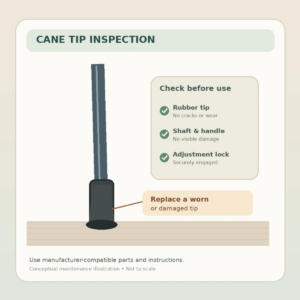
Many walking canes use replaceable rubber tips. Inspect them regularly for wear, cracks, or loss of grip.
Quad Cane Tips
Quad canes typically have multiple ground-contact points. The user must follow the manufacturer’s instructions and maintain appropriate tip contact.
Surface Compatibility
A tip that performs well on smooth indoor flooring may behave differently on wet pavement, grass, or uneven terrain.
Replacement Tips
Use compatible replacement parts for the exact cane model.
Inspect Before Use
Check the tip, handle, shaft, and adjustment mechanism for obvious damage before depending on the cane.
Using a Walking Cane After Surgery or Injury
Recovery instructions may affect whether a walking cane is suitable.
A person who has undergone foot, ankle, knee, or hip surgery may have specific weight-bearing restrictions that require more support than a cane provides.
Follow Medical Restrictions
Do not assume that a cane is appropriate simply because the person can stand briefly.
Consider the Recovery Stage
The recommended mobility aid may change as healing progresses and medical instructions are updated.
Avoid Excessive Weight Through the Cane
A conventional walking cane is not intended to replace every form of lower-limb weight bearing.
Reassess When Symptoms Change
Increasing pain, weakness, dizziness, or instability should prompt medical review.
Ask About Alternatives
Crutches, a walker, or a wheelchair may be more suitable depending on the person’s restrictions and abilities.
A Walking Cane Is Not a Universal Mobility Aid
Learning how to use a walking cane does not mean that a cane is appropriate for every mobility problem.
A standard cane provides relatively limited support compared with some other mobility aids.
Significant Balance Difficulties
A walker may offer more appropriate support for certain individuals.
Weakness in Both Legs
Bilateral weakness can make a single-point cane insufficient.
Substantial Weight-Bearing Restrictions
Some recovery situations require crutches, a walker, or another prescribed device.
Severe Fatigue
If the person becomes too tired to maintain a controlled walking pattern, the mobility plan may need to change.
Repeated Falls
A history of falls or meaningful changes in stability calls for professional assessment rather than relying on the same cane without review.
Caregiver Coaching Without Pulling
Caregivers can play an important role when someone is learning how to use a walking cane.
However, assistance should support the person’s balance and independence rather than involve pulling their arm or cane.
Agree on Clear Instructions
Use simple, consistent verbal cues based on the technique taught by the person’s clinician.
Ask Before Assisting
Respect the individual’s preferences and explain the assistance being offered.
Avoid Pulling the Cane
The cane should not be used as a handle for moving the person.
Observe the Walking Pattern
A caregiver may notice changes in pace, posture, fatigue, or confidence that deserve attention.
Know When to Stop
If the person becomes unsteady or uncomfortable, the activity should be paused and the appropriate support plan followed.
Home Safety While Using a Walking Cane
A walking cane cannot compensate for every hazard in the home.
A cluttered walking route, poor lighting, or slippery flooring can make even a correctly fitted cane difficult to use.
Remove Tripping Hazards
Keep loose cords, clutter, and unsecured rugs away from important walking routes.
Improve Lighting
Adequate lighting helps users identify furniture, thresholds, and surface changes.
Choose Suitable Footwear
Supportive shoes with appropriate traction may help maintain more dependable footing.
Review Furniture Placement
Avoid narrow routes that require awkward turns or repeated sidestepping.
Keep Frequently Used Items Accessible
Arrange essential household items to reduce unnecessary reaching or difficult movements while walking.
Consider a Home Assessment
An occupational therapist may help identify barriers that interfere with mobility.
Outdoor Walking Cane Planning
Outdoor routes introduce additional challenges such as traffic, changing weather, crowds, uneven pavement, and longer walking distances.
Choose Appropriate Routes
Consider the surface conditions and the availability of safe walking areas.
Identify Rest Locations
Plan rest opportunities according to the person’s endurance and mobility needs.
Consider Weather Conditions
Rain, wet pavement, and poor visibility may make certain routes unsuitable.
Avoid Rushing
Crowded areas and road crossings should not pressure a person into moving faster than they can safely manage.
Carry Essentials Without Occupying Both Hands
An appropriate bag or other carrying arrangement may help keep the hands available for necessary mobility support.
Plan the Return Journey
The person should have a realistic way to return safely if fatigue or symptoms worsen.
Walking Cane Use and Fatigue
Fatigue can affect walking rhythm, posture, and concentration.
A walking pattern that feels comfortable at the beginning of a journey may become difficult after prolonged activity.
Recognize Early Fatigue
Slower movement, increased leaning, unusual discomfort, or difficulty controlling the cane may indicate that the activity needs to stop.
Plan Shorter Routes
Choose walking distances appropriate for the person’s current endurance.
Include Rest Opportunities
A suitable rest plan may be more effective than pushing through increasing fatigue.
Review the Time of Day
Some individuals experience meaningful differences in energy or mobility throughout the day.
Reassess the Equipment
When fatigue repeatedly interferes with cane use, a different mobility aid or professional review may be appropriate.
Training Family Members to Support Cane Use
Family members may want to help, but assistance is most useful when everyone understands the same plan.
Review the Professional Instructions
Regular helpers should know the technique recommended for the individual.
Use Consistent Language
Agree on clear terms for starting, stopping, turning, or requesting help.
Respect Independence
Avoid taking control when the individual can safely complete an activity independently.
Identify Unsafe Situations
Helpers should recognize when increased weakness, pain, or poor balance requires stopping.
Update the Plan
A change in the person’s needs may require new instructions rather than relying on an old routine.
Walking Cane Maintenance and Adjustment
A walking cane should be inspected regularly, particularly when it is used every day.
Check the Rubber Tip
Look for worn tread, cracks, looseness, or other deterioration.
Inspect the Shaft
Bent or visibly damaged sections may compromise the cane’s reliability.
Confirm Adjustment Locks
Adjustable canes should have their mechanisms securely engaged according to the manufacturer’s instructions.
Review the Handle
A damaged or unstable handle requires appropriate attention.
Replace Damaged Components
Use compatible parts and discontinue using equipment with unresolved safety problems.
Recheck Cane Height
A change in footwear, posture, or physical ability may make a new fit assessment appropriate.
Reviews and Walking Cane Technique Videos
Online reviews and instructional videos may help someone understand what questions to ask about walking canes.
However, these resources cannot evaluate an individual’s balance, strength, pain, or walking pattern.
Use Videos for General Understanding
Educational demonstrations may explain common cane movements.
Prioritize Qualified Sources
Information from established healthcare organizations and rehabilitation professionals is more useful than unverified personal advice.
Confirm the Exact Technique
The appropriate approach may differ according to the person’s condition.
Avoid Copying Unsafe Demonstrations
An attractive or popular video does not guarantee that its technique is suitable for a particular user.
Request Professional Feedback
A physical therapist can observe gait and adjust instructions according to the individual’s needs.
Reassessment After a Fall or Change
A walking cane that previously worked well may become unsuitable if the person’s abilities change.
After a Fall
A fall may indicate the need for medical review and reassessment of the mobility plan.
New Pain
Persistent or increasing discomfort should not be ignored.
Dizziness or Weakness
New symptoms can affect the person’s ability to use the cane safely.
Changes in Medication or Health
A change in the person’s condition may influence balance or walking ability.
Equipment Damage
A damaged cane should not remain in routine use.
Professional Follow-Up
A qualified clinician can determine whether the existing cane, technique, or level of support remains appropriate.
Final How to Use a Walking Cane Checklist
Before using a walking cane regularly, confirm:
-
The type of cane matches the person’s support needs.
-
Cane height has been appropriately adjusted.
-
The handle provides a comfortable grip.
-
The correct hand position is understood.
-
The walking sequence has been demonstrated.
-
The person can stop and turn appropriately.
-
Stairs and thresholds have been assessed.
-
The cane tip is in suitable condition.
-
The home walking route is clear.
-
Footwear provides appropriate support.
-
Caregivers understand the recommended assistance.
-
The person knows when to stop and seek help.
-
An alternative mobility plan is available if needed.
-
A professional reassessment is arranged when abilities change.
Make the Walking Cane Plan Usable Every Day
Learning how to use a walking cane should translate into a consistent routine rather than a single successful demonstration.
Keep the cane in an accessible place without leaving it where someone could trip over it. Inspect its condition regularly and make sure that frequently used walking routes remain clear.
The individual and any regular caregivers should understand the recommended walking pattern, the appropriate level of assistance, and the situations that require a different mobility plan.
A practical routine also includes knowing when fatigue, pain, weakness, or changes in balance make continued cane use inappropriate.
Reassess Walking Cane Use After a Change
Mobility needs are not always permanent or predictable.
After surgery, rehabilitation, a fall, or a significant change in strength, the person may require a different walking pattern or mobility aid.
Recheck the Cane Fit
Changes in posture or footwear may affect the appropriate cane height.
Review the Walking Pattern
A physical therapist may identify changes in gait that warrant new instruction.
Consider the Environment
Furniture changes, unfamiliar routes, or new flooring may create additional challenges.
Reevaluate Support Needs
A cane may no longer provide sufficient assistance when stability decreases.
Keep the Plan Current
The person and caregivers should understand any updated recommendations.
Compare Walking Cane Options Without Overpromising
Different cane designs offer different features, but no single model is best for everyone.
| Cane type | Main characteristic | What to verify |
|---|---|---|
| Single-point cane | One ground-contact tip | Fit and required level of support |
| Quad cane | Multiple ground-contact points | Stability needs and correct placement |
| Adjustable cane | Height-adjustment mechanism | Secure adjustment and appropriate range |
| Folding cane | Portable construction | Locking system and manufacturer limits |
| Ergonomic-handle cane | Shaped grip | Hand comfort and wrist position |
The correct choice depends on the person’s needs, the intended setting, and professional guidance when appropriate.
Applied Situations for How to Use a Walking Cane
How to Use a Walking Cane When Standing From a Chair
A person preparing to walk needs to transition from sitting to standing. The cane should not automatically replace the stable supports recommended for that transfer.
How to Use a Walking Cane During Level Walking
An older adult walks across an uncluttered living room. Their therapist has taught them to coordinate the cane with the weaker leg and maintain a controlled rhythm.
How to Use a Walking Cane on Stairs
A person approaches a staircase with a secure handrail. They follow their individually taught sequence, taking each step deliberately rather than rushing.
How to Use a Walking Cane at a Doorway Threshold
A small raised threshold interrupts the walking surface. The individual pauses and uses the professionally recommended approach instead of forcing a quick step.
How to Use a Walking Cane on an Outdoor Sidewalk
A route includes cracked pavement and uneven sections. The individual considers a safer path or additional assistance when the surface is unsuitable.
How to Use a Walking Cane When Fatigued
A person becomes tired during an outing. An appropriate rest plan or alternative mobility arrangement may be needed.
How to Use a Walking Cane With Caregiver Assistance
A caregiver notices that the person is taking unusually long steps. They use the agreed instructions and request professional reassessment if the pattern remains difficult.
How to Use a Walking Cane After a Fall
A person experiences a change in confidence or balance after falling. Medical review and a new mobility assessment may be appropriate before normal cane use resumes.
Frequently Asked Questions About How to Use a Walking Cane
Which Hand Should Hold a Walking Cane?
When one leg is weaker or painful, the cane is usually held in the hand opposite that leg. A qualified professional should confirm the appropriate technique.
How High Should a Walking Cane Be?
The handle should generally reach approximately the wrist crease when the person stands upright with the arm relaxed. The elbow should bend slightly when gripping the handle.
How Do You Walk With a Cane Correctly?
The common pattern for one weaker leg is to move the cane and weaker leg forward together, followed by the stronger leg. The specific technique should be confirmed for the individual.
How Do You Use a Walking Cane on Stairs?
The stronger leg generally leads when going upstairs, while the cane and weaker leg lead when going downstairs. Follow individualized instructions and use an appropriate handrail when available.
Can a Walking Cane Help Prevent Falls?
A correctly selected cane may improve stability for certain users, but it cannot eliminate fall risk. Some people require greater support.
Can I Use a Cane After Surgery?
Possibly, depending on the procedure, weight-bearing restrictions, balance, and clinical instructions. Do not assume a cane provides sufficient support after surgery.
Is a Quad Cane Better Than a Regular Cane?
A quad cane offers multiple contact points, but it is not automatically the best option. Suitability depends on the user’s needs and ability to position it correctly.
Should I Look Down While Walking With a Cane?
The person should generally maintain an upright posture and look ahead while remaining aware of obstacles and uneven surfaces.
Can I Use a Walking Cane Outdoors?
Some canes are suitable for certain outdoor environments, but surface conditions, weather, tip design, and individual balance must be considered.
How Often Should I Replace the Cane Tip?
Inspect the tip regularly and replace it when it becomes worn, damaged, or unreliable, following the manufacturer’s instructions.
Can a Walking Cane Replace a Walker?
Not necessarily. A walker may provide more appropriate support for individuals with greater balance or weakness concerns.
Why Does My Wrist Hurt When Using a Cane?
Discomfort may result from unsuitable fit, handle design, technique, or another issue. A qualified professional can review the situation.
Is a Walking Cane Enough for Severe Balance Problems?
Often not. Significant instability may require a different mobility aid and professional assessment.
Walking Cane Practice Plan for the First Week
A gradual practice plan can help a person become familiar with their prescribed walking cane technique.
Begin With Familiar, Level Surfaces
Initial practice should take place in an appropriate environment under the supervision recommended by the treating professional.
Review Starting and Stopping
The person should understand how to begin walking, pause, and maintain a controlled position.
Practice Comfortable Turns
Turning should be assessed before the individual relies on the cane in narrow household spaces.
Add Household Routes Carefully
Doorways and other familiar locations may be introduced according to the person’s abilities and professional instructions.
Recognize Fatigue and Discomfort
Practice should stop when symptoms or instability make continued movement inappropriate.
Review Progress
At the end of the practice period, note which activities feel manageable and which still require instruction, assistance, or another mobility aid.
Conclusion: How to Use a Walking Cane With Confidence
Learning how to use a walking cane correctly begins with choosing an appropriate device and ensuring that it fits the person. Cane height, hand placement, walking technique, posture, and a suitable environment all influence how effectively the cane can provide support.
For people with one weaker or painful leg, the usual technique involves holding the cane on the opposite side and moving it forward with the affected leg. However, stairs, transfers, uneven ground, and changes in mobility require additional attention and sometimes individualized instruction.
The safest approach to how to use a walking cane combines proper fitting, professional guidance when needed, regular equipment inspection, and a realistic plan for situations where a cane is not enough. These steps can help older adults and caregivers make informed decisions about everyday mobility.
Official sources and verification notes
These official and independent sources were consulted for safety, coverage, access, and decision boundaries. They do not endorse a product, seller, provider, brand, price, ranking, or individual outcome. This article keeps that check specific to using a walking stick.
- MedlinePlus — Using a cane — Technique, stairs, hazards, and adjustment.
- Cleveland Clinic — How to use a cane — Sizing, safety, training, and use.
- South Tees NHS — Walking sticks — Walking-stick technique and transfer boundaries.
- NSW Safe Use Guide — Walking stick — Equipment safe-use guidance with professional boundary.
- MedlinePlus — Assistive devices — General assistive-device context.
- CDC — Older adult falls — Fall prevention and reassessment context.