
However, choosing the Best Personal GPS Tracker for Elderly care requires more than comparing prices, device sizes, or advertised real-time tracking capabilities. The most suitable GPS tracker is one that the older adult accepts, consistently carries or wears, and can use comfortably throughout everyday activities.
A personal GPS tracker for seniors may use satellite positioning, cellular networks, Wi-Fi, or Bluetooth technology to provide location information. Each connection method has advantages, limitations, and different service requirements.
This comprehensive guide explains how to choose the Best Personal GPS Tracker for Elderly adults, compare compact GPS tracking devices such as Jiobit, Tracki, and AngelSense, evaluate location accuracy, understand subscription costs, protect privacy, and build a reliable caregiver response plan.
Safety note: The Best Personal GPS Tracker for Elderly users is not automatically a medical alert system, professional emergency monitoring service, or guaranteed location solution. Tracking information may be delayed, approximate, or unavailable because of battery problems, network limitations, device removal, or indoor signal interference. If an older adult is missing, injured, confused, or in immediate danger, contact local emergency services promptly rather than waiting for another GPS location update.
Quick answer: what is the best personal GPS tracker for elderly care?
The Best Personal GPS Tracker for Elderly care depends on the person’s daily routine, mobility, memory, comfort preferences, tracking requirements, and available caregiver support.
There is no single GPS tracking device that works best for every older adult.
For families seeking a compact, connected tracking device with caregiver notifications, Jiobit Smart Tag is one candidate worth investigating.
Jiobit’s published product information describes GPS positioning, cellular communication, Bluetooth, Wi-Fi, trusted-place notifications, location history, and care-team features.
However, Jiobit requires a connected service membership, and the family’s actual coverage and battery requirements should be verified before purchasing.
Tracki Universal is another personal GPS tracker for elderly users worth evaluating.
Tracki’s published materials describe compact tracking hardware, GPS positioning, cellular communication, geofencing, movement notifications, SOS alerts, and access through smartphone or web applications.
Its service requires an active data connection, and its performance can vary according to location, coverage, and tracking settings.
AngelSense is also a relevant candidate when families need tracking features designed around safety routines, caregiver alerts, communication, and location history.
The exact AngelSense device, subscription, service availability, and supported features should be confirmed directly before purchase.
When comparing the Best Personal GPS Tracker for Elderly adults, caregivers should focus on:
- Reliable location sharing.
- Cellular connectivity when independent tracking is necessary.
- Comfortable wearable or portable design.
- Simple charging routines.
- Clear low-battery notifications.
- Safe-area or geofencing alerts.
- Appropriate caregiver access.
- Privacy and consent protections.
- Emergency communication features, when required.
- Affordable long-term operating costs.
The best personal GPS tracking device for seniors is not necessarily the smallest or most expensive option.
It is the device that matches the actual safety purpose, remains available during normal routines, and provides useful information to caregivers who know how to respond.
Best personal GPS tracker for elderly people who dislike watches
A compact GPS tracker may be a suitable alternative for older adults who do not want to wear a smartwatch.
The Best Personal GPS Tracker for Elderly users who dislike wrist devices may include clip-on trackers, pendant-style devices, pocket trackers, or other compact wearable formats.
These devices can sometimes be attached to clothing, belts, compatible accessories, or dedicated carrying pouches.
However, the location of the tracker should be selected carefully.
A device attached to a coat may remain with the coat when the person changes clothes.
A tracker placed inside a handbag may be left behind during an outing.
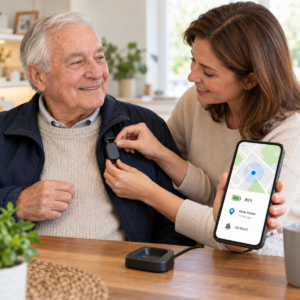
Before choosing a compact elderly GPS tracker, establish a consistent carrying routine and test the attachment during normal activities.
Location sharing should be discussed openly with the wearer, including how the device works and who can access the information.
Best personal GPS tracker for elderly users with dementia or wandering concerns
Families searching for the Best Personal GPS Tracker for Elderly adults with dementia or memory-related wandering concerns should prioritize consistent device use, meaningful alerts, and caregiver response planning.
A personal GPS tracking device may help provide information after an unexpected departure or missed check-in.
However, tracking technology cannot prevent wandering or guarantee that a device remains attached.
The National Institute on Aging recommends a layered approach that may include identification, recent photographs, appropriate home safeguards, and location technology.
Important considerations for dementia-related GPS tracking include:
- Whether the person accepts the tracking device.
- Whether the tracker remains attached during daily routines.
- Whether caregivers receive location notifications.
- Whether the device provides clear timestamps.
- Whether safe-area alerts match familiar routes.
- Whether caregivers can act promptly when necessary.
The Best Personal GPS Tracker for Elderly users experiencing memory changes should support a broader individualized safety plan rather than serve as the only protective measure.
When a personal GPS tracker for the elderly is the wrong category
A personal GPS tracker may not meet every caregiving need.
Families concerned about falls, sudden medical emergencies, medication support, or professional emergency response may require a different service.
The Best Personal GPS Tracker for Elderly users who primarily need location information is not necessarily the best device for someone who needs two-way professional medical monitoring.
A dedicated medical alert system may include help buttons, communication services, and professional response features, depending on the specific plan.
Some GPS trackers include SOS notifications but send them only to designated family members.
Caregivers should verify exactly what happens after an emergency button is pressed.
A personal tracker should be selected for the function it actually performs.
How to choose a personal GPS tracker for elderly routines
Choosing the Best Personal GPS Tracker for Elderly adults begins with understanding the person’s actual daily activities.
Rather than selecting a tracker based on advertised features alone, identify when location information would be useful and how caregivers would respond.
For example, a family may want confirmation that an older parent arrived at a community center.
Another household may need notifications when someone leaves a familiar neighborhood.
These situations require different tracking capabilities.
Define the safety job for the best personal GPS tracker
Before purchasing the Best Personal GPS Tracker for Elderly care, write down the device’s primary purpose.
Examples include:
- Helping locate an older adult after an unexpected departure.
- Confirming arrival at a familiar destination.
- Providing caregiver notifications when someone leaves an agreed safe area.
- Supporting a familiar walking routine.
- Providing an accessible way to request help.
- Supporting communication among authorized caregivers.
A clearly defined purpose makes it easier to compare GPS tracking devices.
Avoid choosing features simply because they are available.
Excessive notifications and unnecessary location history can increase caregiver workload and privacy concerns.
The Best Personal GPS Tracker for Elderly users should provide the information necessary for the agreed safety goal without creating unnecessary complexity.
Map routes before comparing elderly GPS trackers
Before selecting a personal GPS tracker for seniors, identify the locations the older adult regularly visits.
These may include:
- Home and surrounding property.
- Neighborhood walking routes.
- Grocery stores.
- Medical offices.
- Community centers.
- Public transportation stops.
- Parks and familiar destinations.
- Apartment entrances or shared buildings.
Consider indoor environments and areas with weak cellular reception.
A GPS tracker that performs well outdoors may provide less accurate information inside large buildings or underground locations.
Test the device in the environments that matter most.
Match personal GPS tracker attachment to the older adult
The attachment method is an important part of choosing the Best Personal GPS Tracker for Elderly users.
Compact personal trackers may include clips, loops, lanyards, belt attachments, or carrying cases.
Each option has limitations.
A clip may detach during dressing or vehicle transfers.
A lanyard may be uncomfortable or unsuitable because of cord-safety concerns.
A pocket tracker may be forgotten when clothes are changed.
A device attached to a bag may remain with that bag rather than the person.
Before selecting a personal GPS tracker for elderly care, evaluate comfort, clothing, mobility equipment, attachment security, and charging habits.
The tracker should remain available throughout ordinary activities without creating unnecessary discomfort.
Include caregiver availability in the personal tracker decision
Even the Best Personal GPS Tracker for Elderly adults cannot guarantee safety when caregivers are unavailable to respond.
Before activating tracking alerts, identify who receives notifications and what actions they should take.
Assign a primary caregiver and appropriate backup responders.
Important questions include:
- Who receives safe-area notifications?
- Who responds to a missed check-in?
- Who checks low-battery alerts?
- Who maintains the tracking account?
- Who can contact the older adult?
- Who is available during nights and weekends?
A GPS tracker provides information.
A prepared caregiver response plan determines how that information is used.
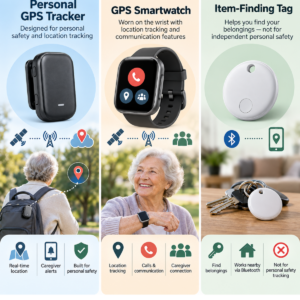
GPS, cellular, Wi-Fi, and Bluetooth in an elderly personal tracker
Understanding the technology behind the Best Personal GPS Tracker for Elderly users helps families compare devices accurately.
Most tracking systems use different technologies for location positioning and communication.
GPS satellites help compatible devices estimate geographic position.
Cellular networks may transmit that information to a remote caregiver.
Wi-Fi and Bluetooth can provide additional connectivity or nearby-device information.
A caregiver application displays the available location and update time.
Problems with any part of this process may interrupt tracking.
Cellular service in the best personal GPS tracker for elderly users
A cellular personal GPS tracker may communicate without requiring the older adult to carry a nearby smartphone.
This independence can be useful when someone regularly forgets their phone.
However, cellular GPS trackers usually require an active service or data plan.
Jiobit’s published support information indicates that its tracking service requires a membership.
Tracki’s published materials also describe an ongoing data connection requirement.
When evaluating the Best Personal GPS Tracker for Elderly users with independent cellular connectivity, confirm:
- Supported cellular networks.
- Coverage in the person’s area.
- Subscription requirements.
- Location update frequency.
- Battery life.
- Service cancellation conditions.
- International availability.
- Caregiver account access.
A cellular connection may fail in areas with limited coverage.
Test the exact tracker during familiar outings before relying on it.
GPS accuracy limits for a personal GPS tracker for the elderly
GPS location information is not always exact.
GPS.gov explains that buildings, bridges, trees, signal reflections, atmospheric conditions, and indoor environments may affect positioning.
The Best Personal GPS Tracker for Elderly adults should provide clear information about when a location was last updated.
Caregivers should review the timestamp rather than assuming every map marker represents the person’s current position.
A GPS tracker may identify a building or nearby street without identifying a particular room or floor.
When information is uncertain, caregivers should use other communication methods and follow the agreed response plan.
Wi-Fi and Bluetooth in a personal GPS tracker for elderly users
Wi-Fi and Bluetooth can support some personal tracking functions.
However, these technologies are not equivalent to independent wide-area cellular GPS tracking.
Bluetooth item tags often depend on nearby compatible devices or participating networks.
They may help locate keys, bags, or other personal belongings.
However, a Bluetooth item tracker is not automatically the Best Personal GPS Tracker for Elderly users who travel independently.
When comparing products, ask whether the device has:
- An independent GPS receiver.
- Cellular communication.
- Smartphone dependence.
- Wi-Fi positioning.
- Bluetooth proximity detection.
- Real-time location capabilities.
- Last-known location information.
Understanding these differences helps families avoid mistaking object-finding technology for personal safety tracking.
Update intervals and location history in elderly GPS tracker apps
The Best Personal GPS Tracker for Elderly care should display location information in a way caregivers can understand.
Tracking services may update locations at scheduled intervals, after movement, following manual refreshes, or during active tracking sessions.
A product advertised as offering real-time tracking may not provide uninterrupted location updates.
Frequent tracking can also increase battery consumption.
Location history may help caregivers understand recent movement patterns.
However, it also creates additional privacy responsibilities.
Choose an update frequency and history setting that matches the agreed safety purpose.
Jiobit Smart Tag as a personal GPS tracker for elderly care
Jiobit Smart Tag is one candidate to evaluate when searching for the Best Personal GPS Tracker for Elderly adults.
Jiobit’s published product information describes compact tracking hardware and location services involving GPS, cellular communication, Wi-Fi, and Bluetooth.
It also describes features such as trusted places, location history, caregiver teams, and attachment options.
Because product specifications and plans may change, families should verify the current model and service details before purchasing.
Where Jiobit fits the best personal GPS tracker shortlist
Jiobit may be worth investigating when an older adult prefers a compact tracking device instead of a smartwatch.
Its small form factor and attachment options may suit certain clothing routines.
Potential features to evaluate include:
- GPS location sharing.
- Cellular connectivity.
- Trusted-place notifications.
- Caregiver access.
- Location history.
- Compact attachment options.
- Charging requirements.
A small personal GPS tracker can be convenient, but its usefulness depends on whether the person consistently carries it.
Before relying on Jiobit for elderly care, test its attachment, coverage, notifications, and charging routine.
Jiobit subscription and connection limits for elderly trackers
Jiobit’s published service information indicates that connected tracking requires a membership.
Therefore, Jiobit should not be treated as a permanently free GPS tracker.
Caregivers comparing the Best Personal GPS Tracker for Elderly users should verify current subscription prices, service regions, cancellation terms, and supported features directly with the provider.
Network coverage may vary by location.
The device may also stop reporting when its battery is depleted or when communication is unavailable.
A connected tracker should be tested on the older adult’s normal routes.
When Jiobit is not the best elderly personal tracker
Jiobit may not be suitable when a family needs features outside the device’s supported service.
For example, some households may require a large watch display, professional medical monitoring, a particular emergency communication function, or verified international coverage.
The Best Personal GPS Tracker for Elderly users should be selected according to the exact required features.
Do not assume that a compact tracker includes professional emergency dispatch or every function offered by a medical alert service.
Tracki Universal as a personal GPS tracker for elderly users
Tracki Universal is another candidate for families researching the Best Personal GPS Tracker for Elderly adults.
Tracki’s published product information describes compact GPS tracking hardware, cellular communication, smartphone and web applications, geofencing, movement notifications, and SOS alert features.
Some Tracki models also offer international connectivity options.
However, capabilities can vary by model and service plan.
Where Tracki fits an elderly GPS tracker buying decision
Tracki may be suitable for investigation when caregivers want a compact GPS tracking device with access through both smartphones and web browsers.
Features to evaluate may include:
- Location tracking.
- Geofence notifications.
- Movement alerts.
- SOS functionality.
- Mobile application access.
- Web-based caregiver access.
- Compact attachment options.
- Cellular communication.
Families considering Tracki as the Best Personal GPS Tracker for Elderly users should evaluate the exact model rather than assuming all devices share the same specifications.
Confirm whether the attachment and application match the older adult’s needs.
Tracki battery, subscription, and GPS limits for an elderly personal GPS tracker
Tracki’s published materials indicate that ongoing cellular tracking requires an active data service.
Battery duration may vary depending on the tracking mode, update frequency, connection strength, and device model.
Frequent location updates can increase power consumption.
GPS signals may also be obstructed inside buildings or under certain roofing materials.
When evaluating Tracki for elderly care, test:
- Battery performance during actual use.
- Charging requirements.
- Tracking update intervals.
- Location accuracy.
- Cellular coverage.
- SOS notification delivery.
- Caregiver access.
Do not assume that promotional battery estimates apply to every tracking configuration.
When Tracki is not the best personal GPS tracker for elderly care
Tracki may not be the ideal solution for someone who needs a very simple interface or professional emergency monitoring.
Compact tracking devices can have small buttons, charging components, or attachment accessories that may be difficult to manage.
International coverage claims should also be checked against the exact destination and service plan.
The Best Personal GPS Tracker for Elderly care should match both the person’s abilities and the caregiver’s response capacity.
AngelSense and brand-specific personal GPS tracker questions
AngelSense is another candidate families may encounter when searching for the Best Personal GPS Tracker for Elderly users.
Its published materials describe GPS tracking services designed around safety routines and caregiver communication.
Features described by the provider may include location monitoring, safety alerts, speakerphone communication, SOS functionality, and search tools.
The exact capabilities depend on the selected device and service.
Where AngelSense may fit an elderly personal tracker comparison
AngelSense may be worth investigating when caregivers prioritize location alerts, communication features, and structured safety routines.
Potential considerations include:
- GPS location tracking.
- Caregiver notifications.
- Location history.
- SOS functionality.
- Two-way communication, when supported.
- Search assistance tools.
- Service availability.
- Attachment options.
Before selecting AngelSense as the Best Personal GPS Tracker for Elderly users, verify its exact subscription, device design, regional support, and caregiver workflow.
A service built around safety routines may be useful, but its suitability should be tested with the actual wearer.
Why the AngelSense GPS tracker for elderly asset remains separate
AngelSense has specific product features, subscription conditions, and service considerations that deserve a dedicated review.
A general guide to the Best Personal GPS Tracker for Elderly users can introduce AngelSense as a comparison candidate without replacing a detailed brand-specific evaluation.
Families should review current manufacturer information and independent evidence before making a purchasing decision.
What to verify before choosing any branded elderly GPS tracker
Before selecting Jiobit, Tracki, AngelSense, or another personal GPS tracker, verify:
- Exact device model.
- Current availability.
- Hardware cost.
- Subscription requirements.
- Cellular compatibility.
- Coverage regions.
- Location update frequency.
- Battery performance.
- Emergency alert capabilities.
- Attachment options.
- Privacy protections.
- Technical support.
- Warranty and cancellation terms.
Manufacturer information provides a useful starting point, but real-world testing remains important.
Compare personal GPS trackers for elderly users by safety job
The Best Personal GPS Tracker for Elderly users should be chosen according to the family’s actual tracking needs rather than a universal brand ranking.
The following comparison identifies candidates and the questions families should investigate.
Product features, availability, and service terms may change.
| Candidate | Best fit to investigate | Published capabilities to verify | Important limitation | Service question |
|---|---|---|---|---|
| Jiobit Smart Tag | Compact connected tracker with caregiver teams and trusted-place features | GPS, cellular, Wi-Fi, Bluetooth, alerts, location history, and attachment options | Membership required; coverage and battery must match the route | What membership, coverage, cancellation, and replacement terms currently apply? |
| Tracki Universal | Compact tracker with app and web access | GPS, cellular connectivity, geofencing, movement alerts, and SOS features | Data plan required; GPS and battery performance vary | Which exact model, service plan, update rate, and coverage region apply? |
| AngelSense GPS tracker | Safety-oriented tracking and caregiver communication | Location tracking, alerts, SOS, communication, and search tools | Service features and regional availability require verification | What subscription, communication features, and support are included? |
| Bluetooth item tag | Finding personal belongings | Nearby-device detection and last-known location | Not equivalent to independent cellular personal GPS tracking | Does the family need object finding or personal location tracking? |
Use the personal GPS tracker table with the older adult
When comparing the Best Personal GPS Tracker for Elderly users, involve the older adult in evaluating comfort and usability whenever possible.
Explain the different device options in accessible language.
Ask where the tracker would be carried or worn.
Discuss who would receive alerts and how information would be used.
A device should not be considered ready for everyday use until the family understands its connection requirements, charging routine, and response process.
Why smaller is not always better in an elderly GPS tracker
Compact devices may be convenient, but smaller hardware is not always easier to use.
A very small personal GPS tracker may have:
- Tiny buttons.
- Limited visual indicators.
- Small charging connectors.
- Difficult attachment clips.
- Reduced battery capacity.
- Limited audio feedback.
A slightly larger tracker may be easier to attach, charge, locate, or operate.
The Best Personal GPS Tracker for Elderly adults should balance size with accessibility and reliability.
Battery, charging, and attachment for a personal GPS tracker for the elderly
Battery life and attachment reliability are essential when selecting the Best Personal GPS Tracker for Elderly care.
Even an accurate tracking device cannot provide useful updates when it is uncharged, disconnected, or left behind.
Battery performance may be affected by location update frequency, weak network signals, voice communication, temperature, and device age.
Build a charging habit for the best personal GPS tracker
Create a predictable charging routine for the selected personal GPS tracker.
Place the charger in a familiar location where the older adult naturally spends time.
Use a large-print reminder or picture card when helpful.
Confirm that the correct charging cable or dock is available.
If the device is removed for bathing, sleeping, or changing clothes, establish a consistent method for returning it.
The Best Personal GPS Tracker for Elderly users is one that can remain charged and available during the activities that matter.
Test clips, lanyards, pockets, and bags on an elderly GPS tracker
Before relying on a personal GPS tracker, test the attachment during normal activities.
Ask the wearer to:
- Walk around the home.
- Sit down and stand up.
- Put on a coat.
- Change clothes.
- Enter a vehicle.
- Fasten a seat belt.
- Use a mobility aid.
- Return the device to its charging station.
Observe whether the tracker detaches, becomes uncomfortable, or is forgotten.
A tracker attached to a walker, scooter, or handbag may report the location of that object instead of the person.
Choose an attachment that matches the actual safety purpose.
Check low-battery and removal alerts on a personal GPS tracker
Some personal GPS trackers provide low-battery or separation notifications.
However, available features vary by model.
When evaluating the Best Personal GPS Tracker for Elderly users, determine whether caregivers receive clear alerts when the battery becomes low or the device stops communicating.
Check whether the application displays:
- Battery level.
- Last successful update.
- Connection status.
- Device removal notifications, if supported.
- Recent tracking activity.
A caregiver should understand the difference between a depleted battery, disconnected network, removed tracker, and stale location.
Privacy and consent in the best personal GPS tracker for elderly care
A personal GPS tracker may reveal sensitive information about the older adult’s home, appointments, routines, destinations, and time away.
Privacy should be considered when choosing the Best Personal GPS Tracker for Elderly users.
The Federal Trade Commission recommends appropriate data minimization, secure access, and meaningful consent for sensitive information.
Review the provider’s privacy policies before activating tracking.
Give personal GPS tracker access to the smallest care team
Location-sharing access should be restricted to authorized caregivers with a legitimate role.
Assign a primary responder and suitable backups.
Avoid sharing live tracking information with large family groups when only a few people need access.
Remove former caregivers when responsibilities change.
Use unique passwords and multi-factor authentication when available.
Explain personal GPS tracker location sharing to the older adult
Before activating the Best Personal GPS Tracker for Elderly care, explain how it works.
Show the wearer what location information appears in the caregiver application.
Discuss whether tracking occurs continuously, at scheduled times, after movement, or during emergencies.
Ask which arrangement feels acceptable.
A transparent tracking agreement may be easier to maintain than a hidden device that the person repeatedly removes.
Review privacy after personal GPS tracker caregiver changes
Privacy settings should be reviewed when caregivers change, devices are replaced, or service conditions are updated.
Check who can view the location, how history is stored, and how information can be deleted.
Remove unnecessary account permissions.
Maintain a secure record of support and account recovery information.
The Best Personal GPS Tracker for Elderly users should provide appropriate privacy protections alongside useful tracking features.
Cost and subscription checks for the best personal GPS tracker
The total cost of the Best Personal GPS Tracker for Elderly care may include hardware, service subscriptions, activation, accessories, replacements, repairs, and support.
Compare long-term ownership costs rather than focusing only on the purchase price.
Prices and promotional offers may change.
Verify current terms directly with the provider before purchasing.
Personal GPS tracker with no monthly fee claims
Some personal trackers are advertised without monthly subscriptions.
However, a no-monthly-fee device may depend on Bluetooth, Wi-Fi, an existing smartphone, or a participating nearby-device network.
These technologies may not provide independent wide-area tracking.
Before purchasing a subscription-free GPS tracker, ask how the device transmits its location when the wearer is far from the caregiver.
A Bluetooth item tag should not automatically be treated as a replacement for a cellular personal GPS tracking service.
Subscription value in an elderly GPS tracker
A recurring tracking subscription may cover cellular connectivity, location history, alerts, cloud infrastructure, technical support, or other services.
However, the exact features depend on the provider.
When choosing the Best Personal GPS Tracker for Elderly users, compare what is included and what stops working if the subscription expires.
The most suitable plan is one that provides the required tracking features at a manageable cost.
Affiliate disclosure and personal GPS tracker verification status
Any commercial recommendation or affiliate promotion should be based on current, verified product information.
The source material identifies this article’s affiliate-link status as pending approval.
Therefore, Jiobit, Tracki, and AngelSense should be treated as research candidates rather than confirmed affiliate recommendations.
Before publication, verify approved affiliate relationships, exact current models, prices, availability, destination URLs, image rights, and any required disclosure language.
Do not present manufacturer links as affiliate links without proper authorization.
Set up and test an elderly personal GPS tracker before use
Selecting the Best Personal GPS Tracker for Elderly adults is only the first step.
The device should be configured, tested, and understood before it becomes part of a regular safety routine.
A successful setup should confirm that the wearer accepts the tracker, the communication service works, caregivers receive notifications, and the response plan is practical.
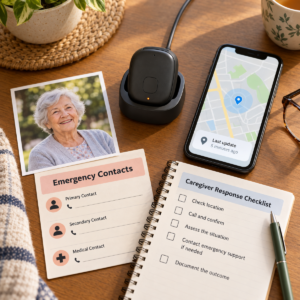
Configure the best personal GPS tracker account
When configuring a personal GPS tracker, record the important device and service information.
This may include:
- Device model.
- Identification number.
- Tracking account details.
- Service subscription.
- Support contact.
- Authorized caregivers.
- Charging requirements.
- Safe-area settings.
- Emergency response contacts.
Use a secure password and enable appropriate authentication features.
Configure meaningful notifications without overwhelming caregivers with unnecessary alerts.
Test personal GPS tracker location in the older adult’s actual places
The Best Personal GPS Tracker for Elderly users should be tested during familiar activities.
Evaluate performance:
- Around the home.
- During planned outdoor walks.
- Inside commonly visited buildings.
- In vehicles.
- Near tall buildings.
- At familiar destinations.
Review timestamps, battery status, location estimates, and caregiver notifications.
Test emergency features only according to manufacturer instructions.
Do not create a dangerous missing-person scenario.
Practice the caregiver response to an elderly GPS alert
A GPS tracking notification becomes useful only when caregivers know what to do next.
Establish a response plan that includes:
- Checking the last location update.
- Reviewing battery and connection status.
- Contacting the wearer.
- Checking the expected destination.
- Coordinating with a backup caregiver.
- Reviewing likely routes and recent photographs.
- Contacting local emergency services when danger is possible.
Caregivers should understand the difference between a stale location, low-battery alert, geofence notification, and SOS signal.
Maintain a personal GPS tracker for elderly routines
Regular maintenance is essential for the Best Personal GPS Tracker for Elderly care.
A tracking device may stop working because of battery problems, software updates, account changes, broken attachments, or service interruptions.
A practical maintenance routine helps identify problems before they affect location sharing.
Weekly elderly GPS tracker readiness check
Use this checklist to maintain a personal GPS tracker:
- Confirm the tracker is attached or carried in the agreed location.
- Check battery level and charger condition.
- Verify the latest successful location update.
- Inspect clips, buttons, case, and charging contacts.
- Confirm the application receives notifications.
- Ask whether the wearer remains comfortable.
- Check that authorized caregivers can access tracking information.
A weekly check may help identify routine problems before an urgent situation occurs.
Monthly account and response review for personal GPS tracking
A monthly review of the Best Personal GPS Tracker for Elderly setup should include caregiver permissions, safe-area settings, subscription status, privacy controls, current photographs, and emergency response contacts.
Review alert history and determine whether notification settings remain appropriate.
Conduct a planned, low-risk alert test.
Remove unnecessary caregiver access.
Update the response plan when routines or responsibilities change.
When to pause or replace an elderly personal GPS tracker
A personal GPS tracker should be reconsidered when it becomes unreliable, uncomfortable, unsupported, or unsuitable for the older adult’s changing needs.
Possible reasons include:
- Repeated location failures.
- Unreliable battery performance.
- Damaged attachments.
- Unavailable cellular service.
- Account access problems.
- Uncomfortable or rejected devices.
- Changes in mobility.
- Privacy concerns.
- Inadequate caregiver response arrangements.
Use an appropriate backup communication plan while evaluating a replacement.
The Best Personal GPS Tracker for Elderly users should remain practical and dependable as care needs change.
Frequently asked questions about the best personal GPS tracker for elderly users
What is the best personal GPS tracker for elderly people who dislike watches?
The Best Personal GPS Tracker for Elderly adults who dislike watches may be a compact clip-on, pendant, or pocket-style device.
Jiobit, Tracki, and AngelSense are candidates worth investigating according to the specific safety purpose.
Compare attachment options, battery life, cellular coverage, subscription costs, caregiver alerts, and privacy.
Choose a device the wearer accepts and can use consistently.
Can a personal GPS tracker for the elderly work without a phone?
Yes, some cellular personal GPS trackers can transmit location information without requiring a nearby smartphone.
However, they typically require an active service plan and suitable network coverage.
Bluetooth item tags and Wi-Fi-dependent devices may not provide the same independent tracking capability.
Verify the exact model and test phone-free operation before relying on it.
Is a personal GPS tracker for elderly people better than a GPS watch?
Neither option is universally better.
A compact personal tracker may be easier to attach to clothing and may not require the wearer to operate a screen.
A GPS smartwatch may provide familiar wrist placement, visible controls, and communication features.
The Best Personal GPS Tracker for Elderly users depends on comfort, accessibility, tracking needs, battery life, and caregiver support.
Can a personal GPS tracker prevent wandering?
No.
A personal GPS tracker cannot physically prevent someone from leaving a location.
Some devices may provide location information or safe-area alerts that help caregivers respond.
However, tracking may fail when the device is removed, forgotten, uncharged, or disconnected.
Combine GPS tracking with identification, recent photographs, appropriate home safeguards, and a caregiver response plan.
Is there a personal GPS tracker for elderly users with no monthly fee?
Some tracking options do not require separate monthly tracker subscriptions.
However, they may depend on Bluetooth, Wi-Fi, an existing smartphone, or nearby compatible devices.
Independent wide-area cellular tracking usually involves ongoing communication costs.
Before choosing a no-fee device, verify which features remain available without a subscription.
How often should an elderly GPS tracker be charged?
Charging frequency depends on the exact model, battery capacity, tracking settings, connection strength, and usage.
Frequent location updates and voice communication may reduce battery life.
Follow manufacturer instructions and test performance during normal routines.
Establish a predictable charging schedule and check low-battery notifications.
Does a personal GPS tracker include emergency dispatch?
Not automatically.
Some personal GPS trackers include SOS alerts or communication features, but these do not necessarily provide professional emergency monitoring.
A device may send a notification only to authorized caregivers.
Confirm the exact response service before treating any personal GPS tracker as a medical alert system.
What should a caregiver do when a personal tracker shows a stale location?
When a personal GPS tracker displays an outdated location, check the timestamp, battery status, connection, and expected route.
Attempt to contact the older adult.
Coordinate with the authorized backup caregiver.
If the person is missing or immediate danger is possible, contact local emergency services promptly.
Explain that the displayed map marker may represent a last-known or uncertain location rather than the person’s current position.
Official sources for personal GPS tracker safety and product claims
The sources below support the product and safety statements in this guide. They do not constitute endorsements, rankings, medical advice, or affiliate approval.
Jiobit personal GPS tracker product and membership information
Jiobit product information was checked for GPS, cellular, Wi-Fi, Bluetooth, care teams, trusted places, alerts, attachments, and subscription requirements. Life360’s Jiobit membership page was checked for current membership structure; prices and terms should be rechecked before publication.
Tracki personal GPS tracker product and app information
Tracki’s current product page was checked for device types, 4G LTE, app tracking, geofences, alerts, and data-plan requirements. Tracki’s guide was checked for GPS limitations in buildings and update or battery-mode explanations.
AngelSense personal GPS tracker information
AngelSense’s small GPS tracker page was checked for its stated audience, monitoring, alerts, SOS, speakerphone, and search features. Detailed brand review remains assigned to SAF-GP-002.
NIA, GPS.gov, FDA, and FTC personal GPS tracker safety boundaries
NIA wandering guidance supports combining GPS with identification, photos, local awareness, and home safeguards. GPS.gov supports environmental GPS limitations. FDA’s home-device checklist supports setup, maintenance, caregiver training, and backup planning. FTC privacy guidance supports minimization, limited access, security, notice, and consent questions.
Final best personal GPS tracker for elderly buying checklist
Before buying, confirm the safety job, wearer consent, attachment, coverage, cellular plan, update interval, battery, low-battery alert, safe-area settings, caregiver access, privacy terms, cancellation, replacement, and emergency limits. Test the device in the actual places where the older adult walks, travels, waits, and may need help.
The best personal GPS tracker for elderly care is the one that fits the complete human system around it. Choose the simplest device that supports the agreed safety job, keep a backup plan, and treat every map point as useful information with limits—not as a guarantee that the person is safe.