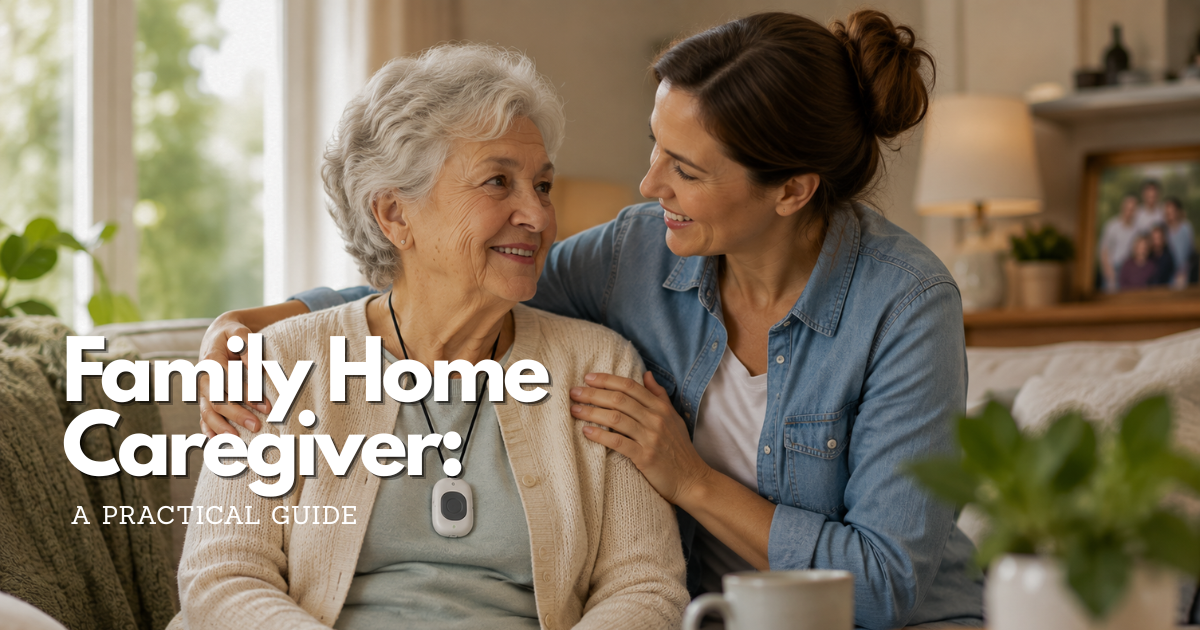
A family home caregiver helps an older adult or another loved one stay safe and supported at home, but the role works best when the family agrees on the plan, the limits, and the backup before a crisis makes every decision harder.
Quick answer: what a family home caregiver does and needs
A family home caregiver is usually a relative, partner, friend, or other unpaid person who helps someone manage daily life at home. That help can include meals, transportation, appointments, routines, paperwork, communication, and emotional support. It may also include hands-on assistance when the caregiver has the right training, the person agrees, and the task can be done safely. The job is not to take over another adult’s life or to silently absorb every need. It is to create a reliable support system around the person’s own goals.
The most useful starting point is a short written agreement: what the person wants help with, what they want to continue doing independently, who handles which tasks, when professionals must be involved, and who steps in if the usual caregiver cannot. A plan does not need to be legalistic to be useful. It needs to be clear enough that someone else can follow it on a difficult day.
| Planning area | What to agree on now | What can go wrong without clarity | When to revisit it |
|---|---|---|---|
| Daily support | Which routines need help, how much help is welcome, and what independence matters most. | Well-meant help can become frustrating, inconsistent, or unsafe. | After a change in mobility, memory, schedule, or living situation. |
| Health coordination | Who may attend appointments, keep notes, and receive information with permission. | Important instructions may be missed or shared without consent. | After each major appointment, hospitalization, or medication change. |
| Emergency response | Who to call, where the information is kept, and which decisions require immediate professional help. | Family members may search for basics while time and attention are limited. | At least every few months and after any address or contact change. |
| Caregiver capacity | Time limits, work conflicts, physical limits, relief options, and a backup person. | Burnout or a single unexpected absence can collapse the routine. | Whenever care expands or the caregiver feels strained. |
Family caregiving often changes gradually. A weekly grocery trip can become daily check-ins, then appointment coordination, then more personal help. Naming that change early gives the person receiving care a voice and gives the caregiver permission to ask for help before the arrangement becomes fragile.
Family home caregiver role: begin with consent, goals, and boundaries
Start by asking the person how they describe the situation. They may say they want “a little help,” while a relative sees risks that feel urgent. Both views matter. The goal is not to win an argument about independence; it is to understand what independence means to that person and what support makes it more sustainable. A person may value choosing their own clothes, attending a faith community, managing a familiar recipe, or keeping private conversations private. Those preferences should shape the plan.
Family caregiver support should be person-led whenever possible
Choose a calm time rather than a rushed moment after a fall, a missed bill, or a hospital visit. Ask open questions: What parts of the day feel harder? What help would make life easier without feeling intrusive? What are you worried family members misunderstand? What do you want to keep deciding yourself? Write down the answers in plain language. If the person has difficulty communicating or making certain decisions, involve the appropriate clinician and any legally authorized decision-maker, while still including the person as much as possible.
Person-led care also means being specific about dignity. A relative might be comfortable picking up groceries but not discussing toileting. Another may welcome a reminder before medication but dislike being watched while taking it. Consent is not a one-time signature; it is an ongoing conversation about what help is useful, what information may be shared, and what needs to change.
Set a family home caregiver scope before the task list grows
A practical scope separates recurring support from occasional favors. For example, one family member may be the appointment note-taker, another may arrange rides, and the main caregiver may visit on set days. Include limits as plainly as duties: no lifting without training or another person present; no handling finances without documented authority; no medical procedure that has not been taught by a qualified professional; no promise to be available around the clock.
These limits protect both people. They lower the risk that a caregiver attempts a transfer that could injure either person, guesses about a medication, or becomes the default responder for every family disagreement. They also make it easier to identify where a clinician, home health service, community program, or another relative is needed.
Choose a backup decision path, not just a backup name
A backup is more than “call my sister.” The backup needs the essential information, knows how to enter the home if appropriate, understands the person’s preferences, and has permission to communicate with the right people. Decide what situations trigger a call to the backup, what situations call for the clinician’s office, and what situations call for emergency services. If family members disagree, keep the focus on the person’s stated preferences, safety facts, and the authority that applies to health or financial decisions.

Family home caregiver care plan: keep the right information current
A care plan is a working reference, not a binder assembled once and forgotten. CDC guidance for caregivers recommends keeping core details such as health conditions, medicines and doses, clinician contacts, insurance details, and emergency contacts together, then updating the plan when health or medicines change. The point is not to collect every document a household owns. It is to make the information needed for ordinary coordination and an unexpected problem easy to find.
Build a home care record around real decisions
Use a secure paper folder, a protected digital file, or both. Make a one-page quick reference first: preferred name, date of birth, address, primary clinician, pharmacy, allergies or serious reactions if known, current medication list, emergency contacts, and communication needs. Keep more detailed records separately. If the person uses hearing aids, a walker, oxygen, glucose monitoring, or another support, note the practical details that a temporary helper would need to know, such as where it is stored and who to call if it is not working.
For each regular task, record the purpose, usual timing, and the person responsible. “Medication” is too vague. “Set out the labeled morning pill organizer at 8 a.m.; the person takes the medicine independently; call the pharmacy, not another relative, for refill questions” is more useful. The wording should reflect the actual arrangement and should never instruct someone to alter a prescribed treatment without a clinician or pharmacist.
Use appointment notes to prevent gaps between visits
Before an appointment, ask the person what they want covered. Bring a short list of changes, questions, and any observations that matter: appetite, sleep, pain, dizziness, falls, confusion, side effects, or difficulty completing a task. During the visit, write down the next steps, who will do them, and when to call. At the end, ask the clinician to clarify instructions that seem unclear. A caregiver should not assume that a vague note means a new medical order.
Afterward, share only what the person has agreed can be shared. A brief family update can prevent repeated calls and conflicting advice, but it should not turn private health details into a group discussion. Use a consistent format: what changed, what the next step is, who owns it, and when it will be checked again.
Review medicines and care instructions after every change
Medication errors are more likely when an old list, a new prescription, a hospital discharge paper, and a pill organizer do not match. Bring every current prescription, over-the-counter product, supplement, and updated list to the pharmacist or clinician when a change is made. Ask what has started, stopped, changed, or needs special timing. Do not rely on memory or on a bottle left from an earlier plan. If the person needs help with a medical task or a transfer, ask the care team to teach and observe the caregiver rather than treating an online explanation as training.
Protect privacy while making information available in an emergency
Choose access carefully. A lockbox, password manager, shared folder, or sealed envelope can be useful only if the right people know it exists and the person has agreed to the arrangement. Avoid leaving Social Security numbers, full account credentials, or detailed diagnoses in an unlocked car or by the front door. A smaller emergency sheet can list contacts, key conditions, medications, and advance-directive location without exposing every private record.
Family caregiver tasks at home: organize support without taking over
Family caregiving can involve many small actions that keep a household functioning. The safest approach is to separate tasks by risk and by who is best positioned to do them. A caregiver may coordinate a ride or simplify a grocery list with little risk. A transfer, wound-care task, medication administration, or sudden change in symptoms may require training, a clinician’s direction, or professional support. When in doubt, pause and ask the care team what is appropriate.
Daily living support can preserve routines and choice
Help with meals, laundry, errands, dressing, bathing, or household routines should match the person’s current ability, not the caregiver’s preferred speed. Break a task into smaller steps, place frequently used items within reach, allow extra time, and offer choices. A caregiver can prepare ingredients while the person cooks a familiar part of the meal, or lay out clothing while the person chooses what to wear. This approach supports participation without forcing independence where it is no longer safe.
Notice patterns without turning every visit into an inspection. A pile of unopened mail, a change in food intake, repeated missed appointments, new trouble with stairs, or a noticeable shift in mood can be useful information to discuss respectfully. One observation does not prove a diagnosis. It is a reason to ask a question, document a concern, and contact an appropriate professional if the pattern continues or is urgent.
Medication support needs a clear, clinician-informed boundary
Some people only need a reminder, a refill request, or help opening packaging. Others need a more structured plan. The family should agree on what the caregiver is doing and what the person is still doing independently. Use original labeled containers, a current medication list, and instructions from the pharmacist or prescriber. Never improvise doses, share medicines, or make a medication change because a family member thinks it “worked last time.” Questions about missed doses, side effects, interactions, or a change in how a medicine is taken belong with a pharmacist or clinician.
Mobility support should put safety ahead of speed
Before assisting with walking, getting in or out of bed, or using stairs, look at the environment and the person’s current ability. Clear cords and loose rugs, improve lighting, keep a phone within reach, and make sure mobility equipment is used as instructed. Do not try to catch a falling person in a way that risks injury to both of you. If transfers or walking feel unsafe, ask a clinician, physical therapist, occupational therapist, or other qualified professional for a demonstration and plan. A family home caregiver does not have to solve a physical challenge alone to prove commitment.
Divide household coordination so one person is not the whole system
Coordination is real work. Appointments, bills, food, refill requests, transportation, home repairs, and check-ins can consume more time than hands-on care. A shared task list can prevent duplicate work and reveal gaps. Assign an owner and a due date to each task instead of writing “someone should.” Keep the list focused on current needs. A large family group chat often creates more noise than help unless there is a clear rule for urgent updates, routine updates, and decisions.
Family caregiver records can make everyday follow-through easier
A short activity record is useful when it answers a real question: Was the pharmacy called? Did the person make it to the appointment? Has the plumber been scheduled? Keep it factual, dated, and limited to what the caregiver needs to coordinate. Avoid writing judgments such as “uncooperative” or copying private health details into a broad family message. The record belongs to the care routine, not to a running argument about who does more.
For money-related tasks, document the task rather than taking on authority you do not have. “Picked up groceries with the person’s approved list” is different from managing an account. If the person asks for help with bills, benefits forms, or legal documents, clarify the permission and safeguards needed before acting. Consider having another trusted person review significant transactions or paperwork when appropriate. Clear records can reduce misunderstandings, but they do not replace legal authority or professional advice.
Family home caregiver safety boundaries: know when to bring in help
The right boundary is often the difference between sustainable caregiving and an avoidable injury or crisis. A caregiver should be able to say, “I can help arrange this, but I cannot safely do that task,” without guilt. Boundaries are not abandonment. They are a way to make sure support is delivered by the person or service best equipped to provide it.
Use an urgent-versus-routine decision rule
Make a simple decision guide in advance. A life-threatening emergency requires emergency services. A new but non-life-threatening concern may require the clinician’s office, an on-call service, or urgent care based on the care team’s instructions. A routine question can wait for a scheduled call or pharmacy consultation. The family does not need to diagnose the issue to act responsibly; it needs to recognize when the situation is outside the agreed plan.
Write the person’s specific escalation instructions where the caregiver can find them. Some conditions have personalized thresholds or action plans. Follow those instructions rather than a generic online checklist. After an urgent event, update the home plan so the same information is available next time.
Ask for training before a family caregiver performs a clinical task
Care teams may teach a caregiver how to support a treatment plan, but the task, the person’s condition, and local rules matter. Ask who is allowed to teach the task, what warning signs matter, what supplies are needed, and when the caregiver must stop and call for help. Request written instructions and a chance to demonstrate the task back if appropriate. Medicare notes that caregiver training services may be covered under Part B in certain circumstances when a provider determines they are appropriate for the patient’s treatment plan; coverage and cost-sharing depend on the individual situation.
Make the home safer one daily route at a time
Start with the paths used most: bed to bathroom, bedroom to kitchen, front door to car, and favorite chair to phone. Look for poor lighting, clutter, loose rugs, unstable furniture, pet items, slippery surfaces, and hard-to-reach necessities. Then ask the person which change feels acceptable. The best environmental change is one that is actually used. If there have been falls, a sudden decline in mobility, or uncertainty about equipment, involve the clinician and ask whether a professional home safety assessment is appropriate.

Family caregiver communication with clinicians and relatives
Good communication reduces the chance that the person receiving care must repeat the same story, relatives make conflicting promises, or a caregiver becomes the sole keeper of information. It also protects privacy. The person decides, when able, who may participate in appointments and what may be shared. Health care organizations have their own privacy procedures, so ask what authorization is needed instead of assuming that a family relationship provides access.
Prepare questions for each health care conversation
Use a short written agenda. Begin with the change that most affects daily life, then list medication questions, safety concerns, and practical barriers to following the plan. Ask the clinician to use plain language and confirm the next step. Useful questions include: What should we watch for? Who do we call after hours? What part of this plan can the person do independently? What training does the caregiver need? Is there a written instruction or referral we should expect?
A family member can take notes, but the person receiving care should remain the center of the conversation whenever possible. If the person wants private time with the clinician, respect it. If the caregiver notices something important, agree on a way to share it before or after the visit rather than interrupting the person’s account.
Use a respectful family update system
Decide which updates are necessary and who receives them. A weekly summary may cover appointments, immediate needs, and volunteer tasks. An urgent update may be limited to a small group. Avoid forwarding clinical messages, test results, or financial documents more widely than the person has authorized. If relatives are far away, a shared calendar and a simple task list can be more helpful than frequent unstructured messages.
When conflict appears, return to observable facts and the person’s goals. “Dad said he wants to keep cooking breakfast, and the occupational therapist suggested a seated setup” moves the discussion forward more than “you never help.” If a decision is emotionally loaded, schedule a conversation instead of debating in a hallway or over text. Document the final agreement and the next review date.
Keep legal and financial roles separate from ordinary caregiving
Helping with a ride or meals does not automatically authorize a relative to access bank accounts, sign forms, receive protected health information, or make medical decisions. The person’s legal documents and state law determine those roles. If paperwork is unclear, consult an appropriate attorney, benefits counselor, or trusted local resource. Do not use a shared password, a family assumption, or an urgent feeling as a substitute for authority.
Family home caregiver respite and self-care are part of the plan
Caregiving can be meaningful and still be exhausting. CDC identifies family and friends who provide unpaid care as caregivers and emphasizes that regular breaks matter. Respite can look different from household to household: another relative covers an afternoon, a friend sits with the person, an adult day service provides structured time, or a short-term service creates a longer break. The form matters less than whether the caregiver can reliably step away without the entire plan failing.
Notice caregiver strain before it becomes a safety problem
Warning signs can include persistent sleep problems, irritability, dread before visits, missed work, chronic pain from assisting, isolation, frequent errors, or a feeling that there is no one to call. These are not proof of weakness. They are signals that the plan needs more support. Tell a clinician about strain that affects the person’s care, and seek your own health support if stress, anxiety, depression, or physical symptoms are interfering with daily life.
Build respite into the family home caregiver calendar
Do not wait for a caregiver to be sick or angry before arranging relief. Put recurring breaks on the calendar and list what the relief person needs to know. Start with a short handoff: arrival and departure time, food or activity preferences, emergency contacts, mobility precautions, and any time-sensitive instructions. A backup person should have a chance to practice the routine before being asked to handle it during a crisis.
The National Family Caregiver Support Program funds states and territories to support family and informal caregivers through services that may include information, access assistance, counseling or training, respite, and limited supplemental services. Availability and eligibility are local, so use that program as a starting point for local help rather than an assumption that every service is available. A separate guide can help you explore that program in detail.
Protect work, relationships, and health with explicit limits
State what you can provide. If you can visit on Tuesdays and Thursdays, say so. If a workday cannot be interrupted except for a true emergency, say that too. Families sometimes interpret one person’s reliability as unlimited capacity. A visible schedule makes limits concrete and gives others a chance to contribute. Keep at least one personal appointment, rest period, or social connection that is treated as a real commitment, not the first item to cancel.
Use a family caregiver check-in to resolve small problems early
A brief weekly check-in can prevent resentment from building in silence. It should cover what changed, what is coming up, which task has no owner, and whether the person receiving care wants the arrangement adjusted. Keep the tone practical. A check-in is not a performance review of the older adult or an invitation for distant relatives to criticize the person doing the daily work. It is a chance to redistribute a task, confirm an appointment, or admit that the current plan is no longer realistic.
If no other family members are available, the check-in can still happen between the caregiver and the person receiving care. Ask whether help is arriving at a useful time, whether instructions feel respectful, and whether a simple task has become harder. Then decide one next step. Repeatedly postponing a hard conversation usually makes the eventual change more abrupt.
Family home caregiver help at home: understand service and coverage boundaries
Families often use “home care” to mean any help delivered in a house, but services differ. Household support, personal care, skilled clinical care, therapy, and caregiver training are not interchangeable. Knowing the distinction helps a family ask for the right assessment and avoid assuming that an insurance program pays for a type or amount of help it does not cover.
Home health services are not the same as full-time family support
Medicare says that eligible home health coverage can include certain part-time or intermittent skilled services, therapies, medical social services, patient and caregiver education, and limited home health aide care when other qualifying skilled services are also being received. It does not generally pay for 24-hour home care, meal delivery, or custodial or personal care when that is the only need. Eligibility and care plans are individual, so verify current details directly with Medicare, the health plan, and the clinician rather than planning around a general summary.
This distinction does not diminish family care. It clarifies the gap the family may still need to organize: companionship, meals, transportation, supervision, household tasks, or help between professional visits. A care manager, social worker, Area Agency on Aging, or clinician may help identify local options, depending on the situation.
Caregiver training can be worth asking about
When a loved one’s treatment plan requires a family member to learn a skill, ask the provider whether caregiver training is appropriate and how it will be delivered. Medicare describes a Part B caregiver-training benefit under certain conditions, with the provider determining whether training fits the patient’s treatment plan. Ask what is covered, what the caregiver will pay, and whether the training addresses the exact task that feels difficult. Do not assume a family caregiver is trained simply because they have been present at appointments.
Keep Medicaid questions in a separate, verified conversation
Some families search for payment or benefits for a family caregiver. Medicaid programs are state-specific, and eligibility, self-directed options, enrollment, assessment, and payment rules can change. This guide does not determine whether a person qualifies or whether a relative can be paid. Gather the person’s state, current coverage, care needs, and legal authority, then use the state Medicaid agency or qualified benefits help for a current answer. For the specific topic, see the planned Medicaid for family caregiver resource once its final URL has been verified.
Family home caregiver technology and privacy: use tools only with permission
A shared calendar, medication reminder, video call, smart speaker, location feature, or home sensor can make coordination easier. It can also feel intrusive or expose private information. Technology should support a stated need, not quietly become surveillance because relatives are worried. Discuss what information the tool collects, who can see it, what happens if it fails, and how the person can say no.
Choose a simple coordination tool before adding more alerts
Start with one practical problem. If appointments are being missed, a shared calendar with only the necessary people may help. If several relatives do errands, a task list may be enough. If the concern is an emergency, the family needs an emergency plan first; an app or device is only one possible component. Avoid creating multiple accounts, alerts, and passwords that the main caregiver must manage without a clear benefit.
Respect privacy in a family caregiver digital routine
Do not share logins by text, leave video connections open without permission, or add relatives to health portals simply because they are family. Use the privacy settings available, limit access to those who need it, and remove access when roles change. Explain the plan in ordinary language: “Your daughter can see appointments, but not your messages with the clinician,” or “The camera is only used at the front door and is not inside your bedroom.” Consent should be revisited if the person’s ability or the technology changes.
Plan for technology failure instead of relying on it alone
Internet outages, dead batteries, forgotten passwords, and confusing alerts happen. Keep a paper backup of essential contacts and instructions. Test any communication setup with the person who will actually use it. If an alert tool is part of the routine, decide who responds, how soon, and what happens if that person is unavailable. No consumer technology replaces calling emergency services for a life-threatening emergency or contacting a clinician for a concerning change.
Family caregiver communication tools need a clear owner
Every shared tool needs a named person who updates it and a simple rule for everyone else. A calendar is unreliable when four people assume someone else entered the appointment. A reminder list becomes stressful when old tasks stay visible for weeks. Decide whether the main caregiver, the person receiving care, or a designated relative is responsible for changes, then use a date and initials for important updates. If the person wants to keep control of a calendar or phone, support that choice by making the system easier rather than automatically moving it to someone else’s account.
Use the least complicated method that works. A paper calendar on the refrigerator can be more dependable than an app for a household that does not routinely use smartphones. A single call tree can be more useful than a large messaging platform when an urgent update is needed. The question is not whether the tool is modern; it is whether the person and backup caregiver can use it accurately on an ordinary, tired, or stressful day.
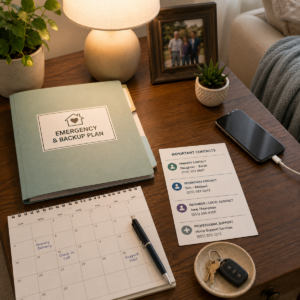
Family home caregiver backup plan for illness, travel, or an emergency
A caregiving plan is incomplete if it works only when one person is healthy, nearby, and available. Backups are not pessimistic. They are how the family protects the person receiving care and the caregiver at the same time. A good backup plan can be used for a work trip, a weather disruption, an illness, a family emergency, or simply a needed day off.
Make a relief handoff that another person can actually use
Create a one-page handoff for the backup caregiver: date and time of coverage, routine priorities, meal preferences or restrictions as directed, mobility precautions, medication boundary, emergency contacts, entry instructions if authorized, and what needs a call. Keep it factual and short. The backup does not need every family history detail to provide a few hours of safe support. For an extended absence, add appointment dates, transportation plans, and a way to reach the main caregiver without assuming they can respond immediately.
Rehearse the family caregiver emergency plan on an ordinary day
Walk through the plan when nobody is in distress. Can the backup find the contact list? Does the person know who will arrive? Is the medication list current? Is the front entry accessible? Does everyone know who is authorized to make a decision? A short rehearsal often reveals a missing phone number, an outdated key arrangement, or an assumption that two people were each handling the same task.
Reset the plan after a hospital stay or major health change
After discharge, do not return automatically to the old routine. Review the written instructions, medication list, follow-up appointments, activity limits, equipment needs, and signs that require a call. Ask the care team what the family caregiver is expected to do and what should be handled by a professional. If the new plan is more than the family can safely provide, raise that concern before leaving the facility or as soon as it becomes clear. A revised plan may require home health evaluation, training, additional relatives, community support, or a different arrangement.
Family home caregiver travel planning needs a written handoff
Travel can expose every hidden dependency in a care routine. Before the main caregiver leaves, identify who will cover each day, who will make decisions if the caregiver cannot be reached, and how the person can contact someone without navigating a complicated app. Confirm transportation for appointments, refills for the period away, food arrangements, and the backup’s access to the approved records. Do this far enough ahead that a gap can be solved with support rather than pressure.
When the caregiver returns, take ten minutes to compare notes. Did the substitute run into a missing instruction, an inaccessible item, or a task that took longer than expected? Update the plan while the information is fresh. That small debrief turns a one-time absence into a stronger system for the next disruption.
Family home caregiver monthly checklist for a steady routine
Use this checklist as a conversation starter, not as a test the family can fail. The goal is to catch a small problem before it becomes an urgent one. Choose a regular date, invite the person receiving care to participate, and record only the updates that matter.
| Check | Question for the family home caregiver | Action if the answer is no or unclear |
|---|---|---|
| Preferences | Does the plan still reflect what the person wants help with and what they want to do themselves? | Schedule a calm conversation and update the written scope. |
| Contacts | Are clinician, pharmacy, emergency, and backup contacts current? | Confirm numbers and remove outdated contacts. |
| Care instructions | Do the medication list and current instructions match the latest clinician or pharmacist guidance? | Reconcile the list with the care team; do not guess. |
| Home routes | Are the frequently used paths well lit, clear, and workable for current mobility? | Fix simple hazards and ask for professional advice when needed. |
| Backup | Could another approved person cover the next planned absence? | Update the handoff sheet and arrange a practice visit. |
| Caregiver capacity | Has the caregiver had predictable rest, medical care, and time away? | Plan relief and discuss added support before strain worsens. |
Also check the relationship, not just the logistics. Ask the person receiving care whether the help still feels respectful. Ask the caregiver what part of the routine feels hardest. Ask other relatives what task they can own, not merely whether they are “available to help.” A small redistribution of work can make the entire plan more durable.
When a checklist identifies a problem, make the next action small and assignable. Replace a burned-out bulb this week. Ask the pharmacist to reconcile the medication list. Schedule a training conversation. Confirm who covers a planned appointment. Big changes are sometimes needed, but a plan becomes usable through concrete follow-through. Keep old versions of major care instructions long enough to understand what changed, then dispose of sensitive paper records securely when they are no longer needed.
Frequently asked questions about family home caregivers
What is a family home caregiver?
A family home caregiver is generally a relative, partner, friend, or other unpaid person who helps a loved one live at home. Support may include daily routines, transportation, appointments, communication, household coordination, and emotional support. The exact role should be agreed with the person receiving care and adjusted when needs change.
Can a family member provide care at home without being a nurse?
Yes, family members often provide non-clinical support at home. They should not assume they can perform clinical tasks safely without instruction, authorization, and task-specific training. For transfers, wound care, injections, medication changes, or a new health concern, ask the clinician or qualified professional what is appropriate.
How does a family home caregiver make a care plan?
Start with the person’s goals, current routines, health contacts, medications, emergency contacts, and the tasks each person can safely do. Add privacy preferences, a backup plan, and a review date. Keep the first version simple, then update it after appointments, hospital stays, medication changes, or meaningful changes in function.
Does Medicare pay a family home caregiver?
Medicare coverage is not a general payment for a relative to provide ongoing home care. It may cover certain eligible home health services and, in certain situations, caregiver training when it fits a patient’s treatment plan. Coverage depends on eligibility, the ordered service, and the individual plan. Verify current details directly with Medicare and the provider rather than relying on a general guide.
How can a family caregiver get respite?
Begin by listing the exact hours and tasks that need coverage, then ask relatives, local aging services, community organizations, the care team, or caregiver-support programs about options. Respite can be a few hours of help, adult day services, in-home support, or another arrangement. The National Family Caregiver Support Program may help connect eligible caregivers with local supports, but availability varies by area.
What should a family home caregiver do after a hospital stay?
Review the discharge instructions, current medicines, follow-up visits, activity limits, and who to call with questions. Ask for clarification and training before taking on a new task. If the planned support is unsafe or more than the family can provide, tell the discharge team or clinician promptly so the plan can be reassessed.
How often should a family home caregiver update the plan?
Review it at regular intervals and whenever health, medication, mobility, living arrangements, caregiver availability, or emergency contacts change. CDC specifically advises updating the plan at least yearly and more often when the person’s health status or medicines change. A brief monthly check of contacts and practical routines can make the annual review easier.
Official sources for family caregiver planning
- CDC: Caregiving guidance — used for the care-plan elements, review timing, and privacy-centered planning.
- CDC: Caring for yourself as a caregiver — used for caregiver breaks and respite context.
- Medicare: Home health services — used for the limits and eligibility framing of home health coverage.
- Medicare: Caregiver training services — used for the conditional caregiver-training coverage discussion.
- Administration for Community Living: National Family Caregiver Support Program — used for the high-level description of caregiver support and respite services.
1 comentario en «Family Home Caregiver: A Practical Guide»