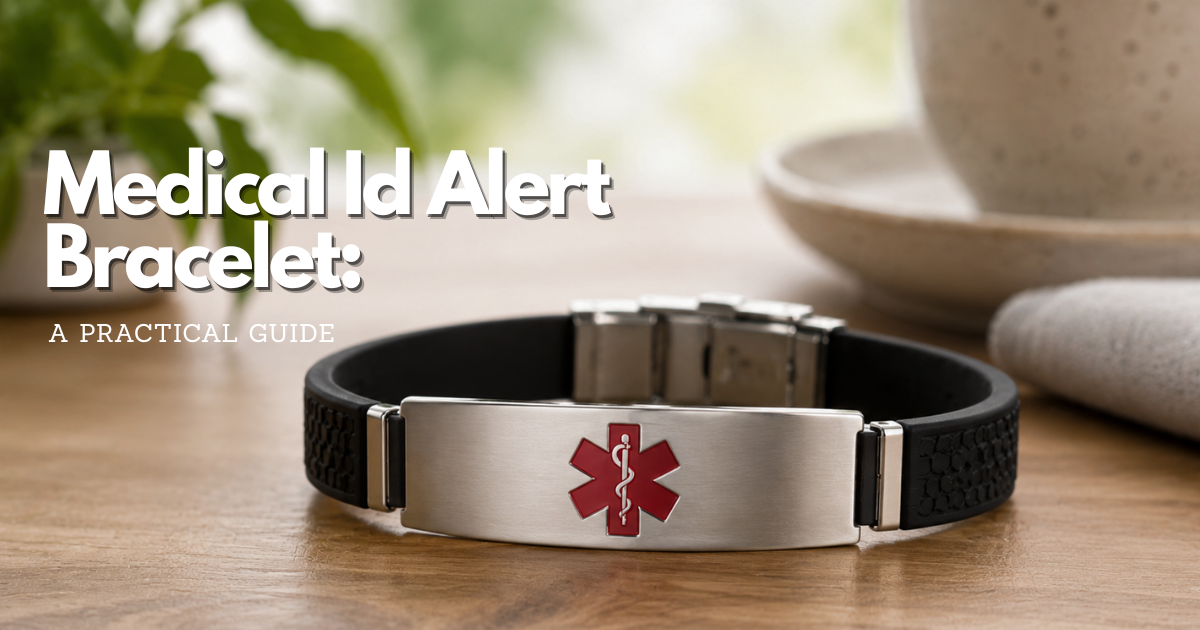
A medical id alert bracelet gives emergency responders a quick clue about health needs when its wearer cannot speak for themselves. The useful bracelet is readable, accurate, comfortable enough to wear, and limited to information a responder can act on—not a tiny substitute for a complete medical record.
Quick answer: what should a medical id alert bracelet say?
A medical id alert bracelet should identify a critical condition, allergy, medicine-related risk, implanted device, or communication need that could change emergency care, plus an emergency contact when space and the person’s preferences allow. The exact wording should be confirmed with the wearer’s clinician when it involves diagnoses, medicines, or treatment instructions. MedlinePlus identifies diabetes, seizure disorders, and heart disease as examples of conditions for which a medical alert bracelet or necklace can help emergency workers identify a need. The bracelet is an information cue, not a diagnosis, consent form, or instruction to delay calling 911.
Start with one decision: “What fact would be dangerous or important if I could not explain it?” That may be a severe allergy, an anticoagulant, diabetes, a seizure condition, a communication limitation, or a need for a particular device. Avoid turning the engraving into a medical biography. If a responder cannot read the text quickly, or if it has not been updated after a health change, the bracelet can create confusion rather than clarity.
| Information category | Why it may matter | Verification step |
|---|---|---|
| Critical condition | May affect assessment or treatment | Use clinician-approved wording |
| Severe allergy | Can influence medicines or materials used in care | Confirm current allergy description |
| High-risk medicine or device | Can signal an important care consideration | Confirm exact name or accepted abbreviation |
| Emergency contact | Helps identify a person to call | Get consent and recheck the number |
| Digital record reference | May offer additional details | Test access and keep a readable physical cue |
Know what a medical ID alert bracelet can and cannot do
A medical ID alert bracelet is passive identification. It does not send an alarm, track location, call contacts, detect a fall, or automatically notify a clinician. An emergency response bracelet is a different tool with a button and service connection. Keeping these roles separate prevents a dangerous assumption that engraved information will summon help. A person who needs a way to call for assistance may need a personal emergency response system as an additional layer.
A medical ID can speak when the wearer cannot
During an emergency, an identification tag can help someone recognize that there may be relevant health information or a contact to consult. The CDC says wearing a medical ID can help when a person cannot speak for themselves, and the NIA advises older adults with a serious allergy or medical need to discuss an medical ID alert bracelet or necklace with a doctor. That is the realistic benefit: it makes an important fact easier to notice. It does not guarantee that every responder will find, read, interpret, or be able to use every detail.
An ID does not replace emergency care or a health record
Call 911 for an immediate emergency whenever possible. Keep a fuller medication list, clinician contacts, insurance information, and advance-care documents in a separate, secure location that trusted people can find. An engraved bracelet has limited space and may be read in difficult conditions. It should point to the most urgent information, while an emergency folder, wallet card, or approved digital record supplies fuller context.
Wearable identification is only one safety layer
For an older adult who lives alone, the NIA also discusses a reachable phone, regular contact with others, home-safety measures, and emergency response systems. A medical ID can support those layers without replacing them. Repeated falls, new confusion, fainting, missed medicines, or difficulty with daily activities deserve clinical or social-service attention; no bracelet can resolve the underlying problem.
Decide who may benefit from a medical id alert bracelet
Need is based on health and daily circumstances, not age or a product trend. A clinician may suggest identification for a serious allergy, diabetes, a seizure condition, heart disease, a medication that changes emergency decisions, or another individual need. The wearer’s values matter too: some people want a visible prompt; others prefer a discreet design, a necklace, a wallet card, or a digital medical ID. The best choice is one that reliably carries correct information while respecting privacy and dignity.
Discuss health wording with the clinician who knows the risk
Do not crowdsource medical wording from reviews or copy an engraving from a stranger. Ask the prescribing clinician, pharmacist, or care team which information is essential, how it should be abbreviated, and whether a medical ID is appropriate. This is especially important for medication names, allergy severity, implanted devices, and instructions that could be misunderstood. A professional can also tell the person when new symptoms or a past event needs assessment rather than an accessory.
Include the wearer in the decision
A capable adult should decide what information to disclose and who may be called. Family concern does not justify secretly adding tracking, private diagnoses, or a caregiver’s contact to a bracelet. Use a plain conversation: What worries you in an emergency? What information would you want shared? Do you want a bracelet, necklace, card, phone Medical ID, or more than one format? Review the choice after changes in health, relationships, or living arrangements.
Consider identification for wandering with a broader plan
The NIA notes that an ID bracelet with a name, address, and phone number can be one safeguard when someone with Alzheimer’s disease may wander, and that GPS may be an addition or alternative. That does not make a bracelet a complete wandering-prevention plan. Safety planning should include professional guidance, home routines, consent where possible, a current photograph, and clear steps for a missing-person emergency. Avoid publishing unnecessary diagnosis details on the outside of the bracelet.
Choose a bracelet for medical ID use by readability and wearability
Style is legitimate: a person is more likely to wear an item they accept. But confirm function before finish. Read the engraving at arm’s length in ordinary indoor light. Check whether the medical symbol or alert marker is recognizable, whether text will remain legible with daily wear, and whether a responder could find it under a sleeve. Avoid tiny, decorative lettering that is difficult to read quickly.
Test the clasp, size, and skin comfort
Try the bracelet with usual clothing, a watch, a walker, and any compression garments. Arthritis, tremor, swelling, fragile skin, or sensory sensitivity may make a clasp impractical. A bracelet that slides off or causes irritation is not a reliable identifier. Ask how the band is adjusted and cleaned. Stop wearing an item that causes skin injury and seek medical advice for persistent irritation or signs of infection.
Choose physical engraving before assuming a QR code solves space
A QR code may point to additional details, but it requires a usable code, a compatible phone, an accessible service, and current information. This asset does not evaluate QR products; that is covered by the dedicated QR medical ID guides. If a code is used, keep the most urgent cue visible on the bracelet, test the code after setup and after updates, and avoid relying on it as the sole way to communicate a life-critical fact.
Use a necklace or card when a bracelet will not be worn
A bracelet is not mandatory. Some people remove wrist items for work, bathing, arthritis discomfort, religious reasons, or sensory preferences. A necklace, wallet card, phone Medical ID, or more than one format can be more realistic. The choice should be based on consistent use and easy recognition, not on a claim that one style is universally best.
Write medical ID alert bracelet information in the right order
Space is limited, so prioritize facts likely to matter first. Use clear terms, standard abbreviations only when a clinician says they are appropriate, and enough spacing to prevent one fact from running into another. A helpful order is: major condition or risk, critical allergy or medicine issue, key device or treatment information if relevant, then an emergency contact or service reference. The exact order changes with the individual. Do not add treatment wishes, dosing changes, or instructions you do not fully understand.
Keep the message concise and actionable
“Severe allergy” without a named allergen may be too vague; a long list of every past diagnosis may be too crowded. A clinician can help decide which facts are most likely to affect urgent care. Make sure contact numbers are complete and current. If the engraving uses a familiar abbreviation, confirm that it is unambiguous to the intended audience. When in doubt, use fewer words and maintain a fuller record elsewhere.
Do not engrave highly sensitive identifiers
A bracelet can be seen by strangers. Avoid Social Security numbers, insurance numbers, account passwords, full financial information, detailed address-access instructions, or a complete medical history. Consider the tradeoff between identification and privacy before including a home address. For someone at risk of wandering, discuss the right format and amount of information with a professional and the person whenever possible.
Check spelling, numbers, and changes before ordering
Read the draft aloud with the wearer and a trusted second person. Confirm allergy spelling, medication names, phone numbers, and the order of information. Then recheck after a diagnosis, medication change, new device, emergency-contact change, move, or hospital discharge. An out-of-date bracelet can be worse than no bracelet because it can send a responder toward incorrect information.
Protect privacy while making medical ID information available
Safety and privacy note: A medical ID bracelet is not a medical record, emergency button, fall-prevention tool, or substitute for calling 911. Confirm health wording with a clinician, obtain the wearer’s consent before sharing information, and use only the minimum personal detail that is useful in an emergency.
Privacy is a design choice. A visible bracelet may reveal a condition to people who see it, while a code or digital service can shift the risk to an online account. Read a service’s privacy terms before entering health or contact data. Ask who can access the record, what information is public on the bracelet, how a code is disabled if lost, how long data is retained, and how former caregivers are removed. HIPAA does not automatically apply to every consumer service that handles health-related information.
Set a consent-based contact plan
Ask each emergency contact before engraving their number. Explain why they may be contacted and what they should do: provide information, meet responders, or simply confirm the wearer’s identity. Review contact permissions when a relationship changes. A contact should never be surprised to learn that their number is worn publicly by someone they cannot help.
Use a medical ID bracelet in everyday and emergency situations
Wear the bracelet consistently enough that it can do its limited job. Many people put it on with a watch, hearing aids, or glasses as part of a morning routine. Others need a reminder near medication supplies or by the front door. The most attractive engraving is not useful if the bracelet sits in a drawer. At the same time, do not force an item that causes distress or skin injury. Find an alternative format that the person is willing and able to use.
At home, keep the bracelet connected to accessible information
A bracelet may be the first clue, but a home should also have a practical way to locate fuller information. Agree on a single place for an emergency sheet and tell trusted contacts where it is. Include current medications, clinicians, preferred pharmacy, insurance information, and documents the person wants available. Review who has access. The goal is to prevent a rushed search during an emergency, without posting private records where visitors can read them.
Outside the home, combine identification with direct communication
When the wearer can speak, they should tell responders about urgent needs directly. The bracelet supports that conversation; it does not replace it. For travel, bring medications in their labeled containers when appropriate, keep a paper list in a bag or wallet, and maintain a charged phone if one is used. A bracelet is especially helpful if a person becomes confused, unconscious, or separated from belongings, but its wording must remain readable and current to add value.
In a hospital or clinic, mention the bracelet rather than assuming it was noticed
Health professionals gather information in multiple ways and may not see a wrist item immediately. The wearer or caregiver should mention relevant conditions, allergies, medications, and devices during check-in and review them again when care changes. If the bracelet conflicts with the current record, ask for clarification rather than silently keeping both versions. A mismatch may signal that the bracelet, emergency sheet, phone record, or medication list needs updating.
Avoid common medical ID bracelet mistakes
Most errors are preventable: too much text, a condition no longer relevant, a phone number that changed years ago, a decorative style that hides the alert cue, or a QR code that nobody tested. Build a simple quality check into the ordering and update process. The wearer, a trusted person, and a clinician when needed can each catch a different kind of error.
Do not use vague or self-invented emergency language
Terms like “medical problems” or “special needs” do not tell a responder what matters. Conversely, instructions such as “do not treat” or a complicated medication plan may be incomplete, out of context, or legally unsuitable for engraving. Use plain, verified wording. If the individual has advance directives or treatment preferences, keep those documents where the care team and trusted decision-makers can access them; do not assume a short bracelet statement replaces them.
Do not allow an outdated ID to remain in circulation
When information changes, remove or replace the bracelet promptly. This matters after a medication is stopped, an allergy is corrected, an emergency contact changes, a device is removed, or a diagnosis is updated. Put the old bracelet away rather than passing it along as a keepsake that could be worn by mistake. If a digital account is involved, update or close it as well and confirm that a lost bracelet no longer links to information you do not want exposed.
Do not let family members decide alone when the wearer can participate
Family members may know the medical history well, yet the bracelet belongs to the person wearing it. Involve them in choosing the visible information, form, and contacts. This is particularly important when conditions are sensitive, relationships are complicated, or a person values privacy. If decision-making ability is changing, use the person’s known preferences and seek appropriate professional and legal guidance rather than treating a bracelet purchase as permission to disclose everything.
Create an emergency information system around the bracelet
Think in layers. The bracelet holds a small, visible signal. A wallet card or emergency sheet carries a more complete list. A phone Medical ID can provide another layer if the person uses one. A trusted contact and clinician fill in what documents cannot. Each layer should agree with the others. This approach also avoids placing too much personal information in any one place.
Make the paper record easy to scan
Use large type and a clear date. Place the person’s name, primary condition or need, allergies, current medicines, emergency contacts, clinicians, and preferred hospital or pharmacy in a consistent order. Ask the clinician whether any medical device, communication need, or treatment consideration belongs there. Keep the list factual and update it after appointments. A concise current sheet is better than a large binder that no one can navigate quickly.
Practice the plan with trusted people
A family member, neighbor, or caregiver should know that an ID bracelet exists and understand its limited role. Practice locating the emergency sheet, finding the phone Medical ID if used, and calling for help. Do not rehearse by creating a false emergency. Instead, use a calm conversation and a checklist. Practice is also a privacy review: it reveals who has more access than they need and who lacks the information they agreed to provide.
Maintain the medical id alert bracelet and backup records
Put a twice-yearly review on the calendar and add an immediate review after any relevant health or contact change. Inspect the clasp, plate, and engraving; clean the bracelet according to its material instructions; and test any digital reference without assuming a first responder will scan it. Update the emergency folder, wallet card, and phone Medical ID at the same time so the information does not conflict.
Use a practical update checklist
Check conditions and allergies, medicines that need emergency notice, implant or device information, contact names and numbers, clinician guidance, legibility, fit, and privacy settings. Ask the wearer whether they still want the bracelet and whether they are actually wearing it. If the answer is no, identify the barrier and consider another format rather than leaving outdated information on the wrist.
Prepare for travel and evacuation
Keep the bracelet on during travel if the wearer is comfortable, but also carry an up-to-date medication list and contact information. CDC emergency-preparedness material encourages people to keep health information with them and to consider a phone Medical ID. During an evacuation or unfamiliar setting, the bracelet can be one quick cue while a paper or digital record supplies details. Do not depend on internet access, a phone battery, or a QR code alone.
Make medical ID bracelet updates part of care transitions
Hospital discharge, rehabilitation, a new specialist, a medication change, or a move are moments when information often becomes inconsistent. Before leaving a care setting, compare the bracelet with the current medication list and ask whether any new diagnosis, allergy, device, or instruction changes what should be displayed. Do not engrave a temporary symptom or an unconfirmed diagnosis. If staff gives a new list that differs from prior records, ask the prescribing clinician or pharmacist to help resolve the difference.
Review the bracelet after a fall or emergency visit
An emergency can reveal what information was missing, unclear, or no longer accurate. After the person is safe, ask whether responders saw the bracelet, whether a contact number worked, and whether the emergency sheet was available. Avoid assigning blame if the bracelet was not worn; find out whether discomfort, worry about stigma, an awkward clasp, or a change in routine made it difficult. Use what you learn to simplify the plan.
Recheck information when caregivers change
A new caregiver may not know where emergency records are kept or may not have permission to access the information. Update contact lists deliberately, remove access for former helpers when appropriate, and explain the plan to the people who remain. The wearer should control these decisions as much as possible. This protects privacy while ensuring that an emergency contact is genuinely available and prepared to help.
Use a final quality check before ordering or replacing an ID
Read every character aloud. Confirm the wearer’s name if included, all health terms, punctuation, phone numbers, and the emergency contact’s consent. Check the manufacturer’s character limit, but do not solve limited space by using unreadable abbreviations. Look at a proof at the approximate size of the finished engraving. Then make a plan for the old item: remove it from use, update any linked digital record, and place the new review date on the calendar.
Frequently asked questions about medical id alert bracelets
What is a medical id alert bracelet?
It is a wearable identifier that displays or references important medical and contact information. Unlike an emergency-button bracelet, it does not itself summon help.
What should I put on a medical id bracelet?
Include only urgent, clinician-confirmed information that could affect emergency care, plus a current contact when appropriate. Keep fuller records elsewhere.
Can a medical ID bracelet have a QR code?
Yes, some products offer one, but it should not be the only visible cue for urgent information. Test it and use the dedicated QR medical ID guidance before relying on it.
Does a medical ID bracelet call emergency services?
No. An engraved ID does not call anyone. A separate emergency response device may have a button and service connection.
How often should a medical bracelet ID be updated?
Review it at least twice yearly and immediately after a relevant health, medicine, device, address, or emergency-contact change.
Final medical id alert bracelet readiness check
Before wearing a bracelet as part of an emergency plan, confirm that its most important text is correct, readable, clinician-informed, and acceptable to the wearer. Check that every contact agreed, that a fuller record exists elsewhere, and that no one mistakes the bracelet for an alarm button. A small, current, well-worn ID is a practical layer of preparedness; it is most useful when it is connected to a respectful, rehearsed broader plan.
Ask one last practical question: if a stranger found this person unable to communicate, would the bracelet direct attention to the most important fact without exposing unnecessary private detail? If the answer is uncertain, revise the wording, contact plan, or backup record before ordering. Revisit this question whenever health needs or the person’s preferences change.
The review should also cover the physical item. Can the person open and close the clasp, does the bracelet stay visible enough to be noticed, and has the engraving become scratched or hard to read? Is the bracelet worn when the person leaves home, travels, or sleeps if that is part of the agreed plan? A small adjustment—changing the band length, moving to a necklace, replacing a worn plate, or using a wallet card as a companion—may make the information much more dependable.
Finally, keep the bracelet’s role clear for everyone involved. It identifies information; it does not make medical decisions, transmit a full chart, or guarantee that help will arrive. Pair it with a phone, a written emergency plan, appropriate check-ins, and professional follow-up when health or safety needs change. That combination gives the small piece of identification its best chance to be useful.
Store the order confirmation and a readable copy of the final engraving with the emergency records. This creates a simple reference when a bracelet is lost, damaged, or needs replacement. At the next review, compare the reference with the bracelet itself rather than relying on memory. If the person’s condition or preferences have changed, ask the appropriate clinician to confirm the new wording before creating another ID.
Official sources and verification
- MedlinePlus: Medical alert bracelet — examples of conditions where identification may help.
- National Institute on Aging: Aging in Place — discussing ID jewelry with a clinician and distinguishing alert systems.
- National Institute on Aging: Tips for Living Alone With Early-Stage Dementia — ID and emergency-planning context.
- CDC: Diabetes Care During Emergencies — ID use when a person cannot speak.
- MedlinePlus: Recognizing medical emergencies — emergency-response and identification context.
6 comentarios en «Medical Id Alert Bracelet: A Practical Guide»