
Mens incontinence pads can help manage small to moderate urine leaks during everyday life, but the safest choice also considers the pattern of leakage, skin comfort, mobility, changing routine, and when a new bladder symptom needs medical attention.
Quick answer: how mens incontinence pads fit into a daily routine
Mens incontinence pads are disposable absorbent products designed to be worn inside close-fitting underwear to manage urine leakage. They are a containment tool, not a diagnosis or treatment. A useful starting choice matches the amount and timing of leakage, stays in place during movement, keeps urine away from the skin as much as possible, and can be changed before it becomes saturated or uncomfortable.
For an older adult, the decision is not only about absorbency. A pad needs to be practical to position, remove, dispose of, and replace with the person’s usual dexterity, vision, balance, clothing, bathroom access, and caregiver support. It also needs to leave room for a medical conversation when leakage is new, worsening, painful, paired with difficulty urinating, or accompanied by blood in the urine.
| Question | Why it matters | Practical next step |
|---|---|---|
| When does leakage happen? | Drips after urinating, sudden urgency, coughing, overnight wetness, and continuous leakage can call for different planning. | Keep a brief private record of timing, triggers, fluid intake, and changes. |
| How much urine reaches the pad? | A product that is too light may leak; one that is far more absorbent than needed may be bulky or hard to manage. | Start with the least complex option that handles the observed amount, then reassess comfort and protection. |
| Can the user change it safely? | Mobility, hand strength, vision, and bathroom layout affect whether a routine will work outside the home. | Practice a daytime change with clean supplies available. |
| Are there new urinary symptoms? | Leakage can be related to a bladder, prostate, medication, infection, or other health issue. | Contact a health professional instead of treating a new symptom only as a product problem. |
Mens incontinence pads manage leakage but do not explain its cause
Urinary incontinence means urine leaks accidentally. The National Institute of Diabetes and Digestive and Kidney Diseases explains that bladder-control problems can have more than one cause, and that prostate problems can be part of the picture for men. A pad may make a day more manageable while the person and clinician work out why leakage is happening.
Mens incontinence pads are not a substitute for evaluating new symptoms
It is common to feel embarrassed about urine leakage, particularly if it begins after a change in health or treatment. Embarrassment should not delay care. NIDDK advises people to see a health professional for bladder symptoms such as loss of bladder control, trouble urinating, waking to urinate, pelvic pain, or leaking urine. The clinician can review history, medicines, urine symptoms, mobility, and other factors rather than assuming that age alone explains the change.
Mens incontinence pads may be useful during evaluation or treatment
A temporary or ongoing pad routine can reduce disruption while a person is waiting for an appointment, trying a clinician-recommended plan, recovering from treatment, or learning which daily triggers make leakage worse. It should be framed as one part of self-care: change promptly, protect skin, keep spare supplies accessible, and report changes that do not fit the person’s usual pattern.
Mens incontinence pads should not hide urgent urinary warning signs
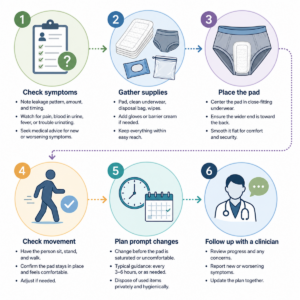
Seek prompt medical advice if the person cannot pass urine or empty the bladder, sees blood in urine, has painful urination or symptoms that may suggest an infection, or develops a sudden substantial change in bladder control. NIDDK identifies these as symptoms that can signal a serious problem. A caregiver should know the person’s usual pattern so that “more pads than usual” does not become the only record of a meaningful change.
Choose mens incontinence pads by leakage pattern and daily activity
“Men’s” on a package does not answer every fit question. The useful comparison is between the person’s leakage pattern and the product’s role in a routine. Avoid treating marketing terms as medical measurements. A trial is successful when the product stays positioned, handles the usual leakage without repeated leaks, feels tolerable, and can be changed safely.
Mens incontinence pads for post-void drips and small leaks
Some people mainly notice a small amount of urine after using the toilet or when standing, walking, or dressing afterward. A lower-profile pad may be easier to wear under ordinary clothing when it remains dry enough between changes. The person still needs a plan for checking the product rather than waiting until dampness reaches the skin or clothing.
Mens incontinence pads for urgency-related leakage
Urgency leakage may occur when the need to urinate feels sudden and the toilet cannot be reached in time. The pad should not become the only response. Record whether urgency is new, whether the person has been limiting fluids, and whether the path to the bathroom, clothing fasteners, night lighting, or mobility aid are adding delay. A safer routine combines containment with a reachable toilet plan.
Mens incontinence pads during walking, transfers, or outings
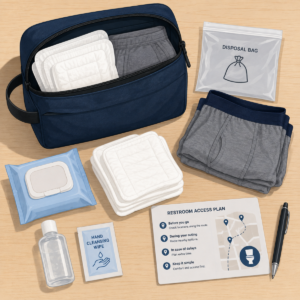
Movement changes how a pad sits. Test it while the person stands, sits, walks, gets in and out of a car, and uses their usual mobility aid. A product that seems fine while seated may shift during a transfer. Carry a small change kit with clean pads, wipes suitable for the person’s skin, a disposal bag, and an extra pair of underwear if that would reduce stress during an outing.
Mens incontinence pads for overnight use need a separate plan
Nighttime leakage can involve a longer wear period, more difficult bathroom access, and a greater risk that a person will sleep through dampness. Do not assume the daytime routine will work overnight. Review bed protection, a clear path to the bathroom, safe lighting, a reachable call method if needed, and whether the person can change independently after waking.

Mens incontinence pads need correct placement and supportive underwear
Even an appropriate absorbency level can fail if the product is positioned poorly or held loosely. Read the product’s directions because shapes, adhesive strips, and intended placement differ. The aim is to keep the absorbent area where urine is likely to reach it and to prevent bunching, gaps, or a loose edge that can rub the skin.
Mens incontinence pads work best with close-fitting underwear
Supportive underwear helps hold a pad close to the body. Loose underwear, fabric that has stretched out, or a waistband that slips during transfers can allow the product to fold or move. Comfort matters too: underwear should not be so tight that it causes pressure, discomfort, or makes a bathroom change difficult. If the person needs help dressing, practice the full sequence at a calm time.
Mens incontinence pads should be placed before closing clothing
Position the product while the underwear is accessible, smooth it without compressing it into a narrow strip, and check that it follows the instructions for front-to-back coverage. Then pull underwear into its normal position and take a few steps. A quick movement check can reveal a fold or a loose adhesive edge before the person leaves the bathroom.
Mens incontinence pads should be changed before saturation
There is no universal schedule because fluid intake, leakage amount, heat, physical activity, and health conditions vary. Check at planned points in the day and after an episode of leakage. Change a wet product promptly. Waiting for a pad to feel completely full increases the chance of leakage, odor, skin irritation, and a difficult cleanup.
Mens incontinence pads are single-use supplies
Do not dry, rinse, or reuse a disposable pad. Dispose of it in a waste container according to local household rules; do not flush it. Keep unused supplies clean and dry. If the person has reduced hand strength or memory changes, use a simple storage arrangement that makes clean supplies and disposal bags easy to recognize.
Skin care around mens incontinence pads prevents avoidable discomfort
Urine against the skin, friction, heat, and delayed changing can make skin sore. Good skin care is not an extra step after a leak; it is part of the product routine. The person or caregiver should watch for redness, tenderness, broken skin, rash, unusual odor, or pain and ask a clinician for advice when skin problems persist or worsen.
Mens incontinence pads should be changed after wetness, not only on a clock
A planned schedule can be helpful, but the product should also be changed whenever it is wet or soiled. Gentle cleaning and careful drying reduce friction from repeated rubbing. Avoid assuming that stronger fragrance means better hygiene; perfumed products can be uncomfortable for some people. A clinician, continence nurse, or pharmacist can help when the skin is fragile or the person has a history of skin breakdown.
Mens incontinence pads and mobility barriers need a caregiver plan
A caregiver may be able to make the routine safer by setting supplies at an accessible height, choosing clothing that can be managed quickly, and agreeing on how the person requests help. The person should be involved in decisions about timing and privacy. Assistance should be offered respectfully, with the least help needed to maintain cleanliness and safety.
Mens incontinence pads can support a bladder-symptom record
A short record can make an appointment more useful and can show whether a new routine is helping. It is not a test the family must perform perfectly. The record simply turns a vague concern—“the pads are not working”—into usable observations about timing, amount, triggers, and associated symptoms.
Mens incontinence pads do not measure the cause of leakage
A wet pad shows that urine reached the product; it does not identify whether the issue is urgency, stress leakage, incomplete emptying, an infection, a medication effect, a prostate problem, or another condition. Avoid trying to diagnose the cause from absorbency alone. Bring the pattern to a clinician, particularly if it is new or changing.
Mens incontinence pads can reveal a change in usual routine
Note the time of leakage, whether there was a strong urge, cough, lifting activity, difficulty reaching the toilet, nighttime waking, or a problem with starting or finishing urination. Also note a new medicine, constipation, illness, reduced mobility, or change in fluid habits. NIDDK notes that temporary health issues and certain medicines can contribute to bladder-control problems, so a change deserves more attention than simply moving to a larger product.
Mens incontinence pads should not lead to unsafe fluid restriction
Some people respond to leakage by drinking very little. That can create other problems and is not a safe default. NIDDK advises people to discuss how much and when to drink with a health professional rather than limiting liquids to the point of dehydration. If nighttime trips are difficult, ask the clinician for individualized advice and improve the route to the toilet instead of making a blanket fluid rule.
Mens incontinence pads at home, during travel, and in care settings
A routine that works in a familiar bathroom may break down in a car, at an appointment, in a shared residence, or during a hospital stay. Preparing for these settings protects comfort and dignity and reduces the chance that a person will skip an outing because they fear an accident.
Mens incontinence pads for travel require a discreet change kit
Bring more clean pads than the person usually needs for the expected trip, along with spare underwear, a sealable disposal bag, and a small towel or protective barrier if appropriate. Keep the kit where the person can reach it without unpacking a large bag in public. Before a long trip, identify rest stops or accessible bathrooms and allow extra time for transfers and clothing changes.
Mens incontinence pads in a shared home need agreed privacy boundaries
Agree where supplies are stored, who can help with laundry or disposal, and how the person signals that help is wanted. A caregiver should not treat continence supplies as public household information. Close the bathroom door when safe, cover supplies during transport, and ask before changing routines. Privacy can coexist with practical help.
Mens incontinence pads in a care setting need clear handoff information
If a person receives home care, attends an adult day program, or moves between care settings, share only the information the next caregiver needs: usual product type, normal changing support, skin concerns, mobility limits, and symptoms that require escalation. Do not assume a new setting uses the same supplies or disposal process. Confirm who will help and what the person can manage independently.
Mens incontinence pads, costs, and coverage questions
Routine supplies can create a recurring household expense. Compare the cost of a practical changing routine rather than the price printed on one package. A cheaper option that leaks, irritates skin, or is hard to change may create more waste, laundry, and stress. Keep the conversation factual and avoid promises about coverage that have not been verified for the person’s plan.
Mens incontinence pads should be budgeted as a changing routine
Estimate how many changes the person actually needs on a typical day, include occasional overnight or travel use, and avoid buying a large supply before a trial confirms fit. Store only what can be kept clean and dry. If cost is limiting safe changing, discuss it with a social worker, clinician, local aging service, or health plan rather than stretching a wet product beyond a reasonable time.
Mens incontinence pads are not covered by Original Medicare
Medicare.gov states that Original Medicare does not cover incontinence supplies or adult diapers and that the person pays all costs for those non-covered items. Some Medicare Advantage plans may offer extra benefits, but benefits, limits, and participating suppliers differ. Contact the specific plan before relying on a benefit, and do not assume that coverage of other medical equipment means absorbent pads are covered.
Mens incontinence pads should not be chosen from a marketing claim alone
Terms such as maximum, overnight, odor control, or advanced protection do not replace a fit check. Focus on the person’s observed needs: whether the product remains positioned, manages the usual amount of urine, avoids skin discomfort, and can be changed independently or with agreed assistance. This guide does not rank products or endorse brands; a clinician or continence professional can help when the right level of protection is unclear.
Mens incontinence pads and caregiver consent
Incontinence care can feel exposing. A routine is more sustainable when the older adult has a real voice in when help is offered, where supplies are kept, and what information is shared. Caregivers should address safety without taking over decisions that the person can still make.
Mens incontinence pads should be introduced with plain, nonjudgmental language
Use the person’s own words for leakage and ask what is most difficult: fear of odor, getting to the bathroom, nighttime changes, cost, pain, or managing supplies in public. Explain that a pad is a practical option, not a sign of personal failure. A calm trial can be less stressful than presenting an unfamiliar product during an urgent moment.
Mens incontinence pads require permission before hands-on help
Ask before entering the bathroom or touching clothing. Explain each step when assistance is needed, preserve privacy with a towel or closed door where safe, and allow time. If the person refuses help, explore the reason. It may be a preference, a misunderstanding, pain, an accessibility problem, or a concern that another solution could address.
Mens incontinence pads should have a backup plan for a missed change
Keep clean clothes and bedding supplies reachable, know who can help after an accident, and avoid blame. A missed change may indicate a mobility barrier, memory concern, a bathroom-access problem, or a product routine that is too complicated. Review the event with the person and adjust one practical step at a time.
Caregiver checklist for mens incontinence pads
- Confirm whether the leakage is new, worsening, painful, or paired with difficulty urinating.
- Ask the person when leakage occurs and what they want help with.
- Set clean supplies, disposal, and spare underwear within reach.
- Practice placement, a movement check, removal, and disposal at a calm time.
- Check skin comfort and change wet products promptly.
- Plan for nighttime, travel, and any setting with a less accessible bathroom.
- Review cost and plan coverage with the actual insurer; do not assume Original Medicare covers pads.
- Write down symptom changes and contact a health professional when needed.
Mens incontinence pads: common routine problems and safer fixes
A problem with a pad routine is often practical before it is a product defect. Looking at the situation step by step helps a family make a small, testable change instead of buying many supplies at once. If the problem is accompanied by new urinary symptoms, pain, fever, blood in urine, or difficulty emptying the bladder, the next step is medical advice rather than more trial and error.
| What happens | Practical checks | When to escalate |
|---|---|---|
| Leakage reaches clothing | Check placement, underwear support, movement during transfers, and whether changing happens too late. | Contact a clinician if leakage is new, suddenly much heavier, or paired with urinary warning signs. |
| Pad shifts or folds | Review underwear fit, placement before dressing, sitting-to-standing movement, and the person’s hand reach. | Ask a clinician or continence professional for help if mobility or pain prevents safe changes. |
| Skin feels sore or looks red | Change promptly, clean gently, dry carefully, and avoid rubbing or fragranced products that irritate the person. | Seek clinical advice for broken skin, persistent rash, pain, or signs of infection. |
| Person avoids outings | Prepare a private change kit, identify accessible bathrooms, and plan extra time for a change. | Discuss anxiety, isolation, or worsening symptoms with a health professional. |
| Nighttime changes are unsafe | Improve lighting, clear the pathway, place supplies within reach, and consider the person’s transfer needs. | Get help promptly after a fall or if bathroom access has become unsafe. |
Mens incontinence pads should not be doubled without a clear reason
Layering disposable products can create bulk, shift the absorbent area away from where it is needed, trap moisture against the skin, and make it harder to know when a change is needed. If one product is not managing the usual pattern, revisit fit, timing, mobility, and the medical question rather than improvising a layered system. A professional can offer individualized advice when containment needs are complex.
Mens incontinence pads should not turn bathroom access into an afterthought
A pad can give someone more confidence, yet the bathroom remains an important part of bladder health and dignity. Check whether a walker, cane, wheelchair, or night-time dizziness makes the route unsafe; whether the toilet height and grab support are adequate; and whether clothing can be opened in time. Small environmental changes can reduce rushed transfers and make the pad a backup rather than the only plan.
Mens incontinence pads require a clear plan after a fall or illness
Illness, a medication change, a new injury, or a fall can make it harder to reach the bathroom or complete a change. Reassess the whole routine after such an event. The person may need supplies closer to the bed or chair, more help with laundry, a revised hydration plan from a clinician, or short-term home-care support. Do not interpret a sudden increase in leakage only as a need for a different pad.
Mens incontinence pads: final readiness check
Before relying on a routine, make sure the person can explain what the pad is for, where clean supplies are stored, how to request help, and which symptoms should be reported. A workable plan protects comfort without ignoring health changes. The best routine is the one the person can use with dignity, can adjust when circumstances change, and can discuss openly with the right professional. Revisit the plan after a move, hospitalization, medication change, new mobility aid, caregiver transition, or a new skin concern. Keep the clinician’s contact information and the person’s preferred pharmacy or supplier information available, but protect those details from casual visitors or untrusted callers.
Frequently asked questions about mens incontinence pads
How often should mens incontinence pads be changed?
Change a pad whenever it is wet or soiled and before it becomes uncomfortable or saturated. The exact number of changes varies by fluid intake, leakage pattern, activity, and health. A scheduled check can help, but it should not replace changing after an episode of leakage.
Can mens incontinence pads be worn overnight?
They may be part of an overnight plan, but daytime use does not prove that a product is suitable for a longer wear period. Review skin comfort, nighttime leakage, safe bathroom access, bed protection, and the person’s ability to change after waking. Discuss new nighttime symptoms with a clinician.
Do mens incontinence pads treat urinary incontinence?
No. They manage urine after it leaks. Urinary incontinence can have different causes, and a health professional can help identify treatment or management options. Pads can support daily life while evaluation or treatment is underway.
What should a caregiver do if mens incontinence pads leak repeatedly?
Check placement, underwear support, timing of changes, and whether the observed leakage exceeds the product’s practical role. Also look for a new symptom or mobility barrier. Do not simply keep adding layers; repeated leaks can signal that the routine or medical plan needs review.
Are mens incontinence pads covered by Medicare?
Original Medicare does not cover incontinence supplies or adult diapers, according to Medicare.gov. A Medicare Advantage plan may offer extra benefits, but the person must verify its current rules, limits, and supplier requirements directly with the plan.
When should a man with urine leakage seek medical care?
Contact a health professional for bladder symptoms, especially if leakage is new or worsening. Seek prompt care for inability to urinate or empty the bladder, blood in urine, painful urination, or symptoms of infection. These signs should not be managed only by changing products.
Official sources for mens incontinence pads and bladder symptoms
- NIDDK: Symptoms and Causes of Bladder Control Problems — symptoms, causes, men’s prostate-related considerations, and when to seek care.
- NIDDK: Treatments for Bladder Control Problems — individualized fluid, lifestyle, pelvic-floor, and clinical treatment boundaries.
- MedlinePlus: Urinary Incontinence — plain-language overview of urinary incontinence and contributing conditions.
- Medicare.gov: Incontinence Supplies and Adult Diapers — Original Medicare coverage boundary and plan-specific benefit caution.