medical id for seniors | SeniorTechLife safety & alert guide
For seniors managing chronic conditions, serious allergies, implanted medical devices, or complex medication schedules, having accurate emergency information readily available can make communication with healthcare professionals more effective. However, medical identification should provide clear, relevant information without unnecessarily exposing sensitive personal details.
Choosing the right Medical ID and Emergency arrangement requires more than purchasing an engraved bracelet. Visibility, comfort, readability, privacy, caregiver coordination, medical accuracy, and record maintenance all influence whether the information will be useful during an unexpected event.
This comprehensive guide explains how Medical ID and Emergency systems work, compares identification options, discusses what information to include, evaluates QR code and digital solutions, and provides practical recommendations for maintaining reliable medical identification for seniors.
Safety note: Medical identification provides information but cannot guarantee emergency treatment or replace medical alert services, professional assessment, or emergency communication. Information should reflect verified medical records, and urgent medical emergencies require appropriate emergency services.
Quick Answer: What Is the Best Medical ID and Emergency Information System?
The best Medical ID and Emergency system combines a visible identification method with an accurate, accessible medical information record. For many older adults, a readable bracelet or necklace can provide an initial indication of important medical needs, while a separate emergency card or digital record contains additional details.
A bracelet alone may not accommodate a complete medication list, multiple conditions, or detailed emergency instructions. Likewise, a smartphone record may be unavailable when the device is locked, discharged, damaged, or inaccessible to responding personnel.
An effective Medical ID and Emergency arrangement should consider:
- Clearly identified medical conditions when relevant.
- Important medication or treatment allergies.
- Essential medical devices or implants.
- Accurate emergency contact information.
- Comfortable and readable identification.
- Appropriate engraving or printing.
- Privacy and informed consent.
- Access without internet when possible.
- Updated medication and medical records.
- Reliable caregiver communication.
- Regular information reviews.
- Backup identification methods.
- Reasonable purchase and service costs.
- Accessibility during travel.
The most useful solution is not necessarily the most expensive product. It is the arrangement that communicates important information clearly and remains accurate, available, and acceptable to the person using it.
What Is Medical ID and Emergency Information?
Medical ID and Emergency information refers to identifying details that may help emergency responders and healthcare professionals recognize important health-related considerations. These details can be displayed on a wearable item or stored in another format intended for quick access.
Traditional medical identification often uses recognizable medical symbols and short engraved information. Digital systems may provide access to more extensive records, but they can also introduce technology and privacy limitations that require additional planning.
The purpose of medical identification is not to communicate every detail of a person’s health history. Instead, it should identify information that may be particularly relevant when the person cannot communicate normally.
Why Medical Identification Matters for Seniors
Some older adults manage several medications, chronic medical conditions, or implanted devices that may be important during emergency assessment. Keeping essential information available may reduce communication difficulties when family members or caregivers are not immediately present.
Medical identification can also help individuals who experience communication difficulties or who may temporarily be unable to explain their medical history. However, its usefulness depends on the accuracy, visibility, and accessibility of the information provided.
Can a Medical ID Bracelet Replace Emergency Services?
No. A medical ID bracelet is an identification tool rather than an emergency communication system. Most traditional bracelets cannot contact emergency services, monitor medical conditions, or automatically notify caregivers.
A separate medical alert system may provide communication or monitoring features, depending on the product and subscription. Families should distinguish between identification and active assistance services when planning emergency preparedness.
Main Types of Medical ID and Emergency Identification
Different formats provide different combinations of visibility, privacy, comfort, and information capacity. Choosing an appropriate option begins with understanding how each one works in ordinary daily life.
Medical ID Bracelets for Seniors
A Medical ID Bracelet is worn around the wrist and usually displays short medical information through engraving or another durable identification method. Many designs include a recognizable medical identification symbol and an area for essential information.
Bracelets are available in materials such as stainless steel, silicone, and other metals. Comfort, clasp security, skin sensitivity, readability, and daily wear habits should guide the choice rather than appearance alone.
Medical ID Necklaces
A medical identification necklace offers an alternative for people who prefer not to wear bracelets. It may feature an engraved pendant or another visible identification component attached to a compatible chain.
However, necklaces may move beneath clothing or become difficult to locate in some circumstances. The wearer should evaluate comfort, visibility, length, and suitability for everyday activities.
Medical Emergency Information Cards
A Medical Emergency Information Card can contain more information than a small wearable label. It may include current medications, allergies, relevant conditions, emergency contacts, and other verified healthcare details.
Wallet cards are particularly useful as a secondary record. However, they may be overlooked if responders do not know where the card is stored, making consistent placement and clear labeling important.
Digital Medical ID
Digital Medical ID systems may store selected emergency information on a smartphone, connected device, or online platform. Depending on the system, information may be accessible from an emergency screen or through another approved method.
Digital records are convenient to update, but their availability depends on device settings, technical accessibility, and the exact service. A digital system should complement rather than automatically replace visible identification.
QR Code Medical ID Bracelets
A Medical ID Bracelet with QR Code connects a physical identifier to additional information. When someone scans the code using a compatible device, they may be directed to a medical profile or another information resource.
However, QR systems may require a working camera, network connection, functional website, and willingness to scan the code. A short readable warning should remain available without requiring digital access.
Medical ID and Emergency: Identification Comparison Table
| Medical ID type | Main advantage | Important limitation |
|---|---|---|
| Engraved medical bracelet | Visible information without electricity | Limited engraving space |
| Medical ID necklace | Alternative wearable format | May be hidden under clothing |
| Wallet medical ID card | Holds more medical details | Must be found and updated |
| Smartphone emergency record | Can store editable information | Device access varies |
| QR medical ID bracelet | May link to a detailed record | Depends on technology and service |
| Silicone medical bracelet | Flexible material | Durability and readability vary |
| Stainless steel bracelet | Durable engraving surface | Fit and comfort matter |
| Medical alert device | May offer assistance communication | Not equivalent to medical ID alone |
The most suitable Medical ID and Emergency arrangement may use more than one format. Combining a concise wearable identifier with a maintained medical card can provide useful redundancy without relying exclusively on technology.
What Information Should Be on a Medical ID Bracelet?
A Medical ID Bracelet should prioritize information that healthcare professionals may need to recognize quickly. The exact content depends on the person’s medical history and advice from an appropriate healthcare professional.
Important Medical Conditions
Certain verified conditions may be relevant to urgent medical evaluation, especially when the person cannot communicate. However, not every diagnosis needs to appear on a public bracelet.
Discuss which conditions genuinely require immediate identification. Avoid vague abbreviations or listing conditions that are uncertain or no longer current.
Serious Allergies
Relevant medication or other serious allergies may be important to communicate. Medical identification can help draw attention to a documented allergy when the person cannot describe their history.
The information should be accurate and specific enough to be useful. Allergy details should be reviewed after changes in medical records or professional recommendations.
Medications That May Affect Emergency Care
Certain medications can be particularly relevant during urgent medical assessment. The decision to include medication information on a bracelet should reflect professional guidance and the limited space available.
A longer, current medication list usually belongs in a wallet card or protected medical record. Crowding a bracelet with excessive text can reduce readability.
Implanted Medical Devices
Some implanted devices or medical equipment may be important to identify. Whether specific information belongs on a wearable should be discussed with the person’s healthcare team.
The objective is to communicate relevant facts accurately rather than include every procedure or device in the person’s history.
Emergency Contact Information
An emergency contact may be useful when a responder needs additional information or assistance communicating with the person’s support network. However, public contact details should be selected carefully.
Some individuals prefer to keep contact information in a wallet card or protected digital record instead of displaying a personal telephone number openly.
Medical ID and Emergency: How to Choose a Readable Bracelet
A well-designed bracelet should be comfortable enough for regular wear and readable enough to communicate its intended message. Attractive materials or elaborate decoration should not interfere with basic identification.
Engraving and Text Visibility
Engraving should use clear lettering, appropriate contrast, and sufficient spacing. Small decorative fonts or unexplained abbreviations may make important information difficult to recognize.
Material and Comfort
Material selection should consider skin comfort, durability, daily activities, and maintenance requirements. Stainless steel, silicone, and other materials offer different characteristics, but no material is universally best.
Clasp Security
A bracelet should remain secure during normal activities without creating unnecessary discomfort. A clasp that frequently opens or is difficult to manage may make the product unsuitable.
Personal Style and Acceptability
Some older adults prefer discreet jewelry, while others appreciate highly visible medical identification. The person’s preferences matter because a bracelet that feels uncomfortable or unwanted may not be worn consistently.
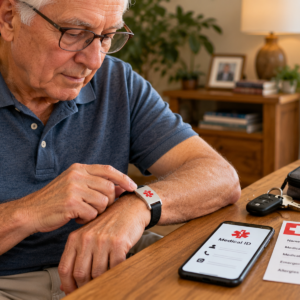
Medical ID and Emergency: Everyday Selection Example
An effective medical identification decision can begin with reviewing different bracelet and card designs together. The goal is to select an option that is accurate, readable, comfortable, and practical for everyday activities.
Medical ID Bracelets With QR Codes: Benefits and Limitations
QR medical identification can provide access to information that does not fit on a traditional engraved bracelet. Depending on the platform, the linked profile may contain medical conditions, allergies, medications, emergency contacts, and other approved details.
However, additional information does not automatically mean better emergency communication. The code must remain readable, the service must function, and the person accessing the record must be able to use the technology.
How QR Medical ID Works
A QR code generally directs a compatible scanning device to a specified digital destination. The exact process depends on the provider, account configuration, and whether the information requires additional access permissions.
What Happens Without Internet?
Some QR-based solutions may be inaccessible without connectivity. Even when the code can be scanned, the destination may fail to load if the supporting service is unavailable.
A short visible medical message should remain readable without technology when appropriate.
What About Privacy?
A linked medical profile may expose personal health information to anyone who can scan the identifier. The wearer should understand which details are public, protected, or restricted.
QR Service Maintenance
QR-linked services can change their fees, website addresses, privacy rules, or availability. Families should periodically verify that the code works and the information remains accurate.
Medical ID Cards and Emergency Information Records
An emergency information card provides a practical location for details that may be too extensive for an engraved wearable. Its format should be easy to read and appropriate for the person and their support network.
Information to Consider Including
Depending on individual needs, a card may contain verified medical conditions, current medications, serious allergies, relevant medical devices, emergency contacts, and healthcare provider information.
Sensitive information should be limited to what is appropriate for the intended use. Full identification numbers and unnecessary financial details generally do not belong on an easily accessible emergency card.
Keep Information Current
Medication schedules, emergency contacts, and medical diagnoses may change. A card that contains outdated information can create confusion, especially when it differs from the person’s current clinical records.
Choose a Consistent Storage Location
A wallet compartment, labeled emergency information pouch, or another agreed location may help keep the record accessible. The person and authorized caregivers should know where it is stored.
Create an Appropriate Backup
A second copy may be useful when maintained consistently. However, multiple copies create additional updating responsibilities, making it important to establish which record is authoritative.
How to Organize Medical ID and Emergency Information
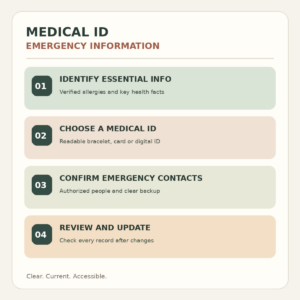
A four-step process can help families build a practical identification arrangement without collecting unnecessary information.
Step 1: Identify Essential Medical Information
Review which verified details may be important during emergency assessment. Seek healthcare guidance when it is unclear what should appear on public identification.
Step 2: Choose the Identification Format
Select a wearable, wallet card, digital record, or suitable combination. Consider readability, comfort, privacy, and the person’s daily activities.
Step 3: Coordinate Emergency Contacts
Confirm which trusted individuals may provide information and how they should be contacted. Discuss access permissions and responsibilities.
Step 4: Maintain and Review the Records
Assign responsibility for checking the information and updating every copy. Review it after important medical changes and at agreed intervals.
Medical ID and Emergency Privacy and Consent
Medical identification is intended to make selected information visible, but visibility creates privacy considerations. The wearer should understand what strangers, emergency responders, family members, and online users may be able to access.
Limit Public Information
A bracelet should not automatically display a full address, complete medical history, or unnecessary personal identification details. Prioritize relevant information while keeping more sensitive material in an appropriate protected record.
Respect the Wearer’s Preferences
Older adults should participate in decisions about what information is shared and which identification format is worn. Family involvement should support informed choices rather than unnecessarily remove personal control.
Review Digital Permissions
QR platforms and emergency apps may offer different levels of privacy protection. Check access rules, account security, data retention, and the provider’s policies before storing sensitive information.
Medical ID and Emergency Planning for Caregivers
Caregivers can help maintain the accuracy and accessibility of medical information, especially when several records are used. However, the plan should define responsibilities clearly rather than assuming one family member will always be available.
Assign an Information Coordinator
One trusted person may coordinate updates across the bracelet, wallet card, smartphone record, and relevant caregiver notes. A second authorized person can help confirm important changes.
Update After Medical Changes
A new medication, allergy, diagnosis, implanted device, or change in emergency contacts may require updates. Compare the revised information against current clinical guidance rather than relying on memory.
Coordinate With Healthcare Professionals
Clinicians can help determine which medical details are appropriate for emergency identification. Their recommendations may also clarify when short engraved information is insufficient.
Prepare for Caregiver Changes
When caregiving responsibilities change, review contact details and digital access permissions. Outdated information may delay communication or expose private records to people who no longer need access.
Everyday Medical ID Use and Record Maintenance
A medical identification arrangement should work during normal daily activities, not only in a hypothetical emergency. Comfort, visibility, accurate information, and accessible backups all influence practical reliability.
Review Bracelet Condition
Check whether the text remains readable and the bracelet remains comfortable and secure. Damaged or illegible identification may need replacement.
Check Wallet Cards
Look for outdated dates, medications, and emergency contacts. Replace cards when important information changes or the text becomes difficult to read.
Review Digital Records
Confirm that the emergency profile opens through its intended access method. Check QR links, stored information, and sharing permissions where applicable.
Keep Copies Consistent
If several formats are used, compare their content regularly. Conflicting information should be clarified with the appropriate healthcare professional.
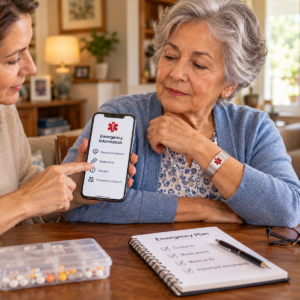
Medical ID and Emergency: Practical Home Review
A realistic review can show whether emergency information is readily accessible without exposing unnecessary personal details. It can also reveal inconsistencies between written, wearable, and digital records.
Medical ID and Emergency Information During Travel
Travel can create new challenges because caregivers, healthcare providers, and emergency contacts may be farther away. Identification should remain useful without assuming the person has continuous mobile connectivity.
Carry a Readable Identification Method
A comfortable wearable or appropriate medical card may be useful during travel. The format should suit the destination, transportation activities, and wearer’s preferences.
Maintain Updated Contact Information
Emergency contacts should be appropriate for the trip. International travelers may need to consider language differences and access to healthcare information.
Keep a Non-Digital Backup
Smartphones and online services may become unavailable because of battery failure, network interruptions, or other technical problems. A current paper record can provide an additional communication option.
Common Medical ID and Emergency Mistakes
Including Too Much Information
Overcrowded engraving may become unreadable. Prioritize concise information and keep longer details in a separate record.
Using Outdated Medical Details
Old medication names, incorrect allergies, or unavailable contacts may create confusion. Regular updates are essential.
Relying Only on QR Technology
Digital access depends on several conditions that cannot always be guaranteed. Consider a visible medical identifier alongside the linked record.
Ignoring Comfort
A bracelet that irritates the skin or interferes with everyday tasks may be removed. Fit and material choice should reflect the user.
Sharing Too Much Private Information
Displaying unnecessary identifying details can increase privacy exposure. Discuss what truly needs to be public.
Assuming Medical ID Calls for Help
Traditional medical ID jewelry does not automatically communicate with emergency services. Identification and medical alert monitoring are separate functions.
Forgetting Backup Records
A second record is useful only if it remains accurate and accessible. Assign responsibility for maintaining backups.
Medical ID and Emergency: Final Checklist
Before relying on a medical identification arrangement, confirm:
- Relevant medical conditions are verified.
- Important allergy information is accurate.
- Medication information is current.
- Necessary medical devices are identified appropriately.
- Wearable text is readable.
- Bracelet or necklace fit is comfortable.
- Clasp and material are suitable.
- The wearer accepts the identification.
- Public information is limited appropriately.
- QR links work where applicable.
- Digital privacy settings are understood.
- Emergency contacts are current.
- A wallet or paper record is available when needed.
- Family and authorized caregivers know the plan.
- Multiple records contain consistent information.
- A person is responsible for updating records.
- Backup information can be accessed appropriately.
- A future review date has been established.
Medical identification should be reviewed after meaningful changes rather than treated as a one-time purchase. An accurate, modest record is more useful than a complicated system that becomes outdated.
Frequently Asked Questions About Medical ID and Emergency
What Is Medical ID and Emergency Information?
It refers to essential medical identification and supporting records intended to communicate relevant information when a person cannot easily explain their health needs.
What Is the Best Medical ID Bracelet for Seniors?
The best bracelet is comfortable, readable, durable, and appropriate for the person’s medical identification needs. No single design is universally best.
What Should I Put on a Medical ID Bracelet?
Prioritize verified information that may be relevant to urgent medical care, such as selected serious allergies, medical conditions, or devices. Seek professional advice when unsure.
Are Medical ID Bracelets Necessary for Every Senior?
Not necessarily. Suitability depends on the person’s medical history, communication needs, and healthcare recommendations.
Are QR Code Medical ID Bracelets Reliable?
They may provide convenient access to additional information, but their usefulness depends on device compatibility, connectivity, service availability, and privacy settings.
Can a QR Bracelet Work Without Internet?
Some QR-based services require internet access. Check the exact provider’s technology and maintain a suitable non-digital backup.
What Is the Difference Between Medical ID and Medical Alert?
Medical ID provides identifying information. Medical alert systems may offer communication or monitoring services, depending on their design and agreement.
Is a Medical ID Card Useful?
Yes. A card may provide additional verified information that does not fit on a wearable, provided it remains current and accessible.
Can Medical ID Information Be Stored on a Smartphone?
Many smartphones support selected emergency-information features. Their accessibility depends on settings, operating systems, and the device’s condition.
How Often Should Medical ID Information Be Updated?
Review it periodically and after significant changes in medications, diagnoses, allergies, medical devices, or emergency contacts.
Are Medical ID Bracelets Available in Different Materials?
Yes. Options include stainless steel, silicone, sterling silver, and other materials. Selection should consider comfort, durability, and engraving readability.
Can I Wear a Medical ID Necklace Instead of a Bracelet?
A necklace may be suitable when it is comfortable, visible, and appropriate for the wearer’s needs. The choice is personal and may benefit from healthcare guidance.
Should My Full Medical History Be on My Bracelet?
Usually a small wearable should communicate concise, relevant information rather than a complete history. A protected record may contain additional details.
Can Caregivers Update Medical ID Records?
Authorized caregivers may assist with updating records according to the person’s preferences and applicable consent arrangements.
What Happens if a Medical ID Bracelet Is Lost?
A suitable backup card or digital record can help maintain access to emergency information while replacement identification is arranged.
Final Thoughts on Medical ID and Emergency
Medical ID and Emergency preparation works best when identification, medical accuracy, readability, privacy, caregiver coordination, and reliable record maintenance are considered together. A bracelet or digital profile is only one part of the broader emergency information plan.
For many older adults, a concise wearable identifier supported by a current wallet card or appropriately protected digital record provides a practical combination of visibility and detail. The specific arrangement should reflect the person’s medical needs, preferences, and daily activities.
The strongest Medical ID and Emergency system is not necessarily the most technologically advanced. It is one that remains accurate, comfortable, respectful, and accessible when important medical information needs to be communicated.
Editorial references
Medical ID: Sources used for this guide
MedlinePlus and NIA support the framework; they do not prescribe wording for a specific condition or endorse a product.
- Medical alert bracelet — MedlinePlus, U.S. National Library of Medicine.
- Recognizing medical emergencies — MedlinePlus, U.S. National Library of Medicine.
- Aging in Place: Growing Older at Home — National Institute on Aging.
Continue exploring
Medical ID: Build a safer plan
Return to the Safety & Alert Resource Center for broad preparation; focused child pages remain inactive until reviewed.