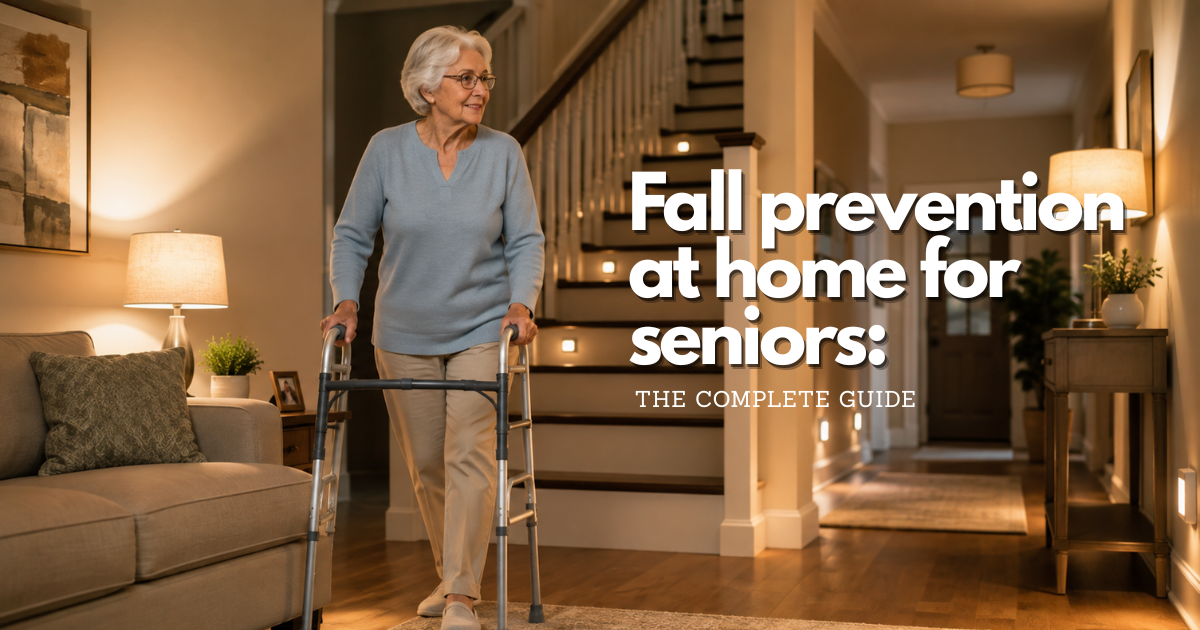
fall prevention at home for seniors | SeniorTechLife home safety guide
Home Lighting and Fall Prevention for Seniors should be chosen by task, fit, access, maintenance, privacy, cost, and the person’s actual routine. The goal is a usable home plan, not a universal product promise.
Fall Prevention At Home For Seniors: What belongs in this guide
fall prevention at home for seniors is the broad starting point for this hub. Approved support phrases include: falls and fall prevention, fall prevention guide, elderly fall prevention, fall prevention in older adults, fall prevention for elderly, fall prevention for seniors, fall prevention older adults, fall prevention in elderly, best shampoo for hair fall prevention, fall prevention programs for the elderly, a matter of balance fall prevention program, fall prevention in the nursing home, fall prevention devices for the elderly, evidence based practice fall prevention in hospitals. Use them naturally in the body and relevant headings while keeping reserved child intents out of this URL.
The primary topic is fall prevention at home for seniors. Approved support phrases include falls and fall prevention; fall prevention guide; elderly fall prevention; fall prevention in older adults; fall prevention for elderly; fall prevention for seniors; fall prevention older adults; fall prevention in elderly; best shampoo for hair fall prevention; fall prevention programs for the elderly; a matter of balance fall prevention program; fall prevention in the nursing home; fall prevention devices for the elderly; evidence based practice fall prevention in hospitals. They clarify category decisions without creating competing pages.
Use fall prevention at home for seniors as the broad starting point, then move to the narrow question that matches the person and the setting.
- Identify the person and the outcome this category must support.
- Match the option with the environment, caregiver, privacy, and emergency plan.
- Separate broad education from brand reviews, local searches, and narrow child intents.
- Verify current instructions, limits, service, and total ownership cost.
A decision starts with the person and setting
Home Lighting and Fall Prevention for Seniors should be chosen by task, fit, access, maintenance, privacy, cost, and the person’s actual routine. The goal is a usable home plan, not a universal product promise.
Two options can look similar online and behave differently under stress. This guide therefore treats fit, control, connection, maintenance, consent, and human support as part of the decision.
Eight decisions that matter more than marketing
The following framework turns a broad product search into observable questions. Complete it with the older adult and, when risk or medical complexity is present, with a qualified rehabilitation or healthcare professional. A specification is useful only when it connects to a real task.
Person and task
Decision question: For lighting & fall prevention, what should a family verify about person and task before choosing an option?
In a lighting & fall prevention decision, person and task changes the practical fit, burden, and safety. Consider the person, the task, the environment, and the support available.
Practical check: For this lighting & fall prevention question, write down the exact task, observe it in the real setting, and compare the result with the manufacturer information and professional advice.
Pause and reassess when: For lighting & fall prevention, pause when the person cannot control the option, the setting requires an untested workaround, or the plan depends on a claim that cannot be verified.
Fit and access
Decision question: For lighting & fall prevention, what should a family verify about fit and access before choosing an option?
In a lighting & fall prevention decision, fit and access changes the practical fit, burden, and safety. Consider the person, the task, the environment, and the support available.
Practical check: For this lighting & fall prevention question, write down the exact task, observe it in the real setting, and compare the result with the manufacturer information and professional advice.
Pause and reassess when: For lighting & fall prevention, pause when the person cannot control the option, the setting requires an untested workaround, or the plan depends on a claim that cannot be verified.
Control and usability
Decision question: For lighting & fall prevention, what should a family verify about control and usability before choosing an option?
In a lighting & fall prevention decision, control and usability changes the practical fit, burden, and safety. Consider the person, the task, the environment, and the support available.
Practical check: For this lighting & fall prevention question, write down the exact task, observe it in the real setting, and compare the result with the manufacturer information and professional advice.
Pause and reassess when: For lighting & fall prevention, pause when the person cannot control the option, the setting requires an untested workaround, or the plan depends on a claim that cannot be verified.
Coverage and connection
Decision question: For lighting & fall prevention, what should a family verify about coverage and connection before choosing an option?
In a lighting & fall prevention decision, coverage and connection changes the practical fit, burden, and safety. Consider the person, the task, the environment, and the support available.
Practical check: For this lighting & fall prevention question, write down the exact task, observe it in the real setting, and compare the result with the manufacturer information and professional advice.
Pause and reassess when: For lighting & fall prevention, pause when the person cannot control the option, the setting requires an untested workaround, or the plan depends on a claim that cannot be verified.
Privacy and consent
Decision question: For lighting & fall prevention, what should a family verify about privacy and consent before choosing an option?
In a lighting & fall prevention decision, privacy and consent changes the practical fit, burden, and safety. Consider the person, the task, the environment, and the support available.
Practical check: For this lighting & fall prevention question, write down the exact task, observe it in the real setting, and compare the result with the manufacturer information and professional advice.
Pause and reassess when: For lighting & fall prevention, pause when the person cannot control the option, the setting requires an untested workaround, or the plan depends on a claim that cannot be verified.
Caregiver support
Decision question: For lighting & fall prevention, what should a family verify about caregiver support before choosing an option?
In a lighting & fall prevention decision, caregiver support changes the practical fit, burden, and safety. Consider the person, the task, the environment, and the support available.
Practical check: For this lighting & fall prevention question, write down the exact task, observe it in the real setting, and compare the result with the manufacturer information and professional advice.
Pause and reassess when: For lighting & fall prevention, pause when the person cannot control the option, the setting requires an untested workaround, or the plan depends on a claim that cannot be verified.
Fall Prevention At Home For Seniors: Service and cost
Decision question: For lighting & fall prevention, what should a family verify about service and cost before choosing an option?
In a lighting & fall prevention decision, service and cost changes the practical fit, burden, and safety. Consider the person, the task, the environment, and the support available.
Practical check: For this lighting & fall prevention question, write down the exact task, observe it in the real setting, and compare the result with the manufacturer information and professional advice.
Pause and reassess when: For lighting & fall prevention, pause when the person cannot control the option, the setting requires an untested workaround, or the plan depends on a claim that cannot be verified.
Backup plan
Decision question: For lighting & fall prevention, what should a family verify about backup plan before choosing an option?
In a lighting & fall prevention decision, backup plan changes the practical fit, burden, and safety. Consider the person, the task, the environment, and the support available.
Practical check: For this lighting & fall prevention question, write down the exact task, observe it in the real setting, and compare the result with the manufacturer information and professional advice.
Pause and reassess when: For lighting & fall prevention, pause when the person cannot control the option, the setting requires an untested workaround, or the plan depends on a claim that cannot be verified.
Ownership, service, and disruption planning
Mobility equipment must remain usable after the first week. Include cleaning, inspection, storage, service, transportation, changing health needs, and an alternative plan. Do not accept a product whose safe-use instructions, compatible parts, or service route are unclear.
Setup
For lighting & fall prevention, plan how setup will work after the first week, including who will explain it and where information will be kept.
Maintenance point: For this lighting & fall prevention setup, check the relevant parts, settings, battery or signal status, cleaning, updates, and service contacts on a documented schedule.
Backup point: For lighting & fall prevention, keep a simple alternative plan for power, coverage, damage, travel, caregiver absence, or a changed health need.
Daily use
For lighting & fall prevention, plan how daily use will work after the first week, including who will explain it and where information will be kept.
Maintenance point: For this lighting & fall prevention setup, check the relevant parts, settings, battery or signal status, cleaning, updates, and service contacts on a documented schedule.
Backup point: For lighting & fall prevention, keep a simple alternative plan for power, coverage, damage, travel, caregiver absence, or a changed health need.
Power or signal
For lighting & fall prevention, plan how power or signal will work after the first week, including who will explain it and where information will be kept.
Maintenance point: For this lighting & fall prevention setup, check the relevant parts, settings, battery or signal status, cleaning, updates, and service contacts on a documented schedule.
Backup point: For lighting & fall prevention, keep a simple alternative plan for power, coverage, damage, travel, caregiver absence, or a changed health need.
Cleaning and updates
For lighting & fall prevention, plan how cleaning and updates will work after the first week, including who will explain it and where information will be kept.
Maintenance point: For this lighting & fall prevention setup, check the relevant parts, settings, battery or signal status, cleaning, updates, and service contacts on a documented schedule.
Backup point: For lighting & fall prevention, keep a simple alternative plan for power, coverage, damage, travel, caregiver absence, or a changed health need.
Travel
For lighting & fall prevention, plan how travel will work after the first week, including who will explain it and where information will be kept.
Maintenance point: For this lighting & fall prevention setup, check the relevant parts, settings, battery or signal status, cleaning, updates, and service contacts on a documented schedule.
Backup point: For lighting & fall prevention, keep a simple alternative plan for power, coverage, damage, travel, caregiver absence, or a changed health need.
Fall Prevention At Home For Seniors: Caregiver handoff
For lighting & fall prevention, plan how caregiver handoff will work after the first week, including who will explain it and where information will be kept.
Maintenance point: For this lighting & fall prevention setup, check the relevant parts, settings, battery or signal status, cleaning, updates, and service contacts on a documented schedule.
Backup point: For lighting & fall prevention, keep a simple alternative plan for power, coverage, damage, travel, caregiver absence, or a changed health need.
Service
For lighting & fall prevention, plan how service will work after the first week, including who will explain it and where information will be kept.
Maintenance point: For this lighting & fall prevention setup, check the relevant parts, settings, battery or signal status, cleaning, updates, and service contacts on a documented schedule.
Backup point: For lighting & fall prevention, keep a simple alternative plan for power, coverage, damage, travel, caregiver absence, or a changed health need.
Emergency backup
For lighting & fall prevention, plan how emergency backup will work after the first week, including who will explain it and where information will be kept.
Maintenance point: For this lighting & fall prevention setup, check the relevant parts, settings, battery or signal status, cleaning, updates, and service contacts on a documented schedule.
Backup point: For lighting & fall prevention, keep a simple alternative plan for power, coverage, damage, travel, caregiver absence, or a changed health need.
Real-world trial scenarios
Equipment should be tested as part of a complete activity, not as an isolated object. The following scenarios expose access, control, fatigue, caregiver, and maintenance problems that can remain invisible in a showroom. A trial is not permission to exceed the person’s care plan or the manufacturer’s instructions.
An ordinary day
Set up the trial: For lighting & fall prevention, use the exact configuration in a realistic route or emergency scenario. A meaningful trial uses the person’s ordinary footwear, usual assistive devices, realistic timing, and the exact equipment configuration being considered.
Observe: Observe lighting & fall prevention control, reach, comprehension, comfort, privacy, and what happens when the first plan fails. Watch the person and caregiver throughout the complete task rather than judging the equipment from a single successful moment.
Compare: Compare the lighting & fall prevention result with the person’s needs, the written instructions, and the service or response promise. Record objective observations, settings, dimensions, assistance, and any reminders so alternatives can be compared without relying on memory.
Boundary: For lighting & fall prevention, stop when safety relies on guessing, rushing, ignored consent, or a person compensating beyond their ability. Stop the trial if safety depends on catching, lifting, uncontrolled movement, ignored instructions, or a workaround the manufacturer or care plan does not permit.
A difficult route
Set up the trial: For lighting & fall prevention, use the exact configuration in a realistic route or emergency scenario. A meaningful trial uses the person’s ordinary footwear, usual assistive devices, realistic timing, and the exact equipment configuration being considered.
Observe: Observe lighting & fall prevention control, reach, comprehension, comfort, privacy, and what happens when the first plan fails. Watch the person and caregiver throughout the complete task rather than judging the equipment from a single successful moment.
Compare: Compare the lighting & fall prevention result with the person’s needs, the written instructions, and the service or response promise. Record objective observations, settings, dimensions, assistance, and any reminders so alternatives can be compared without relying on memory.
Boundary: For lighting & fall prevention, stop when safety relies on guessing, rushing, ignored consent, or a person compensating beyond their ability. Stop the trial if safety depends on catching, lifting, uncontrolled movement, ignored instructions, or a workaround the manufacturer or care plan does not permit.
A caregiver handoff
Set up the trial: For lighting & fall prevention, use the exact configuration in a realistic route or emergency scenario. A meaningful trial uses the person’s ordinary footwear, usual assistive devices, realistic timing, and the exact equipment configuration being considered.
Observe: Observe lighting & fall prevention control, reach, comprehension, comfort, privacy, and what happens when the first plan fails. Watch the person and caregiver throughout the complete task rather than judging the equipment from a single successful moment.
Compare: Compare the lighting & fall prevention result with the person’s needs, the written instructions, and the service or response promise. Record objective observations, settings, dimensions, assistance, and any reminders so alternatives can be compared without relying on memory.
Boundary: For lighting & fall prevention, stop when safety relies on guessing, rushing, ignored consent, or a person compensating beyond their ability. Stop the trial if safety depends on catching, lifting, uncontrolled movement, ignored instructions, or a workaround the manufacturer or care plan does not permit.
A disrupted or urgent situation
Set up the trial: For lighting & fall prevention, use the exact configuration in a realistic route or emergency scenario. A meaningful trial uses the person’s ordinary footwear, usual assistive devices, realistic timing, and the exact equipment configuration being considered.
Observe: Observe lighting & fall prevention control, reach, comprehension, comfort, privacy, and what happens when the first plan fails. Watch the person and caregiver throughout the complete task rather than judging the equipment from a single successful moment.
Compare: Compare the lighting & fall prevention result with the person’s needs, the written instructions, and the service or response promise. Record objective observations, settings, dimensions, assistance, and any reminders so alternatives can be compared without relying on memory.
Boundary: For lighting & fall prevention, stop when safety relies on guessing, rushing, ignored consent, or a person compensating beyond their ability. Stop the trial if safety depends on catching, lifting, uncontrolled movement, ignored instructions, or a workaround the manufacturer or care plan does not permit.
Questions for a supplier, retailer, or clinician
Ask for answers in writing when they affect compatibility, capacity, warranty, returns, insurance, or service. A product page can be outdated or describe a related configuration rather than the exact item delivered. Keep the model and version attached to every answer.
- What exact task and user ability does this option need to support?
- What are the coverage, signal, battery, power, or access limits?
- Who will set up, explain, inspect, and maintain it?
- What happens when the person cannot press, hear, see, carry, or remember the device?
- Which information is collected, shared, stored, or printed?
- What are the fees, contract, return, warranty, and service terms?
- What professional or manufacturer help is available?
- What is the tested backup if the primary plan fails?
Do not treat “medical grade,” “premium,” “smart,” “portable,” “heavy duty,” “upright,” “all terrain,” or “caregiver friendly” as measurable claims unless the seller explains the test, limit, and exact configuration. A high review average cannot replace manufacturer instructions or an individualized assessment.
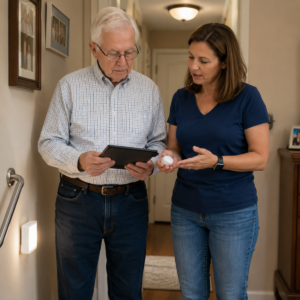
Fall Prevention At Home For Seniors: Common selection and use mistakes
Mistakes often begin with a reasonable goal—speed, independence, comfort, or lower cost—but skip an important constraint. Recognizing the pattern early prevents an unsuitable product from becoming a permanent workaround.
choosing by a single feature
A family may select a lighting & fall prevention option because one feature sounds reassuring while overlooking coverage, fit, training, or maintenance.
Better approach: For lighting & fall prevention, use a short decision record that names the task, constraint, evidence, and unresolved risk. Document the reason for the decision so another caregiver, editor, or clinician can understand what was tested and what remains unresolved.
assuming “senior” is one use case
Older adults differ in hearing, vision, dexterity, cognition, mobility, language, privacy preferences, and caregiver access.
Better approach: Test the actual person and lighting & fall prevention routine rather than relying on an age label. Document the reason for the decision so another caregiver, editor, or clinician can understand what was tested and what remains unresolved.
confusing availability with suitability
A lighting & fall prevention product or service can be easy to order yet difficult to use, charge, explain, return, or repair.
Better approach: Verify the complete lighting & fall prevention ownership path before paying or relying on it. Document the reason for the decision so another caregiver, editor, or clinician can understand what was tested and what remains unresolved.
treating a backup as automatic
A second lighting & fall prevention device or printed record is not useful if it is outdated, inaccessible, untested, or incompatible.
Better approach: Assign an owner and a review date for every lighting & fall prevention backup. Document the reason for the decision so another caregiver, editor, or clinician can understand what was tested and what remains unresolved.
Delivery, follow-up, and reassessment
Delivery is the beginning of ownership, not the final QA step. Verify the exact product, condition, components, instructions, training, settings, and return deadline. Reassessment should respond to the person, caregiver, environment, and equipment as each changes.
first setup
At first use: Record the exact lighting & fall prevention model or service configuration, settings, contacts, and training completed.
Over time: Review the lighting & fall prevention routine after the first few uses and after any change in health, home, vehicle, or caregiver.
Escalate when: Escalate when the promised lighting & fall prevention response, fit, privacy, or control does not match the documented need.
monthly reality check
At first use: Ask whether the person still uses and understands the lighting & fall prevention plan.
Over time: Check lighting & fall prevention supplies, batteries, coverage, labels, contacts, and access routes.
Escalate when: Escalate after a missed lighting & fall prevention alert, false confidence, fall, failed transfer, inaccessible route, or repeated confusion.
travel or disruption
At first use: Decide how the lighting & fall prevention plan works away from home, during outages, and when a caregiver is absent.
Over time: Keep current lighting & fall prevention instructions and a backup contact with the person.
Escalate when: Escalate if the lighting & fall prevention plan cannot be verified in the new setting.
this topic: change in condition
At first use: Treat new weakness, falls, confusion, hearing loss, or medication changes as a reason to reassess the lighting & fall prevention plan.
Over time: Do not silently adapt lighting & fall prevention equipment or service beyond its instructions.
Escalate when: Seek qualified help when the change affects lighting & fall prevention safety or emergency communication.
Emergency and backup planning
Build a safer home plan that does not depend on one product.
Keep a phone or alert method accessible, label equipment without exposing unnecessary private information, and place manuals and service numbers where caregivers can find them. A backup device must be fitted, inspected, and included in the care plan; equipment borrowed during an emergency is not automatically safe.
After a fall, collision, uncontrolled movement, hard impact, flood, fire exposure, or airline handling, remove the equipment from use until its safety can be confirmed. Seek appropriate medical attention for injury or concerning symptoms. Do not hide a failure with tape, improvised fasteners, mixed parts, or a caregiver’s physical effort.
Documented plan for fall prevention at home for seniors
Turn the research into a short, documented decision record.
Broad Lighting & Fall Prevention Hub: explain category choices, fit, safety limits, ownership, and future child intents without ranking unverified models.
- Define the person and task.
- Measure the environment and access route.
- Verify the exact device or service limits.
- Test setup and failure scenarios.
- Document cost, privacy, support, and backup.
Record what was rejected
Record options rejected because of fit, coverage, privacy, cost, complexity, or unavailable service.
Set the next review date
Set a review date and repeat the assessment after any material change.
What this Hub intentionally does not answer
This broad hub provides education and decision structure; it does not rank current models or answer every narrow child query.
Use official instructions and qualified help for any safety-critical setup, installation, transfer, or emergency plan.
How future child guides should connect
Future child guides must own narrower questions and remain inactive until separately reviewed.
Until a child guide is published and reviewed, its cluster card remains visible as navigation architecture but not as an active link. This protects readers from broken destinations and prevents unpublished URLs from being treated as finished advice.
Frequently asked questions
Does one home product prevent every fall or emergency?
No. Safety depends on the person, environment, routines, maintenance, professional input, and a tested backup plan.
What should families test first?
Test the actual room or route, lighting, access, reach, controls, privacy, power, response steps, and the person’s willingness to use the plan.
Are product labels enough to prove safety?
No. Confirm current instructions, limits, compatibility, installation requirements, and whether qualified help is needed.
When should the plan be reviewed?
After a fall, near miss, outage, incident, move, health change, caregiver change, or change in how the person uses the home.
Map lighting and fall risks together
Map lighting and fall risks together should be evaluated in the person’s actual home, routine, abilities, support network, privacy preferences, and local conditions. Start with fall prevention at home for seniors. Then document the intended outcome, the room or route affected, the limits, the person responsible for setup or maintenance, and the backup if power, signal, access, or consent becomes a problem.
Use an observable walk-through or test instead of a marketing promise. Record what was measured, what the person could do, what remained difficult, what information was collected, and when the plan will be reviewed. This keeps the hub broad while reserving model comparisons, installation instructions, brand questions, and narrow searches for separately governed child assets.
Fall Prevention At Home For Seniors: Use light where the person actually moves
Use light where the person actually moves should be evaluated in the person’s actual home, routine, abilities, support network, privacy preferences, and local conditions. Start with fall prevention at home for seniors. Then document the intended outcome, the room or route affected, the limits, the person responsible for setup or maintenance, and the backup if power, signal, access, or consent becomes a problem.
Use an observable walk-through or test instead of a marketing promise. Record what was measured, what the person could do, what remained difficult, what information was collected, and when the plan will be reviewed. This keeps the hub broad while reserving model comparisons, installation instructions, brand questions, and narrow searches for separately governed child assets.
Check glare, contrast, shadows, and switches
Check glare, contrast, shadows, and switches should be evaluated in the person’s actual home, routine, abilities, support network, privacy preferences, and local conditions. Start with fall prevention at home for seniors. Then document the intended outcome, the room or route affected, the limits, the person responsible for setup or maintenance, and the backup if power, signal, access, or consent becomes a problem.
Use an observable walk-through or test instead of a marketing promise. Record what was measured, what the person could do, what remained difficult, what information was collected, and when the plan will be reviewed. This keeps the hub broad while reserving model comparisons, installation instructions, brand questions, and narrow searches for separately governed child assets.
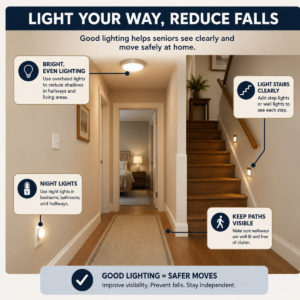
Review night paths and bathroom access
Review night paths and bathroom access should be evaluated in the person’s actual home, routine, abilities, support network, privacy preferences, and local conditions. Start with fall prevention at home for seniors. Then document the intended outcome, the room or route affected, the limits, the person responsible for setup or maintenance, and the backup if power, signal, access, or consent becomes a problem.
Use an observable walk-through or test instead of a marketing promise. Record what was measured, what the person could do, what remained difficult, what information was collected, and when the plan will be reviewed. This keeps the hub broad while reserving model comparisons, installation instructions, brand questions, and narrow searches for separately governed child assets.
Coordinate lighting with mobility aids
Coordinate lighting with mobility aids should be evaluated in the person’s actual home, routine, abilities, support network, privacy preferences, and local conditions. Start with fall prevention at home for seniors. Then document the intended outcome, the room or route affected, the limits, the person responsible for setup or maintenance, and the backup if power, signal, access, or consent becomes a problem.
Use an observable walk-through or test instead of a marketing promise. Record what was measured, what the person could do, what remained difficult, what information was collected, and when the plan will be reviewed. This keeps the hub broad while reserving model comparisons, installation instructions, brand questions, and narrow searches for separately governed child assets.
Separate fall prevention from diagnosis
Separate fall prevention from diagnosis should be evaluated in the person’s actual home, routine, abilities, support network, privacy preferences, and local conditions. Start with fall prevention at home for seniors. Then document the intended outcome, the room or route affected, the limits, the person responsible for setup or maintenance, and the backup if power, signal, access, or consent becomes a problem.
Use an observable walk-through or test instead of a marketing promise. Record what was measured, what the person could do, what remained difficult, what information was collected, and when the plan will be reviewed. This keeps the hub broad while reserving model comparisons, installation instructions, brand questions, and narrow searches for separately governed child assets.
Test the route at difficult times of day
Test the route at difficult times of day should be evaluated in the person’s actual home, routine, abilities, support network, privacy preferences, and local conditions. Start with fall prevention at home for seniors. Then document the intended outcome, the room or route affected, the limits, the person responsible for setup or maintenance, and the backup if power, signal, access, or consent becomes a problem.
Use an observable walk-through or test instead of a marketing promise. Record what was measured, what the person could do, what remained difficult, what information was collected, and when the plan will be reviewed. This keeps the hub broad while reserving model comparisons, installation instructions, brand questions, and narrow searches for separately governed child assets.
Consider outdoor and seasonal conditions
Consider outdoor and seasonal conditions should be evaluated in the person’s actual home, routine, abilities, support network, privacy preferences, and local conditions. Start with fall prevention at home for seniors. Then document the intended outcome, the room or route affected, the limits, the person responsible for setup or maintenance, and the backup if power, signal, access, or consent becomes a problem.
Use an observable walk-through or test instead of a marketing promise. Record what was measured, what the person could do, what remained difficult, what information was collected, and when the plan will be reviewed. This keeps the hub broad while reserving model comparisons, installation instructions, brand questions, and narrow searches for separately governed child assets.
Document maintenance and battery needs
Document maintenance and battery needs should be evaluated in the person’s actual home, routine, abilities, support network, privacy preferences, and local conditions. Start with fall prevention at home for seniors. Then document the intended outcome, the room or route affected, the limits, the person responsible for setup or maintenance, and the backup if power, signal, access, or consent becomes a problem.
Use an observable walk-through or test instead of a marketing promise. Record what was measured, what the person could do, what remained difficult, what information was collected, and when the plan will be reviewed. This keeps the hub broad while reserving model comparisons, installation instructions, brand questions, and narrow searches for separately governed child assets.
Fall Prevention At Home For Seniors: Include balance, footwear, vision, and medication context
Include balance, footwear, vision, and medication context should be evaluated in the person’s actual home, routine, abilities, support network, privacy preferences, and local conditions. Start with fall prevention at home for seniors. Then document the intended outcome, the room or route affected, the limits, the person responsible for setup or maintenance, and the backup if power, signal, access, or consent becomes a problem.
Use an observable walk-through or test instead of a marketing promise. Record what was measured, what the person could do, what remained difficult, what information was collected, and when the plan will be reviewed. This keeps the hub broad while reserving model comparisons, installation instructions, brand questions, and narrow searches for separately governed child assets.
Use programs and exercises with qualified guidance
Use programs and exercises with qualified guidance should be evaluated in the person’s actual home, routine, abilities, support network, privacy preferences, and local conditions. Start with fall prevention at home for seniors. Then document the intended outcome, the room or route affected, the limits, the person responsible for setup or maintenance, and the backup if power, signal, access, or consent becomes a problem.
Use an observable walk-through or test instead of a marketing promise. Record what was measured, what the person could do, what remained difficult, what information was collected, and when the plan will be reviewed. This keeps the hub broad while reserving model comparisons, installation instructions, brand questions, and narrow searches for separately governed child assets.
Treat devices as one layer of prevention
Treat devices as one layer of prevention should be evaluated in the person’s actual home, routine, abilities, support network, privacy preferences, and local conditions. Start with fall prevention at home for seniors. Then document the intended outcome, the room or route affected, the limits, the person responsible for setup or maintenance, and the backup if power, signal, access, or consent becomes a problem.
Use an observable walk-through or test instead of a marketing promise. Record what was measured, what the person could do, what remained difficult, what information was collected, and when the plan will be reviewed. This keeps the hub broad while reserving model comparisons, installation instructions, brand questions, and narrow searches for separately governed child assets.
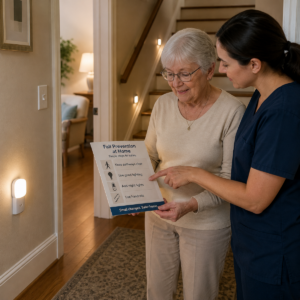
Respect the person’s preferences and routines
Respect the person’s preferences and routines should be evaluated in the person’s actual home, routine, abilities, support network, privacy preferences, and local conditions. Start with fall prevention at home for seniors. Then document the intended outcome, the room or route affected, the limits, the person responsible for setup or maintenance, and the backup if power, signal, access, or consent becomes a problem.
Use an observable walk-through or test instead of a marketing promise. Record what was measured, what the person could do, what remained difficult, what information was collected, and when the plan will be reviewed. This keeps the hub broad while reserving model comparisons, installation instructions, brand questions, and narrow searches for separately governed child assets.
Review after a fall or near miss
Review after a fall or near miss should be evaluated in the person’s actual home, routine, abilities, support network, privacy preferences, and local conditions. Start with fall prevention at home for seniors. Then document the intended outcome, the room or route affected, the limits, the person responsible for setup or maintenance, and the backup if power, signal, access, or consent becomes a problem.
Use an observable walk-through or test instead of a marketing promise. Record what was measured, what the person could do, what remained difficult, what information was collected, and when the plan will be reviewed. This keeps the hub broad while reserving model comparisons, installation instructions, brand questions, and narrow searches for separately governed child assets.
Plan for outages and temporary lighting
Plan for outages and temporary lighting should be evaluated in the person’s actual home, routine, abilities, support network, privacy preferences, and local conditions. Start with fall prevention at home for seniors. Then document the intended outcome, the room or route affected, the limits, the person responsible for setup or maintenance, and the backup if power, signal, access, or consent becomes a problem.
Use an observable walk-through or test instead of a marketing promise. Record what was measured, what the person could do, what remained difficult, what information was collected, and when the plan will be reviewed. This keeps the hub broad while reserving model comparisons, installation instructions, brand questions, and narrow searches for separately governed child assets.
Reserve product and narrow searches for child assets
Reserve product and narrow searches for child assets should be evaluated in the person’s actual home, routine, abilities, support network, privacy preferences, and local conditions. Start with fall prevention at home for seniors. Then document the intended outcome, the room or route affected, the limits, the person responsible for setup or maintenance, and the backup if power, signal, access, or consent becomes a problem.
Use an observable walk-through or test instead of a marketing promise. Record what was measured, what the person could do, what remained difficult, what information was collected, and when the plan will be reviewed. This keeps the hub broad while reserving model comparisons, installation instructions, brand questions, and narrow searches for separately governed child assets.
Sources used for this guide
Official sources support the planning framework; they do not endorse a company, contractor, or product.
- Falls and Fractures in Older Adults — National Institute on Aging.
- Unique Considerations in the Home — U.S. Food and Drug Administration.
- Aging in Place: Growing Older at Home — National Institute on Aging.
Build a safer plan
Return to the Home Safety Resource Center for broad planning; focused child assets remain inactive until reviewed.