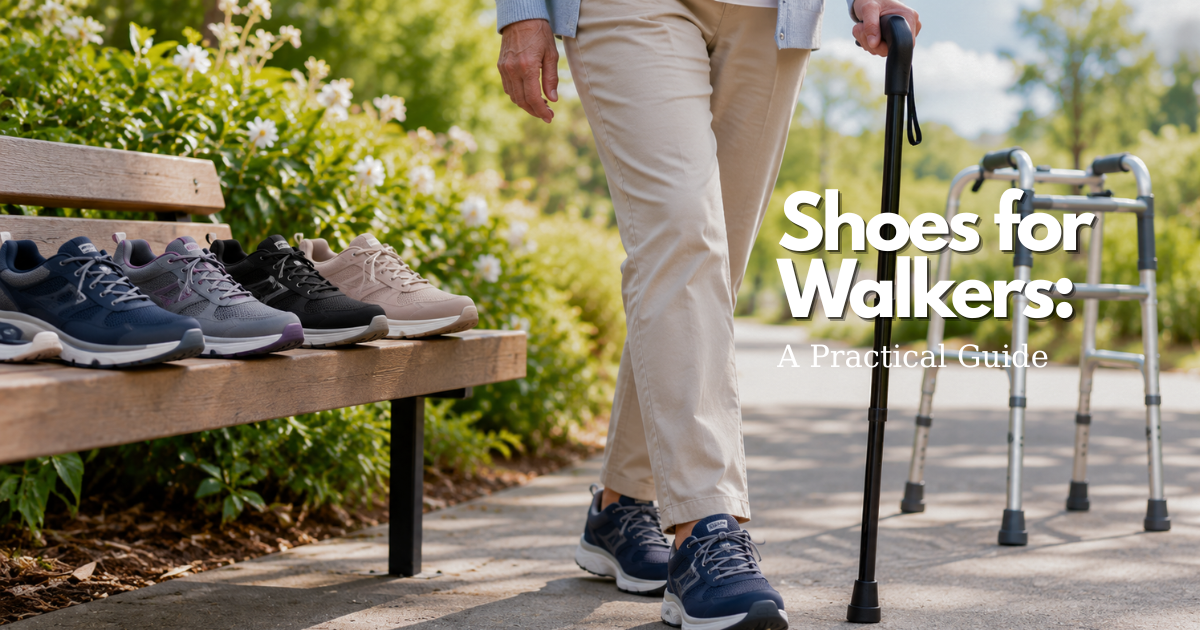
Walkers | SeniorTechLife
Choose safer footwear for using a walker: secure fit, reliable grip, stable soles, enough toe room, and practical checks before everyday use.
Shoes for walkers means footwear for people who use a walker, not a specific shoe brand or a substitute for choosing the right mobility aid. Secure, well-fitting shoes can support steadier steps, help the foot stay positioned inside the shoe, and reduce avoidable slipping hazards while using a walker.
Footwear cannot make an unsafe walker, poor fit, dizziness, or severe weakness safe. But the wrong shoe can add a preventable problem: a smooth sole, loose heel, crowded toes, or a shoe that slips off can make it harder to control the walker and place each foot securely.
Quick answer: what are safer shoes for walkers?
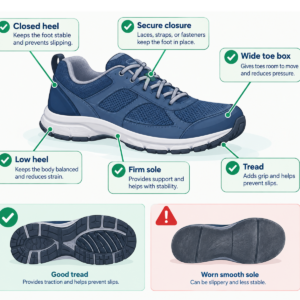
The best shoes for walkers usually have a secure closure, a closed and stable heel, enough room for the toes, a low broad heel, and a firm sole with reliable tread. They should fit the actual foot, stay on during turns, and work with the surfaces the person uses every day.
A secure shoes for walkers is more useful than a fashionable shoe that slides, twists, or comes off easily. Try the pair with the actual walker on a dry, clear floor before depending on it for a longer trip.
Why a shoes for walkers matters when you use it
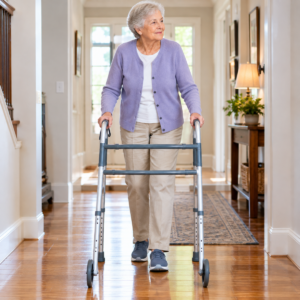
A shoes for walkers affects how a person starts, stops, turns, and shifts weight. Footwear needs to support those movements without adding sliding, catching, or instability. A sole that is too smooth can reduce traction, while an overly soft or stretched upper can allow the foot to move around inside the shoe.
CDC fall-prevention materials advise older adults to wear sturdy, nonslip footwear that fits correctly. MedlinePlus also advises shoes or slippers with rubber or other nonskid soles when using a cane or managing fall risk at home.
Walkers are helpful only when the feet and the device can move as a coordinated system. If a shoe changes the person’s stride, catches on carpet, or makes a toe drag more likely, it deserves attention before the next outing.
Best shoes for walkers: features to check first
| Feature | What to look for | Why it helps |
|---|---|---|
| Secure closure | Laces, adjustable straps, or another closure that holds the foot in place. | Reduces heel slip and the chance that the shoe comes off during a turn. |
| Closed, stable heel | A heel counter that holds the back of the foot rather than an open-back slide. | Helps keep the foot positioned during starts and stops. |
| Low, broad heel | Little or no elevation and no narrow heel. | Provides a more stable base than a high or narrow heel. |
| Firm sole and tread | Enough structure to support the foot and tread that is not worn smooth. | Supports steadier contact on dry and mildly uneven surfaces. |
| Toe room | Length and width that do not crowd toes, bunions, or hammertoes. | Can reduce pain and help the foot stay flat inside the shoe. |
“Firm” does not mean hard or painful. The shoe should feel stable without pinching, rubbing, or forcing the toes into a cramped position. If swelling or foot shape changes make fit difficult, a clinician or qualified footwear specialist can help.
Be cautious with footwear that adds fall risk
Be cautious with shoes that have worn smooth soles, high or narrow heels, loose stretched uppers, no back, or a fit that lets the foot slide forward. Socks alone can be especially slippery on smooth floors and do not protect the foot from hard objects or thresholds.
Slippers vary widely. A closed-back slipper with a secure sole may be more stable than a loose slide, but it should still be tested with the walker. Do not assume a soft indoor shoe is safe simply because it feels comfortable.
Check fit later in the day and with usual socks
Feet may swell as the day goes on. When possible, try shoes later in the day and wear the socks, braces, inserts, or compression garments normally used for walking. Both shoes should be tried on; one foot may be larger or shaped differently than the other.
Stand before deciding that a shoe fits. The toes should have room, the heel should not lift excessively, and the top of the foot should not feel compressed. If a shoe causes rubbing, numbness, or a change in walking pattern, stop using it for longer routes.
Use different shoes for different parts of the day when needed
One pair may not be the best answer for every activity. A shoe that works for a short indoor trip may not have the tread or weather protection needed for a wet driveway or community errand. The goal is not to collect many shoes; it is to avoid using a pair outside the conditions it can handle safely.
Keep the safest pair in a predictable place near the walker. If the person changes from house shoes to outdoor shoes, practice that transition while seated and make sure the walker is within reach before standing. Avoid walking across the home in socks just to retrieve the better shoes.
Make footwear part of the walker safety check
Check shoes alongside the walker, not separately. The walker should be at the correct height, its tips or wheels should be in good condition, and the footwear should allow the feet to clear the frame without catching. A change in heel height can subtly change posture and walker-handle position.
When a person starts shuffling, catching a toe, or leaning harder on the walker, look at more than the device. Shoe wear, swelling, new insoles, a change in socks, or a loose closure may be part of the problem. If the cause is not clear, request a professional mobility assessment.
Test shoes for walkers before relying on them
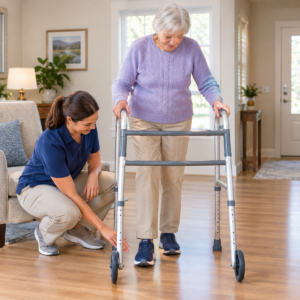
Use a dry, uncluttered floor and keep a sturdy chair nearby. Wear the shoes, then practice the movements that happen in daily life rather than judging fit only while seated.
- Stand still. Confirm both feet feel flat and the heels stay secure.
- Take several slow steps. Notice whether a toe catches, a heel slips, or the sole feels unstable.
- Practice a wide turn. The shoe should not twist or slide inside the sole.
- Approach a chair. Check that the feet can back up and position safely before sitting.
- Repeat after a brief walk. Pressure points or fatigue may appear after several minutes.
Stop the test if the walker catches the shoe, the foot slides, pain increases, or the person feels less steady. A new pair should never be first tested on stairs, wet pavement, or a long community outing.
Match the shoes for walkers to the home and outdoor route
Indoor safety still depends on the environment. Clear clutter, secure rugs, repair loose flooring, and keep walking routes well lit. Even a good sole can slip on water, oil, wax, loose powder, or a curled rug edge.
For outdoor use, inspect the sole regularly and choose a route with firm, even surfaces when possible. Wet leaves, ice, gravel, and steep slopes may require a different route, more support, or help from another person.
Know when to replace a shoes for walkers
Replace shoes when the tread is worn smooth, the sole is uneven, the heel has collapsed, the upper no longer holds the foot, or the fit has changed. Do not wait for a visible hole if the shoe has already become unstable or uncomfortable.
Keep an eye on whether both soles wear evenly. Uneven wear can reflect the way the person is walking, but it can also make the next step less predictable. Bring the shoes to a clinician or footwear professional if you are unsure whether they remain suitable.
Include foot health in the decision
Foot pain, numbness, swelling, reduced sensation, deformities, wounds, or diabetes can change what safe footwear looks like. Do not cut, stretch, or heavily modify a shoe at home if doing so could damage the upper or affect stability.
Ask a health professional about persistent pain, skin changes, repeated rubbing, or a shoe that no longer fits. The goal is not to find a “perfect” shoe online; it is to maintain a safe, comfortable walking pattern with the walker.
Common questions about shoes for walkers
These answers focus on practical safety features rather than brand rankings. A clinician should guide footwear decisions when there are medical foot or balance concerns.
Should I wear shoes inside when using a walker?
Often, yes. A secure shoe or stable closed-back slipper can provide more predictable traction and foot protection than socks alone. The actual floor and the individual’s needs still matter.
Are slip-on shoes always unsafe?
No, but they need a secure heel, good fit, and a stable sole. A loose open-back slide is more likely to shift or come off than a well-fitted shoe with a secure back.
Can worn shoes make walker use less safe?
Yes. Worn tread, a loose heel, or a tilted sole can change traction and foot position. Inspect footwear as regularly as you inspect walker tips, wheels, and brakes.
What if I have trouble fastening shoes?
Look for closures that can be managed with available hand strength, or ask an occupational therapist, podiatrist, or footwear professional for options. The closure must remain secure during walking.
Final footwear checklist for walker use
- The shoe fits both feet with usual socks or orthotics.
- The heel is secure and the sole has usable tread.
- The closure stays fastened through walking and turns.
- The shoe has been tested with the actual walker on a dry clear surface.
- Indoor and outdoor routes are clear, well lit, and appropriate for the conditions.
- Foot pain, numbness, wounds, or repeated slips are being addressed with professional guidance.