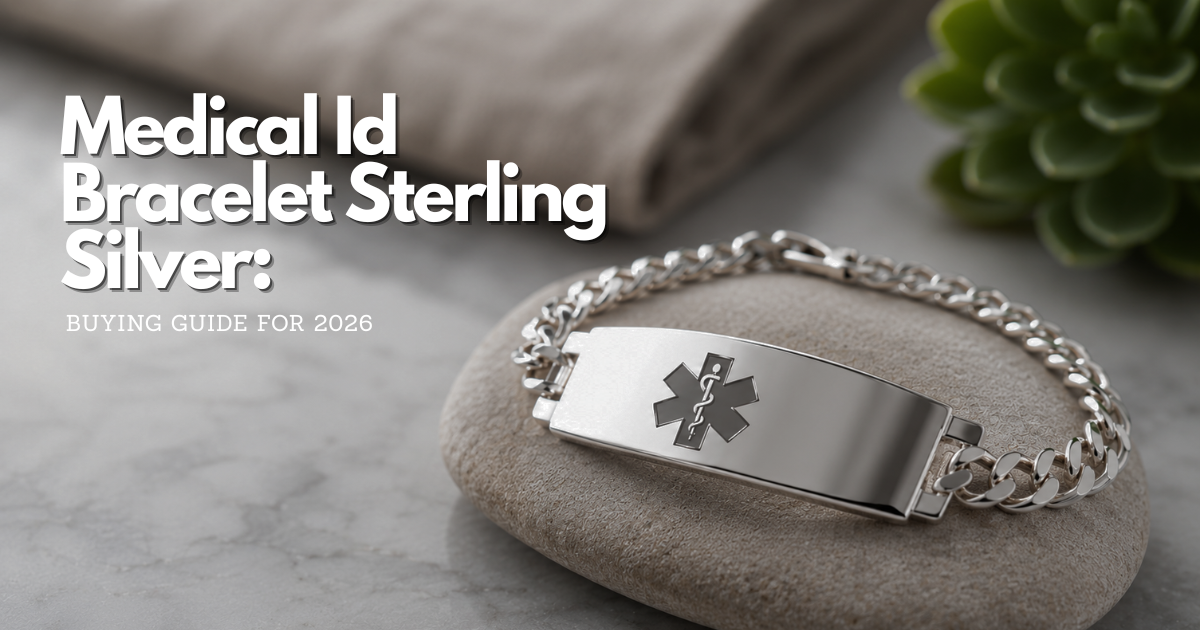
A medical id bracelet sterling silver can combine emergency identification with a bracelet a person feels comfortable wearing every day. The important decision is not the metal alone: the medical information must be readable, current, and useful if the wearer cannot speak for themselves.
Quick answer: what should a medical id bracelet sterling silver include?
A medical ID bracelet sterling silver should make the wearer identifiable and point emergency workers toward the most important information without becoming a crowded medical record. For many people, that means a recognized medical ID symbol, the person’s name when space allows, a condition or treatment that changes urgent care, a severe allergy, and a reachable emergency contact. The exact wording should be confirmed with the person’s clinician or pharmacist when it involves a diagnosis, medication, implant, or treatment instruction.
MedlinePlus notes that medical alert bracelets or necklaces can help emergency medical workers find important information, particularly for people with conditions such as diabetes, seizure disorders, or heart disease. A bracelet does not replace a medical record, a phone call to 911, or professional assessment. It is a quick cue for a situation in which a person may be confused, unconscious, unable to speak, or separated from family.
Choose a medical ID bracelet sterling silver only after the identification job is clear. A beautiful chain with a tiny or hidden engraving can be less useful than a simpler design with a visible emblem and a readable plate. The right bracelet is one the person will wear consistently, can remove safely when necessary, and can keep accurate as their health, contact, or treatment information changes.
How a medical ID bracelet sterling silver differ from plated jewelry
“Sterling silver” describes a metal standard, not a promise about the entire bracelet’s construction, engraving depth, clasp strength, or suitability for every skin. The Federal Trade Commission explains that the terms “silver,” “sterling,” and “sterling silver” describe products containing 92.5% pure silver; a 925 mark is commonly used for the same standard. The FTC also distinguishes silver-plated jewelry, which has a layer of silver applied to a base metal.
That distinction matters because the seller’s material description should be specific. Ask whether the identification plate, chain, clasp, extender, backing, and any decorative parts are sterling silver, plated metal, stainless steel, or another alloy. A product can have a sterling silver plate with a different clasp, or use a silver-colored finish that is not sterling silver. Read the description and ask the seller rather than relying on a photograph or the word “silver” in a listing title.
What a 925 mark can and cannot tell you about a medical ID bracelet sterling silver
A 925 mark can help identify sterling silver, but it does not tell you whether a medical emblem is easy to see, whether the engraving is accurate, whether the bracelet is the right length, or whether the maker will update the plate later. It also does not guarantee that every small component is made from the same material. Keep the purchase documentation and the seller’s material statement with the bracelet records.
Examine the mark, the return policy, and the product description before engraving. Personalized pieces may have limited return options. If the information is still being decided, consider waiting to personalize rather than ordering a permanent inscription that needs immediate correction.
Sterling silver versus silver-plated medical ID bracelets
Silver-plated jewelry can look similar at first and may cost less, but it is a different construction. The question is not which is universally better. It is whether the material, finish, contact points, and expected maintenance fit the person’s skin, budget, preferences, and likelihood of daily wear. Ask the seller which portions are plated and what care methods could damage the finish or the engraving.
Do not use material as a shortcut for emergency reliability. A sterling silver bracelet that stays in a jewelry box is not a dependable medical ID. A lower-cost alternative that is visible, comfortable, and updated may serve the emergency-identification purpose better for a particular person.
Medical ID bracelet sterling silvermetal questions to ask before ordering
- Is the ID plate sterling silver, silver plated, or another metal?
- Are the clasp, links, extender, and emblem made from the same material?
- Where is the purity mark, and what does the seller say it covers?
- Will the engraving remain readable after the recommended cleaning routine?
- Can the bracelet be resized, repaired, or re-engraved if health information changes?
- What is the return policy for a personalized medical ID bracelet?

Plan medical ID bracelet sterling silver information before choosing the design
The plate is a limited emergency communication surface. Start by deciding what another person needs to know quickly, then select a bracelet with enough usable engraving space. Avoid beginning with a font, charm, or chain style and trying to force critical information into whatever room remains.
Medical ID bracelet sterling silver information that can change urgent care
Information is most valuable when it alerts a responder to something that may change immediate care or communication. Examples can include a severe allergy, a condition that affects emergency decisions, an important medication or therapy, a medical implant, an anticoagulant, a communication need, or an emergency contact. The best wording depends on the person’s situation. A clinician or pharmacist can help decide which terms are accurate and concise.
Do not assume that every diagnosis belongs on the bracelet. A long list can be hard to read, can expose private information that is not needed in an emergency, and may obscure the single fact a responder needs first. If the information cannot fit clearly, consider a linked information system only after understanding its access and privacy limits; this asset does not replace guidance on QR medical IDs or full medical records.
What to write on a medical ID bracelet sterling silver when space is limited
Use a priority order. First: a recognized medical ID cue and the most urgent fact. Second: a contact path. Third: only additional facts that remain clear at the available font size. A concise inscription may be more effective than trying to reproduce a medication list. Keep an updated paper or digital medication list elsewhere for healthcare visits and emergencies.
Before submitting an engraving order, read every character aloud with the wearer and a trusted caregiver. Check spelling, abbreviations, phone digits, medication names, and punctuation. Ask whether a person who does not know the wearer could understand it. If not, simplify the wording rather than shrinking it until it becomes difficult to read.
Medical ID bracelet sterling silver wording needs clinical confirmation
Do not invent abbreviations to save space. Some abbreviations can be misunderstood, and a treatment instruction may become wrong after a medication or care-plan change. Bring the draft wording to a clinician or pharmacist when it involves a high-risk condition, anticoagulant, insulin, seizure plan, allergy, implanted device, transplant, or do-not-resuscitate status. The bracelet is not the place to create a legal directive.
For a person with dementia or risk of getting lost, NIA recommends that a medical bracelet may include the person’s name, address, and caregiver phone number. Consider privacy and personal preference before placing a full home address on a visible item. A caregiver should also keep a current emergency plan and know that a bracelet is only one safeguard.
| Priority | Question to resolve | Example of the decision, not prescribed wording | What to verify |
|---|---|---|---|
| 1. Immediate cue | What fact could change urgent care or identify a communication barrier? | A severe allergy, critical condition, or treatment-related alert. | Confirm wording with a clinician or pharmacist when medically significant. |
| 2. Identity and contact | How can responders identify the person or reach a trusted contact? | Name when space allows and one current emergency number. | Check the digits and who is actually able to answer. |
| 3. Additional context | What still adds value without reducing readability? | A short communication or mobility note. | Do not crowd the plate or include a full medical history. |
| 4. Update path | What happens after a change in health, phone number, or caregiver? | Replacement, re-engraving, or a documented review schedule. | Make the update responsibility explicit before purchase. |
Choose a medical ID bracelet sterling silver for readability and fit
A medical ID bracelet sterling silver can be elegant and still be practical, but readability must come first. Check the contrast between the inscription and the metal finish, the size of the plate, the visibility of the medical symbol, and whether a responder can turn the bracelet over easily. A decorative surface, tiny script, or engraving placed under a clasp can defeat the purpose of the ID.
Medical ID plate size, font, and symbol visibility
Ask to see a life-size engraving preview rather than a magnified computer image. Look at it in ordinary indoor light, near a window, and with reading glasses if the wearer or caregiver uses them. The medical symbol should be visible enough to prompt a closer look. If the bracelet has a front and back engraving area, decide which side is most likely to be seen first.
Engraving depth and finish vary by maker. Do not assume that a darkened engraving, polished field, or decorative border will last or remain easy to read in the same way across products. Ask for current care instructions and a clear answer about what happens if the engraving is hard to read on arrival.
Medical ID bracelet sterling silver length, clasp, and daily comfort
Measure the wrist according to the seller’s guidance and account for swelling, arthritis, assistive devices, and the wearer’s preferred looseness. A bracelet that pinches can be removed; a bracelet that is too loose can rotate so the plate is hidden, catch on clothing, or be lost. If there is an extender, determine whether it changes the position of the plate or makes the clasp harder to manage.
Try a comparable clasp if possible. Lobster clasps, magnetic closures, toggles, and other designs create different tradeoffs in dexterity, security, and ease of removal. A magnetic closure may be convenient for some hands but must be discussed with the seller and a clinician if the wearer has an implanted medical device or another situation where magnetic products could matter. Do not make assumptions based on general jewelry advice.
Medical ID bracelet sterling silver style for men and for individual preferences
The search for a sterling silver medical ID bracelet for men often reflects a fit or style preference, not a separate medical requirement. Focus on wrist size, plate width, link scale, closure, engraving room, and whether the person will wear the bracelet with their normal clothing. A narrow chain, a curb-style link, a leather-accent design, or a more traditional ID plate can all be practical only if the medical information remains visible and the material details are clear.
A wearer should not have to choose between feeling like themselves and having usable emergency identification. Invite them to compare a few unbranded design approaches, but keep the decision criteria the same: visibility, comfort, reliable closure, enough engraving space, and a plan for updates.
Skin sensitivity and medical ID bracelet comfort
Skin reactions can have many causes, including moisture, soaps, metals, finishes, or friction. A seller cannot diagnose a skin condition, and this guide cannot determine whether sterling silver is appropriate for a particular person. If the wearer has a known metal allergy, recurrent rash, fragile skin, wound, swelling, or medical device concern, ask a clinician or dermatologist for individualized advice before choosing a bracelet for continuous wear.
Stop wearing the bracelet and seek appropriate medical guidance if there is a concerning reaction. Keep a backup form of medical identification available while the issue is resolved. A bracelet should support safety, not create an avoidable skin or fit problem.
Wear a medical id bracelet sterling silver where it can be found
A medical ID works only when it is on the person and recognizable. MedlinePlus emphasizes that a bracelet or necklace should be findable by emergency workers. Decide when the bracelet will be worn, where it will go during bathing or charging of other devices, and what backup will be used if it must be removed for a procedure, repair, or skin concern.
Build a daily medical ID bracelet habit
Attach the habit to an existing routine: getting dressed, putting on glasses, taking morning medication, or leaving the home. Avoid storing the bracelet in a place that is safe but forgotten. A small dish by the bed may be useful for overnight removal only if the person will reliably put it back on before standing up or leaving the room.
For someone with memory changes, use a simple visual reminder and involve the caregiver in the routine. NIA notes that medical ID bracelets and necklaces can be helpful if a person gets lost or needs help. That benefit depends on the bracelet being present and the contact information being current.
Medical ID bracelet use during bathing, exercise, and medical visits
Follow the specific maker’s instructions for water exposure and cleaning. Do not assume that sterling silver, the engraved plate, every clasp, or a decorative component has the same tolerance for soap, chlorine, salt water, lotions, or cleaning agents. If the bracelet is removed, use another way to keep emergency identification nearby, such as an approved card or a companion who has the relevant information.
Wear the bracelet to medical appointments unless a clinician asks for its removal. Bring an updated medication list and medical records as appropriate; the bracelet is not meant to carry everything. Before imaging, surgery, or a procedure, follow the facility’s instructions about jewelry and medical ID items.
What to do if a sterling silver medical ID bracelet is lost
First, make sure the person still has another way to communicate urgent information. Contact the seller or program if there is an associated account, and update any linked emergency-contact record if needed. If the bracelet carries an address, phone number, or personal health information, consider the privacy implications of the loss and update contact arrangements promptly.
Order a replacement only after reviewing the old inscription. A loss can expose an error that was easy to overlook: an outdated phone number, too-small text, a clasp that did not suit the routine, or a plate that was not visible. Use that information to improve the replacement rather than automatically repeating the same choice.
Care for sterling silver medical ID jewelry without hiding the engraving
Silver can tarnish, and cleaning can change a bracelet’s appearance. The National Park Service’s conservation guidance explains that silver care depends on the object’s condition and surface; aggressive polishing or an unsuitable chemical method can remove material or affect finishes. For a medical ID bracelet, the practical rule is simple: follow the maker’s current care instructions and avoid experimenting on an engraved plate when readability matters.
Check the sterling silver medical ID bracelet before cleaning
Look for loose links, a weak clasp, rough edges, fading engraving, trapped residue, or a plate that has become difficult to read. If the bracelet has an oxidized background, coating, stone, leather element, enamel, adhesive, or plated component, a generic silver-cleaning method may be inappropriate. Ask the maker or a qualified jeweler how to clean that exact construction.
Take a clear photo of the engraving before a deep clean or repair. The photo helps you compare readability afterward and preserves the information while the bracelet is off the wrist. It is not a replacement for the bracelet in an emergency, so keep another identification method available during maintenance.
Gentle medical ID bracelet cleaning and drying
Use only the care method stated by the maker for the complete bracelet. In general, avoid abrasive scouring, harsh chemicals, and aggressive polishing of an engraved field unless the seller specifically approves it. Rinse and dry according to the instructions, paying attention to the back of the plate, links, and clasp where residue can collect. Do not use a method that makes the lettering less distinct.
For tarnish that affects the bracelet’s appearance or legibility, ask a professional jeweler or the maker before using a dip, paste, ultrasonic cleaner, or home chemical process. Conservation sources warn that cleaning choices can alter silver surfaces. An ID bracelet has a functional engraving, so preserving that readability matters more than restoring a mirror finish.
Store a silver medical ID bracelet so it is ready to wear
Store the bracelet clean and dry in a designated place that is easy for the wearer and caregiver to find. Do not store it beside unrelated jewelry where it may be confused with a decorative bracelet. If it is kept in a pouch or box, add a simple label and keep the emergency information record nearby but protected from casual viewing.
Long-term storage should be the exception for an active medical ID. If the bracelet is not being worn because it needs repair, feels uncomfortable, or no longer has correct information, document the alternative identification plan. A polished bracelet in a drawer is not an active safety tool.
When a medical ID bracelet engraving or hardware needs replacement
Replace or re-engrave the bracelet when a phone number changes, a relevant medical alert changes, the plate becomes unreadable, the clasp fails, the fit changes, or the bracelet causes ongoing discomfort. Do not wait for an annual review if the information is already wrong. Make the change as soon as a clinician, pharmacist, caregiver, or wearer identifies the issue.
Before shipping a personalized bracelet for repair, write down the inscription and take a photograph. Confirm whether the jeweler will preserve the original engraving, whether the plate must be replaced, and how the bracelet will be returned. Use a temporary medical ID option during the repair period.
Protect privacy while keeping medical ID information useful
A visible bracelet creates a deliberate tradeoff: it makes selected information easier for someone else to find. Keep the inscription limited to what may help in an urgent situation, avoid unnecessary identifiers, and discuss the choice with the wearer. Privacy is not a reason to make emergency information unusable; it is a reason to choose it carefully.
Medical ID bracelet privacy and personal details
Consider whether a full birth date, home address, insurance number, patient portal credential, or complete medication list really belongs on a public-facing bracelet. Those details can create security or privacy risks and may not help a responder in the first moments. A name, concise alert, and one emergency contact may be sufficient for many people, but the exact decision is personal and may need clinical input.
HHS explains that HIPAA protects health information held by covered entities and business associates under defined circumstances. A personal engraving is not a HIPAA-controlled medical record just because it contains health-related words. Treat the bracelet as information that strangers may see, and do not assume a seller’s general privacy language resolves the wearer’s disclosure choices.
Emergency contacts on a sterling silver medical ID bracelet
Choose a contact who knows the wearer, answers reliably, and can make decisions or reach the right person. Confirm the number regularly. A phone number without an area code, a disconnected line, or a contact who has moved away can turn a useful bracelet into a dead end. If several people share caregiving, decide who is first and who is backup.
Tell the contact that their number is engraved and explain what information they should have ready if called. They may need the wearer’s location, communication needs, major conditions, medication list, clinician contact, or access instructions. Do not engrave sensitive details simply because the contact has them elsewhere.
QR medical ID and sterling silver bracelet boundaries
A QR-linked profile can hold more information than an engraved plate, but it introduces questions about phone access, scanning, passwords, account maintenance, connection, privacy, and whether a responder will use it. It is a distinct solution from a traditional sterling silver medical ID bracelet. If a QR feature is considered, keep the engraved emergency cue readable and use a separate, up-to-date privacy review.
Never assume that a QR code will be scanned, that a device will have service, or that a full profile is more useful than a concise visible alert. The physical bracelet should still communicate the essential fact without requiring technology.
When a sterling silver medical ID bracelet needs another identification layer
A bracelet is a fast, visible starting point. It is not designed to hold every medication, diagnosis, clinician instruction, advance directive, or insurance detail. The more complex the person’s health situation, the more important it is to pair the bracelet with a current medication list, an emergency contact plan, and records that can be accessed by the appropriate people. Adding more tiny text to the plate is not the same as improving emergency preparedness.
Medical ID bracelet limits when a person cannot wear jewelry
Some people cannot safely or comfortably wear a bracelet all the time. They may remove it for a procedure, work task, skin problem, swelling, physical therapy, contact sport, or sensory discomfort. A person with arthritis may be able to wear a bracelet but not fasten it independently after bathing. Someone who uses a mobility aid may find that a loose chain catches on equipment. These are practical fit problems, not failures of commitment.
Identify an alternate form of identification before the bracelet is removed. Depending on the person’s needs, that might be a wallet card, a medical ID necklace, an emergency contact card attached to a mobility aid, or a clinician-approved plan. Do not treat a phone-only solution as automatic backup; the phone may be uncharged, locked, missing, or out of reach. The useful backup is the one the person can carry and another person can find.
Medical ID bracelet limits when information changes often
A plate works best for stable, high-priority facts. If the person’s medication list, treatment plan, emergency contact, or location changes frequently, use the bracelet for the most durable alert and keep details in a record that is easier to update. A caregiver can maintain a dated medication list for appointments, but should not assume that a responder will see a paper in the home during every emergency.
Make a change protocol. When a clinician changes a medication or diagnosis, ask whether the change affects emergency identification. When a phone number changes, update the bracelet decision immediately rather than leaving it for a future jewelry order. The goal is not to engrave every new fact; it is to make sure the bracelet never carries information that is dangerously outdated or misleading.
Medical ID bracelets and emergency service expectations
A traditional engraved bracelet does not automatically notify a family member, provide live location, contact a monitoring center, or summon emergency services. It can help a responder identify the wearer and see an alert, but it has no battery, network, or response service on its own. Those differences should be clear when a family is deciding whether they need identification, an alert system, a communication device, or several layers together.
Do not let a medical ID bracelet create a false sense that someone is being monitored. If a person lives alone, falls frequently, has wandering risk, or may be unable to call for help, develop the broader support plan with the person, caregivers, and appropriate professionals. The bracelet can contribute a useful identity and information cue within that plan, but it cannot perform the job of a call button or regular human check-in.
Choose a medical ID format around autonomy and routine
Ask the wearer what they are willing to use. Some people prefer a bracelet because it looks like ordinary jewelry; others dislike wrist jewelry but will wear a necklace or keep a card in a familiar wallet. A person who decides not to wear a visible medical cue should still be included in a respectful conversation about the risks, alternatives, and what information they are comfortable sharing.
Autonomy does not mean ignoring a real safety concern, and safety does not mean choosing the most intrusive option by default. The best plan is often the least burdensome one that the person will actually sustain. Revisit the decision after a hospitalization, move, functional change, or actual emergency instead of assuming the original choice will always fit.
Set a review schedule for a sterling silver medical ID bracelet
A medical ID bracelet is only as good as its last update. Build a short review into an existing routine, such as a birthday month, annual wellness visit, seasonal clock change, or caregiver planning meeting. The review should be quick enough to happen and specific enough to catch errors before an emergency.
Monthly medical ID bracelet checks
Once a month, look at the bracelet in ordinary light. Check that the plate is present, the medical symbol and engraving are readable, the clasp closes securely, the fit is comfortable, and the emergency contact number is still correct. If the bracelet is stored rather than worn, ask why. A simple monthly check can reveal a broken clasp, a skin issue, or a routine that has quietly stopped working.
Medical ID bracelet review after an emergency or near miss
After a fall, emergency department visit, confusion episode, lost-person event, or instance when the bracelet was needed, ask what was useful and what was missing. Was the bracelet worn? Did someone notice it? Was the engraving readable? Did the contact answer? Did the person’s needs change? This is not a test of whether the wearer did everything correctly. It is a chance to improve the safety plan using real evidence.
Write down the outcome while it is fresh. If a change is needed, assign one person to complete it and another to confirm it. When the bracelet is sent for repair or replacement, keep a temporary ID method in use until the new one has been checked for accuracy and fit.
Annual confirmation of medical ID bracelet wording
At least once a year, compare the engraving with the person’s current emergency plan. Confirm the condition or alert is still accurate, the emergency contact is willing and reachable, the person still wants the information disclosed, and the bracelet still fits their routine. Ask a clinician or pharmacist whether a clinically important phrase remains appropriate rather than copying language from an old prescription label or a family note.
Use this review to check the records that support the bracelet. Make sure the medication list, care contacts, and preferred hospital or clinician information are current in the places where the household keeps them. The bracelet should point to a prepared person and a coherent plan, not become the only record anyone can find.
Medical ID bracelet costs, ordering terms, and realistic expectations
The cost of a sterling silver medical ID bracelet can include the metal, engraving, chain or band, clasp, sizing, shipping, repair, replacement, and an optional linked service. Prices change and vary widely, so this guide does not quote a current amount or recommend a seller. Compare the total cost of keeping the identification accurate, not just the product price shown first.
Medical ID bracelet engraving, resizing, and replacement terms
Before ordering, ask whether engraving is included, whether both sides can be engraved, how many characters fit at a readable size, and whether changes can be made later. Ask how a resize affects the plate position, how a lost bracelet is replaced, and whether a repair service can preserve the inscription. Keep these answers with the order record.
Personalization can change return rights. Review the cancellation, return, warranty, and repair terms before authorizing engraving. If the bracelet arrives with an error, photograph it immediately, compare it to the approved text, and contact the seller through a documented channel.
Do not treat a medical ID bracelet as insurance coverage
A bracelet is consumer jewelry and emergency-identification support, not insurance coverage or a guaranteed medical service. Do not assume Medicare, Medicaid, a health plan, or a clinician will pay for a particular item. If a program, insurer, or community organization may offer assistance, verify eligibility directly and get the current terms in writing.
The more important cost question is whether the person will maintain the bracelet. Budget for changes in contacts, medical information, fit, and hardware. A cheap bracelet that cannot be updated may become more costly than a design with a clear replacement path.
Keep the medical ID bracelet order record
Save the approved engraving text, material description, size, care instructions, order confirmation, return terms, and a photograph of the finished bracelet in one secure place. This record makes it easier to correct an error, order a replacement, confirm what the bracelet is made of, or compare the inscription after a health change. It also prevents a caregiver from guessing at old wording during an urgent replacement.
Record the date of the last information review beside the order details. If the bracelet is handed down to a new caregiver or the wearer moves, share only the parts of the record that the new helper needs. The goal is continuity without making unnecessary health details broadly accessible.
Caregiver routines for a sterling silver medical ID bracelet
A caregiver can help keep the bracelet accurate without taking over the wearer’s choices. Discuss the purpose, what is engraved, who may be contacted, and when the bracelet should be removed. The wearer should understand the plan as much as their circumstances allow.
Review medical ID bracelet details after health changes
Review the inscription after a new diagnosis, changed allergy status, new medication that a clinician says is important to identify, new implant, changed emergency contact, move, change in communication needs, or a lost bracelet. Do not add every clinical detail automatically. Ask what information is genuinely important in an emergency and whether the bracelet remains the right format.
Teach others to recognize the medical ID bracelet
Show close family, home aides, and trusted neighbors where the bracelet is kept when not worn and what the emblem means. The goal is not to ask them to make medical decisions. It is to help them find the relevant information and call for appropriate help if the wearer cannot communicate.
For dementia-related wandering risk, NIA recommends additional safeguards such as current identification and a caregiver phone number. A bracelet may be useful, but it should sit within a wider plan that can include supervision, neighbor awareness, home safety steps, and emergency contacts.
Frequently asked questions about sterling silver medical ID bracelets
Is a sterling silver medical ID bracelet really sterling silver if it says 925?
A 925 mark is commonly used for sterling silver, which the FTC describes as 92.5% pure silver. Verify what the mark and seller description cover, because clasp, links, plate, and decorative components may not all be the same material.
What should I engrave on a medical ID bracelet?
Prioritize a clear medical alert, a concise fact that can affect urgent care, and a reliable contact path. Confirm clinically important wording with a clinician or pharmacist, keep text readable, and avoid trying to engrave a full medical history.
Can a sterling silver medical ID bracelet tarnish?
Silver can tarnish. Follow the specific maker’s care instructions and avoid cleaning methods that could damage finishes or make the engraving harder to read. If the plate’s legibility is affected, ask the maker or a qualified jeweler before aggressive cleaning.
Are sterling silver medical ID bracelets appropriate for men?
They can be, but the practical criteria are the same for everyone: a comfortable fit, a secure and manageable clasp, visible medical cue, readable engraving, and a style the person will actually wear.
Does a medical ID bracelet replace a wallet card or phone?
No. A bracelet is a quick, visible cue. Keep a current medication list, emergency contacts, and other records in appropriate formats. Use a phone or call 911 directly in an emergency when possible.
Can I put an address on a medical ID bracelet?
It may help in some situations, such as a person at risk of getting lost, but it also makes personal information visible. Discuss the tradeoff with the wearer and caregiver, consider a contact number, and keep the wider safety plan current.
How often should a medical ID bracelet be updated?
Update it whenever a medically relevant alert, emergency contact, communication need, fit, or readability changes. A scheduled review can help, but do not wait for one if the engraving is already inaccurate.
What if the medical ID bracelet causes a rash or is uncomfortable?
Stop wearing it and seek appropriate professional advice if there is a concerning skin reaction. Verify the material and finish with the seller, and use another medical ID method while deciding on a replacement.
Medical ID bracelet sterling silver readiness checklist
- The material claim has been verified: sterling silver, plated, or another metal.
- The medical emblem and essential engraving can be read in ordinary light.
- Clinically important wording has been checked with an appropriate professional.
- The emergency contact is current, reachable, and understands their role.
- The bracelet fits, the clasp can be managed, and the wearer is willing to use it.
- There is a plan for bathing, repair, skin concerns, and temporary removal.
- Care instructions do not risk hiding the engraving or damaging the bracelet.
- Privacy choices have been made deliberately; unnecessary identifiers are not engraved.
- A caregiver or trusted person knows how and when to review the information.
- The bracelet is supported by a phone, current records, and an emergency plan rather than treated as the only safeguard.
A sterling silver medical ID bracelet is a good fit when the person likes wearing it and the emergency information remains easy to find, easy to read, and easy to update. The metal can make the bracelet feel personal and durable; the real value is the clear, current information it carries when it is needed.
Official sources used to verify this sterling silver medical ID bracelet guide
- MedlinePlus: Medical alert bracelet — used for the role of medical identification in emergencies and the need for emergency workers to find it.
- National Institute on Aging: Tips for Living Alone With Early-Stage Dementia — used for the safety role of medical ID bracelets and necklaces when a person may get lost or need help.
- National Institute on Aging: Coping With Alzheimer’s Behaviors: Wandering and Getting Lost — used for identification and caregiver-contact planning in wandering-risk situations.
- Federal Trade Commission: Buying Platinum, Gold, and Silver Jewelry — used for sterling silver, 925, and silver-plated material definitions.
- National Park Service: Caring for Silver and Copper Alloy Objects — used for the caution that cleaning and polishing choices can affect silver surfaces.
- HHS: Protecting the Privacy and Security of Your Health Information When Using Your Personal Cell Phone or Tablet — used to explain why health-related personal information is not automatically protected by HIPAA in every context.
Sources were accessed August 17, 2026. This guide does not diagnose conditions, prescribe engraving text, verify seller claims, or guarantee emergency response. Confirm personal medical wording and current product terms before ordering.
2 comentarios en «Medical Id Bracelet Sterling Silver: A Practical Guide»