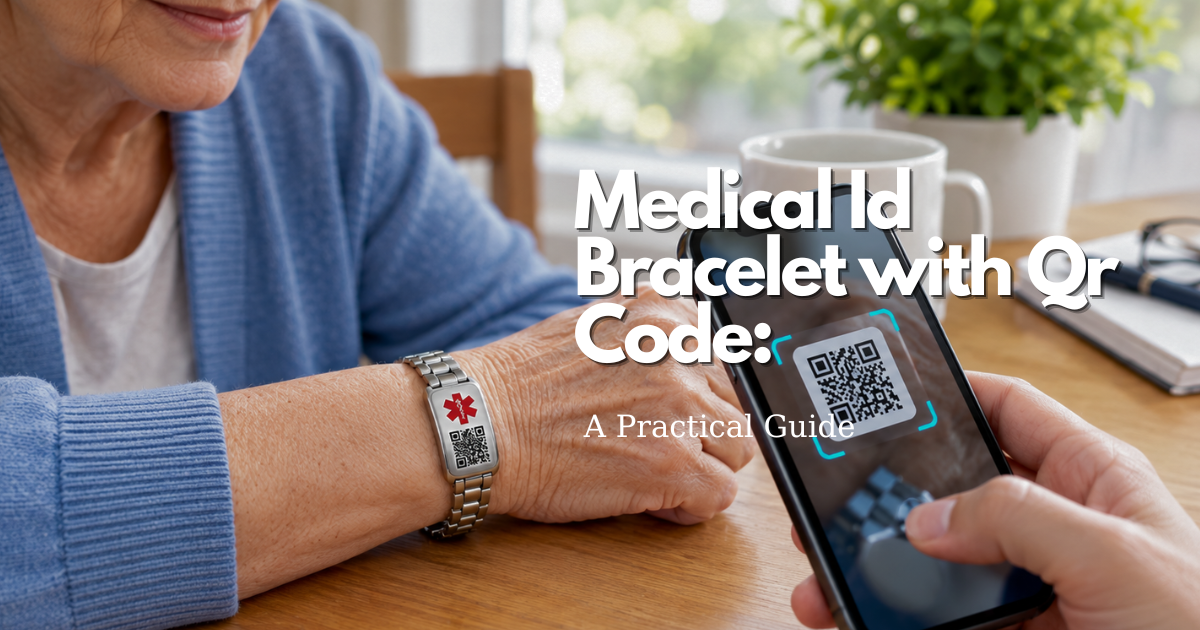
This guide focuses on the wearable bracelet: fit, information planning, testing, privacy, maintenance, and how to select a provider without treating a QR code as a product promise. A separate planned guide covers the broader QR code medical ID system, while this page stays focused on the decision to use a bracelet on the wrist. A Medical Id Bracelet with Qr Code should be viewed as one part of a broader emergency-information plan.
What a QR Medical Bracelet Can and Cannot Do
A QR code is a machine-readable pattern that can direct a smartphone camera or scanner to information. In a Medical Id Bracelet with Qr Code, the code may open a profile, a secure page, a contact screen, or a provider-managed record. The physical bracelet helps identify that a person carries emergency information, while the code may provide more detail than a few engraved lines. What appears after scanning depends entirely on the provider and account setup. Some services allow a detailed profile, while others show a shorter page or contact instruction.
Do not assume that a QR code itself stores a complete medical record, works without any connection, contacts emergency services, or alerts family automatically. Those capabilities are separate from the code. Ask the provider what a scan shows to a stranger, what requires a login, whether the page works with a standard phone camera, and what happens if the account is inactive. A Medical Id Bracelet with Qr Code is a communication aid. It does not replace a call to 911, a current medication list, an advance directive, or a clinician’s instructions.
Start With the Person, Not the Bracelet Style
Fit before features is a useful rule. A sophisticated Medical Id Bracelet with Qr Code is of little value if it is uncomfortable, difficult to fasten, removed for bathing, too easy to lose, or incompatible with a watch, sleeve, wheelchair transfer, or skin sensitivity. Ask the wearer when they will use it, whether they can manage the clasp, whether wrist swelling changes during the day, and whether they prefer a bracelet, necklace, card, or combination.
A person with reduced hand strength may need a magnetic or slide closure, but it should first be checked to make sure it will remain secure during normal daily activities.
Consider sensory needs as well. High contrast, a readable medical symbol, an uncluttered surface, and a shape that does not snag can matter more than a decorative finish. For someone with dementia or a tendency to remove unfamiliar items, introduce the bracelet gradually and make its place in the routine predictable.
For someone who spends time in water, ask about the material and provider instructions rather than relying on a generic claim that a bracelet is waterproof.
Include the wearer in the decision. A medical ID should support independence and dignity, not make a person feel labelled or watched. A simple explanation—“this helps someone find the important information if you cannot explain it yourself”—can be more respectful and useful than a long list of frightening possibilities.
Choose Information for an Emergency Reader
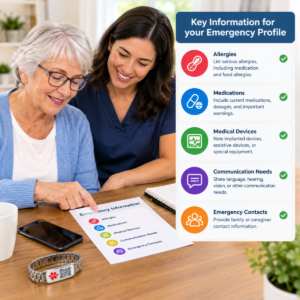
Information should be short, accurate, and organized around actions that could change emergency care. The content depends on the person, but examples can include serious allergies, conditions that may affect immediate treatment, essential medications, implanted devices, anticoagulant use, communication needs, emergency contacts, and the location of an advance directive if one exists.
For a Medical Id Bracelet with Qr Code, avoid adding a diagnosis simply because it is part of a long health history. Ask a clinician or pharmacist which information is most important to share in an emergency.
Use plain terms a responder can recognize. Avoid unexplained family shorthand, outdated medication names, uncertain diagnoses, long personal stories, financial details, passwords, Social Security numbers, insurance IDs, or any information you would not want a stranger to see or access.
The goal is not to build a full medical chart. It is to make urgent facts available in a form that can be reviewed quickly and verified by the care team.
Make a one-page paper version of the same essential information. Keep it in a wallet, refrigerator packet, or emergency folder according to the person’s routine. A printed backup is valuable when a camera cannot scan the bracelet, a phone battery has failed, the service is unavailable, or the information needs to travel with the person to an appointment.
Compare Bracelet Construction and Usability
When choosing a Medical Id Bracelet with Qr Code, look beyond appearance. Materials, closure, sizing, visibility, and everyday usability can determine whether the bracelet becomes a dependable part of the person’s routine.
Band and Plate Materials
Metal, silicone, fabric, leather-like materials, and interchangeable bands each create different maintenance needs. A person with sensitive skin, frequent hand washing, arthritis, or edema may need to try a material and fit before relying on it all day.
Check the provider’s care instructions and whether the QR code remains readable after normal wear. If an etched or printed code becomes damaged, do not assume the profile is still reachable—test it.
Clasp, Adjustability, and Sizing
Measure the wrist according to the seller’s instructions, but also think about real movement. A bracelet that is too tight can be uncomfortable; one that is too loose can rotate, catch, or be lost.
If swelling varies, an adjustable option may be more practical. Have the wearer practice opening and closing the bracelet while seated, standing, and after ordinary tasks. A caregiver should know how to remove it safely if medical care requires it.
Visible Identification and Scan Instructions
A QR code that cannot be recognized as a medical ID may be overlooked. A bracelet may use a medical emblem, brief text, or a scan prompt, but avoid treating any symbol as a universal guarantee.
Look at the Medical Id Bracelet with Qr Code in normal indoor light and outdoors. Can the wearer and a family member find the code? Is it positioned where it can be scanned without twisting the wrist painfully? Is there a concise fallback instruction if scanning fails?
Evaluate the QR Service Before Sharing Health Information
The bracelet is only one part of the decision. Review the service behind the code. Find out whether it creates a public page or a protected profile, whether the wearer can change information directly, whether a caregiver can help update it, and whether there are membership, renewal, or deactivation terms.
For a Medical Id Bracelet with Qr Code, read the privacy policy and ask what information is visible after a scan, how data is stored, how a lost bracelet can be disabled, and whether the provider can export or delete a profile.
Do not equate “encrypted,” “HIPAA-compliant,” or “secure” language with a personal guarantee. Those words need context: what is protected, who may view information, and what the user must do to keep the account secure.
Use a unique strong password, enable any available account protection, limit who receives login details, and review the profile after any caregiving change. Avoid placing a QR code on a bracelet that points to a shared document with editing permission for many people.
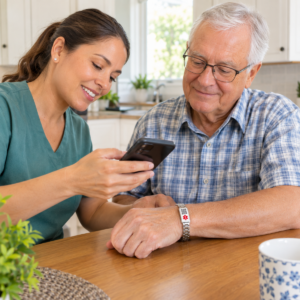
Test the actual experience before depending on it. Scan the Medical Id Bracelet with Qr Code with a phone that is not logged into the owner’s account. Check whether the opening page is readable, whether it reveals only the intended information, and whether emergency contact numbers are correct.
Repeat the test after every major edit and after receiving a replacement bracelet. Keep a date for the next review.
Update a Medical Id Bracelet with Qr Code When Life Changes
Medication changes, new allergies, a hospital discharge, a new implanted device, a move, a new emergency contact, or a changed care preference should trigger a review.
The profile should not become a place where old information accumulates. Remove discontinued medicines when appropriate, confirm doses with the current medication list, and avoid using the profile to make treatment decisions.
If a person cannot manage updates, assign a trusted caregiver and create a simple review process with the care team. A Medical Id Bracelet with Qr Code is only as useful as the information connected to it.
For a person with several specialists, one family member should coordinate the emergency summary. Different portals can contain conflicting details.
A QR profile should use the most current verified facts and tell responders where to find fuller records, not attempt to copy every note from every clinician. A pharmacist or clinician can help identify which medications and warnings are essential.
Privacy and Safety Tradeoffs
A Medical Id Bracelet with Qr Code must balance accessibility with privacy. More visible information can be helpful when scanning is not possible, but it can also disclose health details in everyday settings.
A QR-linked profile can hold more information, but it depends on technology and the provider. One practical approach is to keep a small amount of critical information visible when appropriate and reserve the larger profile for the QR destination.
The right balance is personal and may change over time.
Consider what happens if the bracelet is lost. Know how to disable or update its associated profile, how to replace the band, and whether a new code is issued.
Keep the provider’s customer-support details in the emergency folder. Do not put a home address, personal identifier, financial account, online-banking information, or passcode in a profile designed for an emergency reader.
Create an Emergency-Information Routine
A bracelet works best inside a larger routine. Pick one person to check the profile with the wearer after medication reconciliations, hospital discharge, annual wellness visits, or a change of emergency contact.
A Medical Id Bracelet with Qr Code should be reviewed on a predictable schedule. Put the review date on a family calendar.
A routine prevents a common failure: a bracelet that is physically present but leads to an old phone number or a medication that was stopped months ago.
Use the same source list for the bracelet profile and the person’s paper emergency summary. If the two documents disagree, correct the underlying information before changing either one.
Keep original medication bottles, pharmacy printouts, or the current clinician list available for verification. A QR page should be a concise emergency communication tool, not a place to guess about prescriptions, doses, diagnoses, or treatment wishes.
Practice with the person. Ask them to explain where the bracelet is, what it is for, and whom it may help contact.
If they do not understand or dislike it, revise the plan. A device that creates anxiety or is regularly removed needs a different approach, such as a wallet card, a necklace, visible engraving, a phone health record, or a combination chosen with the person.
Plan for Scan Failure and No-Phone Situations
A Medical Id Bracelet with Qr Code depends on someone noticing it, having a capable camera or scanner, and being able to reach the destination. Those conditions are often present, but they are not certain.
The bracelet should therefore be understandable without a scan whenever possible. Consider a visible medical emblem, a short instruction, or limited critical engraving if it fits the person’s privacy preferences.
Keep a written emergency summary available in another predictable location.
Think through likely situations. At home, a family member may have a phone and know where information is kept. In a restaurant, on a walk, or during travel, the bracelet may be the only immediate clue.
In a hospital, staff will still verify information through their own process. The purpose is to offer a useful starting point, not to make a QR page the sole authority about the person’s care.
Test the Medical Id Bracelet with Qr Code under normal conditions: dim indoor light, a phone with a smudged camera lens, a different family member’s device, and a connection that is not the owner’s home Wi-Fi.
If the scan path is slow, confusing, or exposes more information than intended, contact the provider or choose another system before treating the bracelet as ready.
Respect Consent and Caregiver Boundaries
When an adult can make their own decisions, they should decide what information is carried and who can edit the profile. A caregiver can explain options and help with setup, but should avoid adding sensitive material without the person’s agreement.
If a person has a legal representative, follow the applicable documentation and the provider’s account rules. Be especially careful with mental-health information, substance-use history, and family contact details; only information that is genuinely useful in an emergency should be included.
Agree on who receives account recovery information. Avoid sharing one password across a large family group.
If several people need to help, use the provider’s authorized-access options if available, document the responsibilities, and review them when a caregiver relationship changes.
This is both a privacy practice and a safety practice: people need to know who is responsible for keeping the information current.
Use the Bracelet Alongside Other Emergency Tools
A Medical Id Bracelet with Qr Code can complement, rather than replace, other preparations. A person may also use a medication list, a wallet card, a phone emergency-contact setting, an advance-care-planning document, a lockbox, or a medical alert system.
Each has a different job. A medication list needs frequent updates; a phone might not be accessible; an alert button summons help but may not explain the person’s health history.
Combining tools deliberately is more useful than expecting one item to do everything.
For someone with mobility needs, keep the wearable comfortable during transfers and daily care. For someone with impaired vision, select a form that a caregiver can identify and maintain.
For someone who travels, check the service’s access and language limitations before leaving. These are individualized decisions. A clinician, occupational therapist, pharmacist, or social worker may help identify the appropriate questions, while the person remains central to the plan.
Review Cost, Ownership, and Support Before Ordering
The purchase price is not always the full cost of a Medical Id Bracelet with Qr Code. Some providers include an online profile with the bracelet; others charge for membership, premium features, profile support, replacement, shipping, or renewal.
Ask whether the service remains usable if payment stops, whether a caregiver may call for support, and whether the company has a clear process for a lost or damaged code. Record the answer before entering payment information.
Look for a plain return policy and a way to test the actual bracelet after it arrives. Check the QR code, fit, clasp, profile visibility, and update process within the return period.
A product photograph cannot show whether the code is easily scannable on the person’s wrist or whether the band irritates their skin. Do not make a safety decision based only on reviews, promotional language, or an influencer’s experience.
The person’s own routine and the provider’s written terms are more useful evidence when evaluating a Medical Id Bracelet with Qr Code.
Be cautious with a listing that describes a generic “QR code medical ID bracelet” without explaining who hosts the information, how it is edited, or what happens when the code is scanned.
A code that only leads to a blank form, a broken page, or a private document inaccessible to a responder does not accomplish the intended purpose. The provider should make the basic scan path understandable before purchase.
A Simple Setup Checklist
Before relying on a Medical Id Bracelet with Qr Code, work through these practical steps:
- Choose the wearable format with the person who will use it.
- Confirm the bracelet fits, is comfortable, and the QR code is visible.
- Use verified information from the current medication list and care team.
- Limit the profile to emergency-relevant facts and contacts.
- Set a unique account password and decide who may update the information.
- Scan the code from a different phone and check exactly what appears.
- Create a paper backup and tell key helpers where it is kept.
- Set a review date and update after any significant change.
This sequence makes the bracelet a maintained tool rather than a one-time purchase. It also helps a family discover problems early, when they can still be fixed without an emergency.
Questions to Ask a Provider
Before ordering a Medical Id Bracelet with Qr Code, ask the provider clear questions about access, privacy, costs, maintenance, and account management.
- What does a stranger see immediately after scanning the code?
- Does a scan require an app, account, password, subscription, or internet connection?
- Can the code be disabled if the bracelet is lost?
- Who can update the profile, and is there a record of changes?
- What information is stored, how is it protected, and how can it be deleted?
- Does the code remain with the wearer if the band is replaced?
- What is the cost now and later, including replacements and support?
- What written instructions are available for emergency readers and caregivers?
Write the answers in the person’s emergency folder. If a provider cannot give clear answers to these basic questions, consider another option.
The bracelet should reduce uncertainty, not add another account that nobody in the household understands.
Situations That Deserve an Extra Conversation With the Care Team
Some circumstances make emergency information especially important and also more complicated. Examples include severe allergies, anticoagulants, implanted cardiac devices, insulin or other medicines with urgent implications, seizure disorders, communication limitations, dementia, recent hospitalization, or multiple specialists.
The right response is not to put every chart detail on the bracelet profile. Ask a clinician or pharmacist which facts need to be prominent and how they should be stated accurately.
For a Medical Id Bracelet with Qr Code, the goal is to communicate essential, verified information rather than reproduce an entire medical history.
A recent care transition is another reason to pause. Medication lists frequently change after a hospital stay, rehabilitation, or move to assisted living.
Before updating a QR profile, compare it with the discharge instructions and the medications actually being taken. If the person has a do-not-resuscitate order or other advance directive, follow the clinician’s and legal guidance for how that document should be stored and communicated; a short QR summary cannot replace the formal document.
For a family caring from a distance, agree on a check-in process rather than repeatedly editing the profile from memory.
A scheduled call, current pharmacy list, and one designated updater can prevent contradictory information. The wearer should know whom to contact if the bracelet is uncomfortable, lost, or no longer reflects their wishes.
Make the Bracelet Easy to Recognize and Explain
Show the Medical Id Bracelet with Qr Code to close family, aides, and regular caregivers so they know it exists and why it is worn. They should not need account access to understand the basic plan.
Explain that the code offers information but does not replace calling emergency services when a person has alarming symptoms.
If the person moves between homes, day programs, or care settings, include the bracelet in the packing and handoff routine.
It can help to keep a short note with the emergency folder: the provider name, account-support number, date the profile was last reviewed, and the location of the paper backup.
This note is for the household, not for public display. It makes a QR bracelet more resilient when a usual caregiver is unavailable.
Before You Rely on It
Wear the bracelet for several ordinary days. Notice whether it remains comfortable during sleep, dressing, bathing as permitted by the manufacturer, cooking, walking, and transfers.
Test the QR code once more from a phone that does not belong to the wearer. Confirm that the result is clear, that the essential facts are current, and that a family member can find the non-digital backup.
If any part of this process is difficult, revise the setup before it has to work in a stressful situation. A Medical Id Bracelet with Qr Code should fit naturally into the person’s everyday routine rather than create additional problems.
Keep expectations realistic. Emergency professionals use their own assessment and verification processes, and a medical ID is simply one source of helpful information.
The bracelet may still be worthwhile because it gives the person a practical way to carry verified emergency details without having to remember them under stress. Its value comes from careful setup, regular review, and a plan that is understood by the person and the people who support them.
At the next scheduled review, inspect the physical bracelet as well as the profile. Check for a cracked plate, worn code, loose clasp, stretched band, skin irritation, or a change in wrist size.
Replace a damaged item promptly and scan the replacement before assuming it is connected to the correct record. Small maintenance steps preserve the usefulness of a simple safety tool.
When a bracelet is no longer appropriate, retire it deliberately: disable the associated code if the provider offers that option, update the backup record, and choose the next communication method with the wearer.
That careful handoff keeps emergency information useful, respectful, and current.
Bottom Line
A Medical Id Bracelet with Qr Code is most useful when it is comfortable enough to wear every day, shows accurate emergency information after a straightforward scan, and is supported by a paper or visible-information fallback.
Review the privacy terms, test the code, and keep the profile current. The best choice is not necessarily the most elaborate bracelet; it is the one that fits the person’s life and helps communicate verified facts when they are needed.
How to Purchase Without Relying on Marketing Claims
Do not begin with a “best medical ID bracelet” list. Begin with a requirement list: bracelet or other form, wrist size, closure needs, material concerns, visible information, scan process, privacy level, update responsibility, ongoing costs, and return policy.
Then compare providers using the same questions. A Medical Id Bracelet with Qr Code is a personal safety item, so a return window and responsive support can matter more than a fashionable style.
Verify whether the purchase includes the bracelet, an account, a profile, a subscription, or all of them. Ask whether future edits cost extra, whether the account continues if the bracelet is replaced, and whether a caregiver can help.
Ignore coupon-code language and urgency tactics when evaluating a safety item. A lower initial price can be less useful if the service is hard to update or does not give a clear path for lost-device support.
Frequently Asked Questions
What Should I Put on a Medical ID Bracelet?
Start with the information most likely to affect urgent care, verified with a clinician or pharmacist. Keep it accurate and concise. Avoid passwords, financial information, and long unverified histories.
Can a QR Bracelet Replace an Engraved Bracelet?
Not always. A QR profile can provide more detail, but scanning may not be possible in every circumstance. Decide whether a brief engraved backup is appropriate for the person and the chosen provider.
Is a Medical Bracelet ID Useful for Someone Who Uses a Wheelchair?
It can be, if it does not interfere with transfers, armrests, skin comfort, or the person’s ability to wear it consistently. Test it in real daily positions rather than deciding only from a product photo.
How Often Should the Profile Be Reviewed?
Review it after a significant health, medication, contact, or living-situation change, and set a routine review date even when nothing has changed.
Bottom Line
A Medical Id Bracelet with Qr Code can be a practical part of an emergency-information plan when it fits the person, points to a clear and current profile, and has a reliable paper or visible-information backup.
Choose it for usability and accurate communication—not for a claim that a code alone can solve every emergency. Test the bracelet, protect privacy, and update it whenever the person’s care changes.