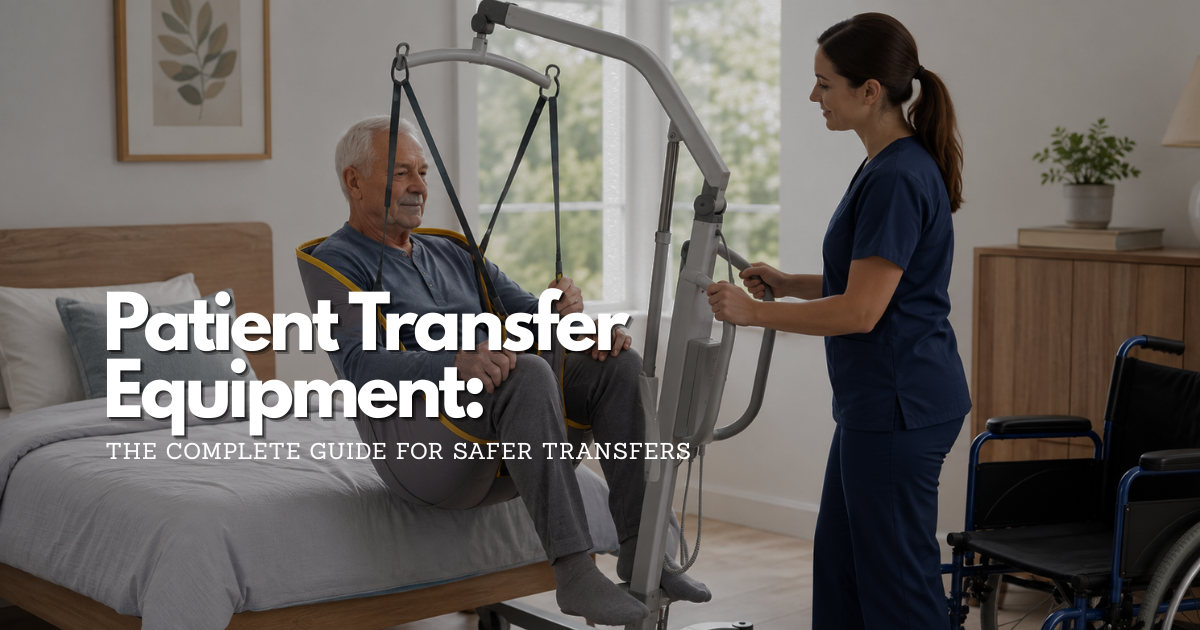
patient transfer equipment for seniors | SeniorTechLife mobility guide
Patient transfer equipment for seniors must match the exact movement, the person’s ability to participate, the caregiver’s training, the surfaces involved, and the home. This guide maps the categories without replacing hands-on assessment.
Patient Transfer Equipment For Seniors: How should families choose patient transfer equipment for seniors?
Define the exact transfer, assess how much the person can safely participate, and select equipment only with trained guidance. Patient transfer equipment for seniors includes full-body lifts, sit-to-stand lifts, ceiling lifts, transfer boards, sheets, chairs, and bathroom or vehicle aids. Similar-looking products may require completely different abilities and techniques.
The FDA explains that patient lifts can reduce injury when properly used but that improper use has caused severe injuries and deaths. Training, compatible slings, secure attachments, open and stable bases, capacity limits, inspection, and manufacturer instructions are essential.
Equipment categories and required abilities
| Category | Broad purpose | Critical assessment |
|---|---|---|
| Full-body floor lift | Supports a person in a compatible sling between surfaces | Sling, space, capacity, positioning, trained operators, and emergency lowering |
| Sit-to-stand lift | Assists a person who can participate in a supported rise | Weight bearing, knee and trunk control, cognition, sling, and foot placement |
| Ceiling lift | Moves along a fixed or portable overhead track | Structure, coverage, installation, charging, track transitions, and rescue plan |
| Transfer board or sheet | Supports seated or lateral movement and reduces friction | Skin, balance, strength, height difference, gap, and trained technique |
| Transfer chair or hybrid | Combines seating with a labeled transfer or lifting function | Product intent, mode setup, thresholds, brakes, capacity, and destination compatibility |
| Bathing or toileting aid | Reduces or changes transfers in wet and private-care environments | Water, hygiene, skin, access, brakes, surfaces, and caregiver space |
Search phrases such as “patient lift and transfer chair,” “patient transfer chair lift,” “patient lift chair transfer,” “transfer chair patient lift,” and “transfer patient lift chair” often describe hybrid products imprecisely. “Patient lift patient lift” is malformed search language. Verify the manufacturer’s labeled purpose rather than inferring capability from word order.
Electric and hydraulic home equipment
An electric patient lift transfer chair for home uses powered movement, while a hydraulic patient lift transfer chair for home may use a pump mechanism. Neither label proves that the base fits under the bed, that a toilet or car can be approached, or that one caregiver can operate it. An electric patient lift transfer chair portable claim must be tested against folded weight, assembly, batteries, thresholds, and the complete destination.
Bed, chair, toilet, bath, and car boundaries
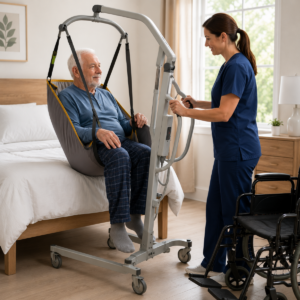
A patient lift transfer from bed to chair requires compatible surfaces, approach, sling positioning, and a receiving chair prepared according to the plan. A patient lift transfer chair for home may not enter a bathroom. A patient lift transfer chair to car claim is especially sensitive because door openings, vehicle seat height, ground slope, and securement vary.
The best patient lift transfer chair is therefore the one supported by assessment for the defined tasks, not a brand winner. Reduce unnecessary transfers when possible by coordinating toileting, bathing, seating, and care surfaces, but never combine tasks in a way the equipment does not permit.
Caregiver safety and training
OSHA emphasizes matching equipment to the task, involving the people who use it, keeping it available, and maintaining equipment and slings. Mechanical equipment does not make training optional. Caregivers need an individualized written plan and hands-on practice.
Body mechanics alone cannot make a heavy or unpredictable manual lift safe. Do not pull under the arms, twist while carrying weight, or attempt to stop a fall by catching the person. Follow the emergency plan and call trained assistance when the transfer exceeds the available people or equipment.
Selection checklist
- Define every start surface, destination, frequency, and assistance level.
- Obtain professional assessment of weight bearing, balance, cognition, skin, pain, and tolerance.
- Confirm the exact equipment category and manufacturer-approved sling or accessory.
- Measure the home and trial the complete route.
- Train every caregiver and document the number of people required.
- Verify capacities, attachments, brakes, power, emergency lowering, cleaning, and maintenance.
- Keep brands, rentals, prices, and detailed child intents outside this Hub.
- Stop and reassess whenever the person, caregiver, equipment, or environment changes.
Eight decisions that matter more than marketing
A transfer-device search becomes useful when it begins with the person, the helper, and one named movement. Record what the person can initiate, how much weight can be borne, whether trunk control is reliable, and what the helper can do without lifting manually. A clinician should evaluate uncertain or changing abilities before equipment is selected.
Exact transfer task
Decision question: Is the movement bed to chair, toilet, shower, repositioning, floor recovery, or vehicle access?
Different tasks require different support, approach, range, hygiene, and destination setup. One device rarely solves every transfer safely.
Practical check: List every start and destination surface, height, gap, frequency, and time-of-day condition.
Pause and reassess when: The proposed device cannot approach both surfaces, clear obstacles, or complete the full route.
Patient Transfer Equipment For Seniors: Ability to participate
Decision question: Can the person bear weight, follow directions, control the trunk, grip, or tolerate a sling?
Sit-to-stand aids, boards, and full-body lifts assume different levels of participation. This can change with fatigue, pain, medication, or illness.
Practical check: Have a qualified clinician assess the person during the intended task and define assistance levels.
Pause and reassess when: The person’s ability fluctuates beyond the care plan, knees buckle, agitation rises, or new symptoms appear.
Sling and support compatibility
Decision question: Is the exact sling approved, correctly sized, intact, and suitable for the transfer?
The FDA warns that no sling fits every lift. Fabric, loops, clips, commode openings, head support, and positioning affect containment and skin.
Practical check: Verify manufacturer compatibility, label, size, attachment points, laundering, inspection, and replacement policy.
Pause and reassess when: Seams fray, loops stretch, labels are unreadable, clips do not secure, or the user slides or experiences pain.
Caregiver training
Decision question: Who has been trained and how many people does the plan require?
Equipment reduces manual-lifting exposure only when available caregivers can assess, set up, operate, communicate, and respond to problems.
Practical check: Require hands-on training with the exact equipment, person, room, sling, and emergency lowering process.
Pause and reassess when: A caregiver relies on memory from another model, skips inspection, or must catch or manually lift the person.
Space and floor
Decision question: Can the base, boom, chair, bed, caregiver, and emergency access fit?
Lift legs may need to open; thick carpet, thresholds, furniture, bed under-clearance, and narrow bathrooms can defeat operation.
Practical check: Measure equipment at every operating position and trial the route without the person first.
Pause and reassess when: The base cannot open as directed, wheels bind, the boom contacts fixtures, or exits become blocked.
Capacity and combined system
Decision question: Are the person, sling, accessories, and every component within stated limits?
System safety is governed by the lowest applicable limit and correct assembly, not the strongest-looking component.
Practical check: Record labels and capacities for lift, sling, spreader bar, scale, transfer chair, and destination surface.
Pause and reassess when: A label is missing, components are mixed, weight is uncertain, or an accessory was not approved.
Power and emergency lowering
Decision question: Can batteries, chargers, controls, manual lowering, and outages be managed?
Powered equipment may fail during an outage or low battery. Hydraulic systems also require inspection and controlled lowering.
Practical check: Test charge indicators and emergency functions exactly as the manufacturer directs during training.
Pause and reassess when: The lift hesitates, drifts, cannot lower, shows an error, overheats, or lacks a tested backup plan.
Dignity, comfort, and communication
Decision question: Can the person understand, consent when possible, feel secure, and maintain privacy?
Fear and rushed handling can increase movement and risk. Explain each step, protect skin and clothing, and avoid unnecessary transfers.
Practical check: Agree on words, stop signals, privacy, pacing, and how discomfort will be reported.
Pause and reassess when: The person becomes distressed, restless, painful, poorly positioned, or unable to communicate a concern.
Ownership, service, and disruption planning
A lift or transfer chair creates an ongoing care responsibility. The plan needs a place for the device and sling, a charging or hydraulic check, cleaning after personal care, scheduled inspection, access to replacement parts, and a safe response when the device is unavailable. Ownership is incomplete when nobody knows whom to call for service.
Pre-use inspection
Inspect sling, clips, spreader bar, boom, mast, base, casters, brakes where applicable, controls, battery, and emergency lowering.
Maintenance point: Use a written checklist and remove damaged equipment from service immediately.
Backup point: Keep an alternate trained transfer plan; never replace mechanical support with an improvised manual lift.
Patient Transfer Equipment For Seniors: Cleaning and infection control
Follow manufacturer directions for lift surfaces, slings, sheets, and shared accessories.
Maintenance point: Track laundering cycles, heat limits, contamination, labels, and complete drying.
Backup point: Stock enough compatible slings or supplies so cleaning does not force unsafe reuse.
Charging and storage
Park equipment where it is accessible, protected, and does not block exits; maintain charge as directed.
Maintenance point: Inspect cords, plugs, batteries, hydraulic leaks, caster debris, and storage damage.
Backup point: Plan for outages, charger failure, and emergency service without leaving the person stranded.
Service and records
Keep model, serial number, manual, supplier, prescription, warranty, sling compatibility, training, and inspection records.
Maintenance point: Only qualified personnel should perform structural, hydraulic, or electrical repairs.
Backup point: Know response times, loaner policy, and the safe care plan while equipment is unavailable.
Changing care needs
Reassess after hospitalization, falls, weight or skin changes, pain, cognition changes, or caregiver turnover.
Maintenance point: Update the written transfer plan and retrain every caregiver on the exact equipment.
Backup point: If the person’s participation changes, stop using the old sequence until a qualified reassessment occurs.
Real-world trial scenarios
Test the entire transfer pathway rather than merely raising and lowering an empty machine. Include approach space, sling placement, the destination surface, caregiver position, communication, cleanup, and storage. Stop the trial if it conflicts with clinical precautions, the product manual, or the person’s expressed comfort and consent.
Bed-to-chair environment
Set up the trial: Measure bed under-clearance, height, side access, lift-leg opening, boom range, chair position, caregiver space, and exit route. A meaningful trial uses the person’s ordinary footwear, usual assistive devices, realistic timing, and the exact equipment configuration being considered.
Observe: Observe equipment approach, sling preparation, lines or tubes, communication, receiving-surface setup, and whether trained caregivers can remain in safe positions. Watch the person and caregiver throughout the complete task rather than judging the equipment from a single successful moment.
Compare: Compare full-body, sit-to-stand, overhead, and non-lift options only against the assessed assistance level. Record objective observations, settings, dimensions, assistance, and any reminders so alternatives can be compared without relying on memory.
Boundary: Do not conduct an occupied trial until the plan, sling, trained operators, capacity, and emergency functions have been confirmed. Stop the trial if safety depends on catching, lifting, uncontrolled movement, ignored instructions, or a workaround the manufacturer or care plan does not permit.
Toileting route
Set up the trial: Map bedroom or chair to toilet, clothing management, privacy, hygiene, floor moisture, narrow turns, and return transfer. A meaningful trial uses the person’s ordinary footwear, usual assistive devices, realistic timing, and the exact equipment configuration being considered.
Observe: Check whether equipment can enter, position, and leave without repeated manual lifts or unsafe twisting. Watch the person and caregiver throughout the complete task rather than judging the equipment from a single successful moment.
Compare: Compare commode-compatible equipment, shower/commode chairs, sling openings, and whether reducing transfer count is possible. Record objective observations, settings, dimensions, assistance, and any reminders so alternatives can be compared without relying on memory.
Boundary: Stop if wet floors, insufficient space, skin exposure, unstable destinations, or rushed urgency defeat the written plan. Stop the trial if safety depends on catching, lifting, uncontrolled movement, ignored instructions, or a workaround the manufacturer or care plan does not permit.
Sling selection
Set up the trial: Use the exact lift, spreader bar, person measurements, diagnosis-related needs, and transfer task. A meaningful trial uses the person’s ordinary footwear, usual assistive devices, realistic timing, and the exact equipment configuration being considered.
Observe: Inspect label, size, fabric, seams, loops, clips, head support, leg configuration, and how the person is contained. Watch the person and caregiver throughout the complete task rather than judging the equipment from a single successful moment.
Compare: Compare only manufacturer-approved slings and document loop or clip setup for the care plan. Record objective observations, settings, dimensions, assistance, and any reminders so alternatives can be compared without relying on memory.
Boundary: Never substitute a visually similar sling, use a damaged label, exceed capacity, or invent attachment combinations. Stop the trial if safety depends on catching, lifting, uncontrolled movement, ignored instructions, or a workaround the manufacturer or care plan does not permit.
Caregiver team practice
Set up the trial: Train every regular and backup caregiver with the exact person, device, room, and emergency procedure. A meaningful trial uses the person’s ordinary footwear, usual assistive devices, realistic timing, and the exact equipment configuration being considered.
Observe: Observe role assignment, communication, inspection, setup, movement, line management, lowering, cleanup, and documentation. Watch the person and caregiver throughout the complete task rather than judging the equipment from a single successful moment.
Compare: Compare the minimum number of trained people required across routine, fatigue, agitation, and emergency conditions. Record objective observations, settings, dimensions, assistance, and any reminders so alternatives can be compared without relying on memory.
Boundary: A caregiver who missed training, cannot explain emergency lowering, or must manually lift should not proceed. Stop the trial if safety depends on catching, lifting, uncontrolled movement, ignored instructions, or a workaround the manufacturer or care plan does not permit.
this topic: Portable or vehicle claim
Set up the trial: Test folding, component removal, lifted weight, assembly, ground slope, door opening, seat height, and destination securement. A meaningful trial uses the person’s ordinary footwear, usual assistive devices, realistic timing, and the exact equipment configuration being considered.
Observe: Watch caregiver strain, pinch points, battery handling, person support, thresholds, and whether the product is labeled for the claimed transfer. Watch the person and caregiver throughout the complete task rather than judging the equipment from a single successful moment.
Compare: Compare a portable device with vehicle-specific equipment and accessible transportation rather than assuming one product solves both. Record objective observations, settings, dimensions, assistance, and any reminders so alternatives can be compared without relying on memory.
Boundary: Do not attempt a car transfer from an online demonstration or because a frame appears to fit beside the door. Stop the trial if safety depends on catching, lifting, uncontrolled movement, ignored instructions, or a workaround the manufacturer or care plan does not permit.
Power and outage drill
Set up the trial: Charge the device, review indicators, test controls and emergency lowering as instructed, and simulate loss of ordinary power without a person suspended. A meaningful trial uses the person’s ordinary footwear, usual assistive devices, realistic timing, and the exact equipment configuration being considered.
Observe: Observe whether every caregiver can locate and operate the approved backup and whether the person can be placed safely. Watch the person and caregiver throughout the complete task rather than judging the equipment from a single successful moment.
Compare: Compare battery duration, replacement interval, charger, manual lowering, service response, and backup equipment. Record objective observations, settings, dimensions, assistance, and any reminders so alternatives can be compared without relying on memory.
Boundary: Remove the lift from use for drifting, failed lowering, error codes, overheating, hydraulic leakage, or uncertain battery condition. Stop the trial if safety depends on catching, lifting, uncontrolled movement, ignored instructions, or a workaround the manufacturer or care plan does not permit.
Skin, pain, and tolerance
Set up the trial: Review skin integrity, sensation, swelling, pain, joint precautions, breathing, fear, and time in the sling. A meaningful trial uses the person’s ordinary footwear, usual assistive devices, realistic timing, and the exact equipment configuration being considered.
Observe: Watch pressure, shear, leg separation, head support, clothing, tubes, facial expression, and communication. Watch the person and caregiver throughout the complete task rather than judging the equipment from a single successful moment.
Compare: Compare sling materials and positions only with clinical guidance and the manufacturer’s approved options. Record objective observations, settings, dimensions, assistance, and any reminders so alternatives can be compared without relying on memory.
Boundary: Stop for pain, distress, skin injury, breathing change, agitation, loss of containment, or any new medical concern. Stop the trial if safety depends on catching, lifting, uncontrolled movement, ignored instructions, or a workaround the manufacturer or care plan does not permit.
Floor recovery boundary
Set up the trial: Create a written plan for a fall without placing a person on the floor for practice unless qualified professionals direct it. A meaningful trial uses the person’s ordinary footwear, usual assistive devices, realistic timing, and the exact equipment configuration being considered.
Observe: Confirm who assesses injury, calls emergency help, brings equipment, uses the appropriate sling, and protects both caregivers. Watch the person and caregiver throughout the complete task rather than judging the equipment from a single successful moment.
Compare: Compare lift capability, floor-level range, space, emergency response, and whether the device is actually accessible. Record objective observations, settings, dimensions, assistance, and any reminders so alternatives can be compared without relying on memory.
Boundary: Never pull a fallen person up by arms, clothing, a walker, or an unassessed lift after possible injury. Stop the trial if safety depends on catching, lifting, uncontrolled movement, ignored instructions, or a workaround the manufacturer or care plan does not permit.
Questions for a supplier, retailer, or clinician
Request written confirmation for the exact lift, sling, spreader bar, battery, accessories, capacity, and destination surfaces under consideration. Save the model and revision beside every compatibility answer; a general sales page may combine several configurations whose parts cannot safely be interchanged.
- What exact transfer tasks is this product labeled to perform?
- Which user abilities and contraindications determine whether it is appropriate?
- Which slings or supports are approved for this exact model and spreader bar?
- How are sling size, attachment points, capacity, and laundering documented?
- What floor, bed under-clearance, turning, door, and bathroom dimensions are required?
- How many trained caregivers does the individualized plan require?
- Who provides hands-on training in the actual home?
- How do ordinary controls, emergency stop, emergency lowering, charging, and hydraulic backup work?
- What is the lowest capacity across lift, sling, bar, scale, chair, and accessories?
- Who performs preventive maintenance, inspection, recalls, and emergency service?
- What loaner or safe transfer plan applies during repair?
- What return, rental, insurance, prescription, and supplier requirements apply before delivery?
Descriptions such as easy transfer, one-person operation, portable, or hospital quality are not clinical findings. Ask what the claim means for the assembled configuration, required helper count, floor clearance, sling, user capacity, and emergency lowering procedure. Ratings from buyers cannot establish that a device is appropriate for a particular transfer.
Common selection and use mistakes
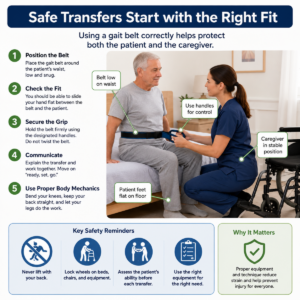
Transfer mistakes often begin with the wish to reduce strain quickly. Problems follow when the team overlooks sling fit, helper training, bedroom clearance, toileting access, or changes in the person’s ability. Naming those constraints early is safer than forcing an unsuitable device into the routine.
Buying before assessment
Families may choose a popular lift before defining whether the person can bear weight, tolerate a sling, follow directions, or fit the home.
Better approach: Obtain a task-specific clinical and environmental assessment before selecting the equipment category. Document the reason for the decision so another caregiver, editor, or clinician can understand what was tested and what remains unresolved.
Assuming every sling is compatible
Sling shapes and attachments can look similar while differing in manufacturer approval, size, support, fabric, and capacity.
Better approach: Use only the exact approved sling and document its configuration in the transfer plan. Document the reason for the decision so another caregiver, editor, or clinician can understand what was tested and what remains unresolved.
Relying on caregiver strength
A strong caregiver can still be injured by reaching, twisting, catching, or controlling an unpredictable person.
Better approach: Use mechanical and other assistive equipment with training and the required number of caregivers. Document the reason for the decision so another caregiver, editor, or clinician can understand what was tested and what remains unresolved.
Patient Transfer Equipment For Seniors: Ignoring the receiving surface
A successful lift can still end unsafely if a wheelchair, bed, commode, or chair is unstable, inaccessible, or unprepared.
Better approach: Include the destination, brakes, height, clearance, and final positioning in every trial and checklist. Document the reason for the decision so another caregiver, editor, or clinician can understand what was tested and what remains unresolved.
Treating portable as universally usable
Portable equipment may remain heavy, require assembly, lack clearance, or fail at thresholds and vehicles.
Better approach: Test the entire transport and setup routine and keep vehicle-specific claims separate. Document the reason for the decision so another caregiver, editor, or clinician can understand what was tested and what remains unresolved.
Continuing after a near miss
A shifted sling, loose clip, caregiver catch, unexpected movement, or battery warning may be dismissed because no injury occurred.
Better approach: Stop, document, inspect, report, retrain, and update the plan before another transfer. Document the reason for the decision so another caregiver, editor, or clinician can understand what was tested and what remains unresolved.
Delivery, follow-up, and reassessment
When patient-transfer equipment arrives, compare every component with the order and compatibility documentation before use. Arrange hands-on training, record the return period, and demonstrate normal and emergency controls. Repeat the assessment whenever the user’s function, caregiver team, room layout, sling, or device condition changes.
Delivery acceptance
At first use: Verify model, serial number, sling labels, components, manuals, capacity, inspection, controls, battery, and emergency functions.
Over time: Keep receiving records and photographs and do not discard packaging until fit and function are approved.
Escalate when: Any item differs from the order, appears damaged, lacks labels, or cannot complete the assessed route.
Competency confirmation
At first use: Have every caregiver demonstrate inspection, setup, communication, operation, lowering, cleaning, and documentation.
Over time: Repeat competency after staff changes, long gaps, software or equipment changes, and any incident.
Escalate when: A caregiver cannot explain sling compatibility, attachments, required assistance, or emergency procedures.
Pre-use and periodic inspection
At first use: Use a written checklist before every transfer and a scheduled qualified maintenance program.
Over time: Track sling laundering, seams, clips, bars, casters, brakes, hydraulics, batteries, chargers, and recalls.
Escalate when: Damage, missing labels, uncontrolled movement, leakage, errors, or overdue maintenance appears.
Clinical review
At first use: Confirm the transfer plan still matches ability, weight, skin, pain, cognition, behavior, and goals.
Over time: Review after hospitalization, falls, pressure concerns, new tubes or braces, or changes in medications and strength.
Escalate when: The person’s participation, tolerance, body size, or destinations no longer match the plan.
Incident response
At first use: Protect the person, obtain medical care, remove equipment from service, preserve evidence, and notify appropriate parties.
Over time: Review root causes, training, maintenance, environment, staffing, and the plan before resuming.
Escalate when: There is a fall, entrapment, injury, equipment failure, sling displacement, or caregiver musculoskeletal injury.
Patient Transfer Equipment For Seniors: Emergency and backup planning
Patient transfer emergencies require a written response before equipment is used. Plan for power failure, incomplete lowering, sling displacement, agitation, fire, evacuation, caregiver injury, and a person found on the floor. The plan must identify when to stop, whom to call, and how trained help will arrive.
During a transfer, the helper needs a reachable way to call for assistance and a documented response if power, hydraulics, or a sling connection fails. Store instructions and service contacts where every trained caregiver can find them. A borrowed lift or sling is not a backup until compatibility, condition, capacity, and training have been confirmed.
Remove a transfer device or sling from service after a dropped load, damaged clip, torn fabric, bent component, control failure, fluid leak, battery problem, or other abnormal event. Address possible injury first, then obtain an appropriate inspection. Never compensate with improvised straps, mixed slings, tape, or extra physical force from a caregiver.
Documented plan for patient transfer equipment for seniors
The final decision should exist as an individualized transfer plan, not as instructions remembered by one caregiver. It should identify each transfer, assistance level, exact lift or aid, compatible sling or support, attachment configuration, number of trained caregivers, destination setup, communication, stop conditions, cleaning, inspection, and emergency response.
Patient transfer equipment for seniors crosses medical-device, caregiver-safety, home-access, and dignity concerns. The broad Hub can explain categories, but the care plan must come from qualified assessment and the manufacturer’s current instructions. A retailer video, model review, or family member’s prior experience cannot authorize a transfer.
- List every routine and occasional transfer by start surface and destination.
- Record the person’s current weight-bearing, trunk control, cognition, skin, pain, behavior, and tolerance.
- Identify the exact equipment, model, sling, size, loops or clips, and approved accessories.
- State how many trained caregivers are required and what each person does.
- Attach room measurements, destination preparation, power, charging, and emergency-lowering details.
- Include pre-use inspection, cleaning, maintenance, incident, and recall procedures.
- Keep rental, purchase, insurance, brand, and vehicle claims in separately validated workflows.
- Set explicit stop conditions and the contact path for clinical reassessment or emergency help.
Record what was rejected
Document equipment rejected because it cannot enter the room, fit under the bed, use an approved sling, support the person’s ability, meet capacity, provide emergency lowering, or be operated by available trained caregivers. Rejecting an option is a safety decision, not a purchasing inconvenience.
Set the next review date
Review the plan after any transfer incident, near miss, caregiver change, hospitalization, weight or skin change, new line or brace, altered cognition, room rearrangement, sling replacement, repair, or manufacturer notice. Suspend the old sequence until changes have been assessed and retraining completed.
What this Hub intentionally does not answer
This Hub owns the broad orientation to patient transfer equipment for seniors. It maps transfer tasks, equipment categories, assessment, slings, home compatibility, training, caregiver protection, inspection, and emergency planning. It does not provide an unassessed operating sequence or a universal recommendation.
Brand reviews, rental decisions, prices, a detailed Hoyer guide, a sling guide, sale intent, and individual vehicle-transfer claims remain separate. Mixing them into this page would weaken the safety boundary and create competing URLs for narrower questions.
How future child guides should connect
Each future child asset must preserve the individualized-care warning, use current manufacturer and official sources, and link back to this safety Hub. Technique must be reviewed by qualified professionals, and product or affiliate content must never override compatibility, training, or the written transfer plan.
The transfer cards currently describe the approved publishing map. Their destinations stay inactive until the focused article has passed clinical-risk review, keyword checks, originality screening, and final WordPress inspection.
Frequently asked questions
Is a patient lift the same as a lift chair?
No. A patient lift supports and moves a person with a compatible sling or support system. A lift chair raises its seat to assist a person who can participate in standing.
Can one caregiver use a patient lift alone?
Only when the individualized care plan, manufacturer’s instructions, training, environment, and applicable rules permit it. Some transfers require more than one trained person.
Can any sling be used with any lift?
No. FDA guidance says the sling must be approved for the specific lift and appropriate for the person and transfer. No sling is universal.
Is a transfer chair automatically safe for a car transfer?
No. Vehicle geometry, product intent, thresholds, securement, user ability, and caregiver training must all be assessed. A portable label is not proof.
When must equipment use stop?
Stop for damaged slings, unsecured clips, unstable bases, unexpected movement, failed brakes or lowering systems, capacity concerns, new pain, agitation, or any loss of a safe transfer plan.
Sources used for this guide
The transfer-safety statements in this hub were checked against the references below, with FDA and OSHA material used for lift hazards, training, compatibility, inspection, and program planning. Those authorities inform general education; the person’s clinical team must determine an individual transfer method.
- Patient Lifts — U.S. Food and Drug Administration.
- Safe Patient Handling Equipment — Occupational Safety and Health Administration.
- Unique Considerations in the Home — U.S. Food and Drug Administration.
- Mobility Aids — MedlinePlus, U.S. National Library of Medicine.
Build a safer mobility plan
Use the published Mobility Resource Center to step back from a transfer-specific question and compare other forms of support. Links to Hoyer lifts, slings, and home-transfer guides will open only after each destination clears its separate editorial and safety checks.
1 comentario en «🤝 Patient Transfer Equipment for seniors: The Complete Guide for Safer Transfers»