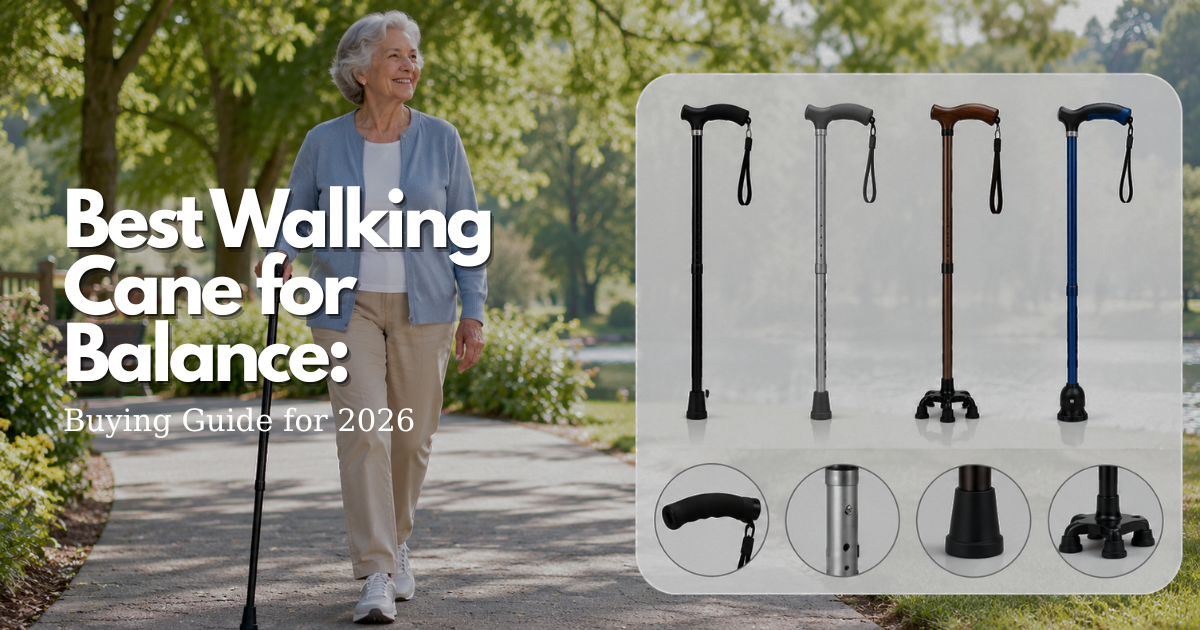
This guide is educational. A clinician or qualified mobility professional should help when balance, pain, transfers, sensation, or a recent fall makes device selection uncertain.
Quick answer
Start with the person, the daily route, and the existing equipment. Identify the problem to solve, confirm fit and compatibility, and test only on a dry, level, clear surface.
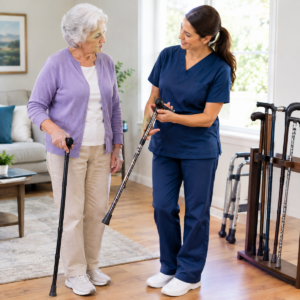
Choose by the real need
List the routine first: getting up, moving through doors, carrying essentials, sitting, parking, or walking on uneven surfaces. Avoid adding an item that makes the device heavier, harder to fold, or more difficult to control. Check manufacturer instructions before attaching any accessory or changing a component.
Comfort and convenience matter only when they do not reduce safe fit, stability, or access.
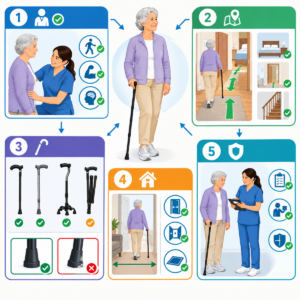
Check fit, condition, and compatibility
Inspect handles, tips, brakes, wheels, fasteners, straps, and adjustment points. A cane or wheelchair accessory should not interfere with transfers, wheel movement, folding parts, emergency access, or a caregiver’s ability to help. Do not rely on a generic product description to determine compatibility.
Practice before daily use
Use a clear indoor area or level pavement for a slow practice session. If the person has to lean, twist, reach, or use more force than expected, pause and reassess. For a new or complex setup, ask a therapist or mobility professional to review it.

Final checklist
Confirm the item addresses a real need, fits the person and device, works with the home route, is in good condition, and has been practiced safely. Reassess whenever mobility or the environment changes.
What the best walking cane for balance must accomplish
The best walking cane for balance adds an appropriate point of support without making the user lean, reach, or trip. It must fit the person’s height and hand, remain stable on the real route, and provide only the level of assistance the person can safely manage.
A cane is generally considered for mild balance or stability needs. MedlinePlus advises discussing substantial pain, weakness, or balance problems with a provider because crutches or a walker may be more appropriate. A buying guide cannot determine that threshold.
Define success before comparing products: fewer near-falls, less pain, safer turns, improved confidence, or easier community walking. Then verify those outcomes during a professional trial.
Single-point versus quad cane for balance
A single-point cane is light, narrow, and easy to advance. It can work well for mild one-sided weakness or modest balance support when properly fitted. Its small base provides less standing stability than a quad design.
A quad cane has four feet and can stand independently, but the base is heavier and may catch the user’s foot. All feet must contact the ground; on stairs and slopes they may not. Small-base and large-base quad canes behave differently.
Choose from observed gait, not the assumption that four points are automatically safer. The user must control placement without widening the walking pattern or striking the ankle.
Offset, derby, fritz, and ergonomic cane handles
Offset handles position the hand over the shaft and are common on adjustable medical canes. Derby and fritz shapes can be comfortable for many users. Palm-grip and ergonomic handles may distribute pressure but can be side-specific.
Test grip with usual hand strength, arthritis, tremor, sensation, and gloves. The wrist should remain near neutral and the shoulder relaxed. Foam can feel comfortable but wear; hard handles are durable but may concentrate pressure.
A handle that feels pleasant while standing may hurt after a longer route. Trial time matters. Stop if numbness, wrist pain, shoulder elevation, or loss of grip develops.
Cane height and balance control
A common fitting starting point places the handle near the wrist crease with the elbow slightly bent while wearing normal shoes. This allows the user to press down without bending far forward or raising the shoulder.
Observe several steps and turns. The tip should land where it can support the next movement, not far ahead. Height settings must lock fully, and a folding cane must lock at every joint.
Professional fitting is especially important after stroke, surgery, one-sided weakness, or repeated falls. Correct product dimensions do not guarantee correct technique.
Cane tips designed for stability
Standard rubber tips are simple and predictable when fresh. Pivoting or self-standing tips increase contact area and may adapt to angle, but they add weight and can change feedback. Extra-wide bases may interfere with stairs or catch a foot.
Compare traction on the surfaces actually used: tile, carpet, concrete, wet entrances, and slopes. No tip makes ice, loose gravel, or a wet bathroom safe. An ice spike needs a safe indoor transition.
Replace worn tips immediately and carry a spare. Confirm shaft diameter and compatibility; a loose replacement is a failure risk.
Adjustable, folding, and fixed walking canes
Adjustable aluminum canes allow height changes and are easy to fit, but buttons and collars need inspection. Folding canes are portable, yet every joint must seat completely. Fixed wooden or carbon models can feel solid and quiet when cut correctly.
Compare total weight, folded length, deployment effort, noise, capacity, and storage. A user who cannot unfold and lock a cane independently needs a different transport plan.
Do not choose portability at the expense of reliable setup. Practice opening and closing without using the unsteady cane as support during assembly.
Weight capacity and how heavily a cane is used
Published capacity is a maximum tested or stated load under manufacturer conditions; it is not permission to place most body weight through a cane. Heavy reliance may indicate the user needs a walker or another device.
Watch for bent posture, white knuckles, shoulder loading, furniture walking, or the cane flexing. These are reasons for reassessment, not simply a higher-capacity product.
Bariatric canes may use stronger shafts and wider tips, but fit, gait, door clearance, and control still matter. The care team should select the support category.
Best cane for indoor balance
Indoor priorities include narrow width, predictable tip placement, quiet operation, and easy use around chairs and doors. Remove rugs, cords, clutter, and wet spots; equipment cannot compensate for a hazardous route.
A self-standing cane may be convenient beside a chair but can create a wider obstacle. Storage clips or holders can keep the cane reachable without letting it fall across the path.
Test bathroom, bedside, kitchen, and entry routes with supervision. If the user reaches for furniture, the device or environment needs review.
Best cane for outdoor walking and stability
Outdoor routes add cracks, curb cuts, grass, rain, slopes, glare, and crowds. A slightly larger or flexible tip may help on some surfaces, but it also changes swing weight and placement.
Use secure footwear, slow before transitions, and choose step-free routes. A cane should not be used to climb a curb by pulling the body upward. A handrail remains essential on stairs.
For long distance or fatigue, a rollator or other device may be safer than adding features to a cane. Plan rest and a backup option.
Walking with a cane for balance
For common one-sided problems, the cane is often held opposite the weaker or painful leg and moves with that leg. This pattern can improve support and reduce load. Individual instructions may differ.
Keep steps short and look ahead. Turn with small steps. Do not carry items in the cane hand or place the tip too far forward. Use a shoulder bag or appropriate storage to keep hands available.
MOB-CA-002 owns the complete walking technique. This buying guide explains why ease of placement, grip, and fit should be tested before purchase.
Cane testing checklist before purchase
Wear ordinary shoes and bring the person’s medication, fall, and route concerns to the trial. Adjust height, then test starts, stops, turns, doors, chair approach, and a representative surface.
Score grip comfort, tip placement, weight, noise, confidence, and errors. Repeat after several minutes because fatigue can reveal problems. A cane that requires constant reminders may not be suitable.
If buying online, verify return terms before altering or cutting the cane. Do not rely on star ratings for medical fit.
Real products and affiliate decisions
SeniorTechLife will recommend only real current canes after verifying official specifications, manuals, availability, image rights, and an approved affiliate program. No affiliate link is included in this draft.
Product candidates should represent meaningful categories rather than arbitrary brands: a dependable adjustable single-point cane, an appropriate quad cane, a folding travel option, an ergonomic handle option, and a higher-capacity design when justified.
Commission will not determine ranking. If the most suitable product has no affiliate program, it may still be included with a noncommercial official link or the article may send readers to a clearly labeled alternative.
Price, warranty, and replacement parts
A basic cane can be inexpensive, but total value includes fit, a replaceable tip, secure adjustment, available parts, warranty, and a return path. Decorative materials do not automatically improve support.
Check whether tips and collars use standard or proprietary sizes. Ask who handles a defect and whether cutting a fixed cane affects returns. Keep the model and receipt.
Replace rather than repair a cracked, bent, or unreliable shaft. Safety equipment should not be kept in service solely because it was expensive.
When a cane is not enough for balance
Repeated falls, severe weakness, dizziness, fainting, sudden gait change, inability to stand without pulling, or heavy loading through the cane requires clinical attention. A walker may provide a broader base.
Balance problems can also involve medication, vision, feet, blood pressure, neurologic conditions, strength, and the home. A fall-risk assessment looks beyond the device.
Seek urgent care for sudden one-sided weakness, facial droop, speech difficulty, severe injury, chest pain, or loss of consciousness. Do not treat an acute change as a shopping problem.
Best walking cane decision table
Compare support level, base, handle, height range, tip, weight, folded size, capacity, route, parts, and return terms in one worksheet. Eliminate any cane that fails a safety requirement before considering style.
Rank the remaining options by observed control and comfort. Record who completed the fitting and when the tip should be checked. Plan reassessment after the first week.
The winning cane is the one the person can place accurately and use consistently on the real route—not the model with the most features.
Frequently asked questions about the best walking cane for balance
What is the best cane for balance and walking?
The best cane provides enough support, fits correctly, and can be placed consistently. A clinician should determine whether a single-point or quad cane is suitable.
Is a wider cane tip better?
It can add contact area but also weight and bulk. Test the exact tip on the real route.
Should a cane stand by itself?
That is convenient, not essential. A self-standing base may catch or sit unevenly.
Can a cane help dizziness?
A cane does not treat dizziness. New or worsening dizziness needs medical evaluation.
Does Medicare cover a walking cane?
Coverage depends on medical necessity, documentation, supplier, and plan rules. Verify before purchase.
Official balance and cane sources
Best walking cane for balance after hip surgery
The right aid and timing depend on the surgeon’s weight-bearing order, pain, strength, and gait. A cane may follow a walker rather than replace it immediately.
Use the opposite hand when that is the individual instruction, fit with postoperative footwear, and practice turns, chairs, and stairs with therapy.
Monitor limping, trunk lean, pain, fatigue, and confidence. Do not choose a stylish light cane if it encourages premature progression.
Practical outcome: The product supports the rehabilitation stage and can be changed when the clinical plan changes.
Best walking cane for balance after knee surgery
Knee pain and weakness can make step timing and stair use difficult. The cane should reduce unsafe loading without becoming a pulling device.
Confirm handle height, opposite-hand use when prescribed, and the exact sequence. A quad base may complicate stairs even if it feels stable while standing.
Test the normal home route late enough in the session to reveal fatigue. Check swelling and the ability to sit and stand safely.
Practical outcome: The cane fits the recovery task, while a walker remains available if one point of support is insufficient.
Best cane for balance with arthritis
Arthritis can affect hips, knees, feet, shoulders, wrists, and hands. The cane must reduce one problem without intensifying another.
Compare ergonomic handles, diameter, device weight, and adjustment controls. A soft grip is helpful only if it remains secure and durable.
Walk long enough to reveal hand and shoulder symptoms. Review footwear and the side on which support is needed.
Practical outcome: The user can control the cane consistently without painful squeezing or compensatory posture.
Best walking cane for balance with neuropathy
Reduced foot or hand sensation can hide pressure, poor placement, worn tips, and surface changes. Vision may become more important for feedback.
A clinician should assess whether a cane gives enough information and support. Choose a predictable tip and handle the user can detect securely.
Inspect skin, footwear, tip placement, and grip. Test low light and transitions only under professional supervision.
Practical outcome: The aid complements a broader neuropathy and fall-prevention plan rather than masking risk.
Best cane for balance with Parkinsonian symptoms
Freezing, small steps, turning difficulty, posture, and medication timing can change cane use. A standard cane may not address all gait problems.
Work with a neurologic physical therapist. Cueing devices exist, but they require individual assessment and training.
Observe starting, doorways, dual tasks, turns, and periods when medication effect changes. Avoid adding an unfamiliar feature without practice.
Practical outcome: The chosen strategy addresses the actual gait pattern and includes caregiver guidance.
Best walking cane for low vision
Contrast, lighting, depth perception, and hazard detection affect balance. A support cane is not the same as a white orientation cane.
Coordinate mobility and vision professionals when both support and navigation are needed. Select visible colors and a consistent storage location.
Test glare, stairs, curbs, and changes in flooring with qualified help. Keep the route well lit and uncluttered.
Practical outcome: The person receives the correct device and training for both support and environmental information.
Best cane for balance on stairs
No product makes stairs universally safe. A small base may place more easily than a quad base, but a handrail and taught sequence remain central.
Use individual instruction and avoid carrying items. If the user cannot control the sequence, change the route or level of assistance.
Test only with a therapist or trained helper. Check tip contact, base clearance, rail height, lighting, and fatigue.
Practical outcome: The stair plan is selected first; the cane is chosen only if it works within that plan.
Best walking cane for balance outdoors
Outdoor priorities include traction, visible tip placement, comfortable grip, manageable weight, and durability. Terrain can exceed any cane.
Compare standard, flexible, and wider tips on representative safe surfaces. Plan around rain, ice, crowds, curbs, and long distances.
Inspect tread before every outing and carry a backup plan. A larger base must not catch or sink.
Practical outcome: The user knows when the cane is suitable and when a walker, assistance, or different route is safer.
Best folding cane for travel balance
A travel cane should deploy reliably and fit correctly, not merely fit in luggage. Elastic-cord sections can appear assembled while a joint is not seated.
Practice opening, locking, checking, folding, and storing without using the unassembled cane for support.
Confirm full height, grip, tip, folded size, total weight, carry case, and airline or venue plan.
Practical outcome: Portability does not reduce stability, and the user can verify setup independently or has help.
Best quad cane for balance and stability
A quad cane can provide a larger base and may stand independently. Large and small bases differ in weight, footprint, and stair behavior.
Have a clinician determine orientation and height. Some bases must be configured for right- or left-hand use.
Check that all four feet contact level ground and the base clears the user’s foot. Test turns and chairs.
Practical outcome: The wider base adds usable support without becoming a trip hazard.
Best lightweight cane for balance
Lower weight can reduce effort and make placement easier, but ultralight construction must still meet capacity, stiffness, locking, and durability needs.
Compare actual weight with shaft flex, handle comfort, tip, parts, and warranty. Do not infer strength from material names alone.
Inspect after drops and travel. Test whether the cane feels stable during a deliberate load and stop.
Practical outcome: The cane is light enough to control and robust enough for its stated role.
Best walking cane for balance at home
Indoor use rewards narrow placement, quiet tips, reachable storage, and compatibility with doors, chairs, and bathrooms.
Measure routes and remove hazards before buying. A freestanding base can help storage but may add clutter.
Test nighttime lighting, bedside reach, bathroom approach, and the ability to keep both hands available for transfers.
Practical outcome: The home supports cane use instead of forcing unsafe reaching or furniture walking.
Best cane for balance when standing from a chair
A cane is not normally a pull-to-stand handle and can tip if loaded before the user is upright.
Use stable armrests or the transfer method taught by therapy, then take the cane when balanced.
Test chair height, footwear, reach, and where the cane waits.
Practical outcome: The device supports walking without destabilizing the transfer.
Best cane for balance in the bathroom
Water, tight turns, and transfers make bathrooms high-risk. An ordinary cane tip can slip on a wet floor.
Use grab bars and prescribed bathroom equipment; keep the cane on a dry route.
Assess doorway, toilet, shower, mats, lighting, and caregiver space.
Practical outcome: The bathroom plan does not depend on one small rubber tip.
Best cane for balance in crowded places
People may bump the cane or step into its placement area, while distractions reduce deliberate control.
Choose quieter times, allow space, and use assistance or another device for long crowded routes.
Test visibility, fatigue, storage, and emergency contact access.
Practical outcome: The outing matches the user’s ability rather than forcing the cane to solve crowd risk.
Best cane for balance for left- or right-hand use
Many simple canes work in either hand, but ergonomic grips and quad bases may be side-specific.
Confirm orientation and whether the clinical pattern uses the opposite hand.
Check handle contour, base direction, foot clearance, and adjustment instructions.
Practical outcome: The exact product supports the prescribed side without improvisation.
Best cane for balance with a wrist strap
A strap may prevent repeated drops but can pull the wrist or keep the cane attached during a fall.
Use only a properly sized strap and learn when to release it. Do not loop it tightly.
Practice setting the cane aside and completing transfers without entanglement.
Practical outcome: Convenience does not turn the cane into a tether.
Best cane for balance and carrying oxygen
Oxygen tubing and cylinders can catch on the cane, feet, and furniture.
Coordinate the oxygen supplier and therapist. Use a purpose-built carrying solution and route tubing safely.
Test turns, doors, seated rest, and emergency access.
Practical outcome: Mobility and respiratory equipment work together without tangling.
Best cane for balance during fatigue
A cane adequate for a short morning route may not provide enough support later in the day.
Plan rest, limit distance, and keep a walker, wheelchair, or caregiver option when prescribed.
Compare gait, tip placement, and errors at realistic times.
Practical outcome: The plan changes before fatigue produces a fall.
Best cane for balance with changing medications
Sedatives, blood-pressure medicines, and other treatments may affect alertness or dizziness.
Report symptoms to the prescriber and avoid changing medication independently. Reassess mobility after significant changes.
Record timing of dizziness, near-falls, and cane use.
Practical outcome: Device decisions are coordinated with medical causes of imbalance.
Best cane for balance as a gift
A cane is personal safety equipment, so a surprise gift may have the wrong height, handle, tip, or capacity.
Give a fitting appointment or returnable choice instead of cutting or customizing first.
Include the user’s preferences while preserving professional selection.
Practical outcome: The gift supports autonomy and can be exchanged if unsuitable.
When to review the cane again
Mobility changes after illness, hospitalization, weight change, new pain, vision change, or a move.
Schedule reassessment instead of simply replacing the same model.
Repeat the route, fit, tip, hand, and support-level checks.
Practical outcome: The cane remains matched to current life rather than an old decision.
Best walking cane for balance comparison notes
Use a simple scorecard for fit, grip, placement, traction, weight, parts, warranty, and route performance.
Eliminate unsafe options before comparing price or style.
Record the exact model and setting.
Practical outcome: The ranking remains evidence-based.
Best cane for balance and nighttime use
Low light changes depth perception and hazard detection.
Improve lighting and keep the cane in a consistent reachable place.
Test the bed-to-bathroom route with supervision.
Practical outcome: Night safety does not depend on memory alone.
Best walking cane for balance and hearing changes
Reduced hearing can limit awareness of traffic, people, and equipment sounds.
Choose quieter routes and improve visual scanning rather than adding distracting accessories.
Check whether the cane’s own clicking signals a loose part.
Practical outcome: The user preserves environmental awareness.
Best cane for balance with a caregiver
A caregiver should not pull the cane or the user’s arm while walking.
Learn the approved guarding position and how to respond to fatigue.
Practice doors, curbs, chairs, and communication cues.
Practical outcome: Assistance complements the device without destabilizing it.
Best walking cane for balance final purchase checklist
Confirm clinical suitability, height, handle, tip, capacity, route, maintenance, return terms, and replacement parts.
Do not activate a future affiliate link until the exact destination and product are verified.
Save official specifications and the fitting date.
Practical outcome: The purchase can be audited and updated.
Best cane for balance follow-up plan
Set review dates after one week and after any fall, illness, or mobility change.
Ask about confidence, pain, hand comfort, avoided routes, and near-falls.
Replace worn parts and escalate support when needed.
Practical outcome: The device evolves with the user instead of becoming an unchecked habit.
Best walking cane for balance editorial standard
A future named recommendation must be a real current product with official specifications and a clearly defined user need.
Verify height range, capacity, handle, tip, weight, warranty, parts, image rights, and availability.
Explain who should and should not consider it.
Practical outcome: The buying guide earns trust beyond an affiliate button.
Best walking cane for balance product replacement
If a recommended cane is discontinued or unavailable, do not silently redirect its button to a different model.
Reassess the alternative against the same criteria and update the text, table, image, and disclosure.
Record the change date and affected assets.
Practical outcome: Readers never encounter a recommendation that no longer matches the destination.
Best walking cane for balance and personal preference
Color, material, sound, and appearance influence whether a person will use the cane consistently.
Consider preferences only among options that already pass fit and safety checks.
Let the user handle and view the final choices.
Practical outcome: The selected cane supports identity without compromising function.
Best walking cane for balance conclusion
A cane is successful when it is correctly placed, comfortable, maintained, and sufficient for the route.
Pair the purchase with fitting, practice, home safety, and reassessment.
Keep the dedicated technique guide available for review.
Practical outcome: The final decision supports confident movement without pretending one model fits everyone.
Best walking cane for balance final review
Recheck the user, cane, and route together after the first week. Ask about hand comfort, confidence, near-falls, fatigue, stairs, and activities still avoided.
Confirm height, tip tread, handle control, and whether the user relies more heavily than expected.
Arrange reassessment rather than merely buying another tip or model when function has changed.
Practical outcome: The cane remains an actively monitored mobility tool, not a one-time purchase.
Document the walking cane decision
Record the selected model, height setting, tip size, fitting date, and professional instructions.
Keep the record with receipts and replacement-part information.
Share it with regular caregivers.
Practical outcome: Future maintenance and reassessment start from accurate information.