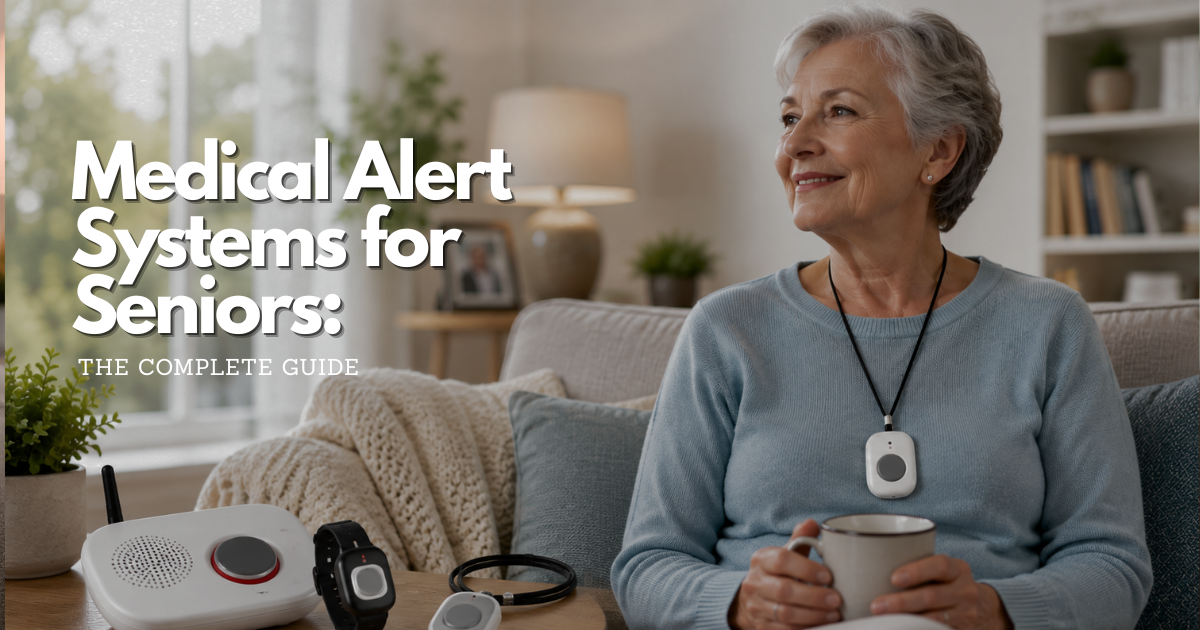
medical alert systems for seniors | SeniorTechLife safety & alert guide
An alert device is one layer of an emergency plan. NIA emphasizes setup, wearing, batteries, fees, coverage, and caregiver check-ins.
Medical Alert Systems For Seniors: What belongs in this guide
A medical alert systems for seniors guide should compare response pathways, wearability, connection, fall-detection limits, privacy, service, and cost.
The primary topic is medical alert systems for seniors. Approved support phrases include senior medical alert system; medical alert system seniors; medical alert systems seniors; senior medical alert systems; best medical alert system seniors; best senior medical alert system; best senior medical alert systems; elderly medical alert system; best medical alert system for seniors; best medical alert systems for seniors; medical alert systems for seniors reviews; reviews of medical alert systems for seniors; the best medical alert system for seniors. They clarify category decisions without creating competing pages.
Use medical alert systems for seniors as the broad starting point, then move to the narrow question that matches the person and the setting.
- Identify the person and the outcome this category must support.
- Match the option with the environment, caregiver, privacy, and emergency plan.
- Separate broad education from brand reviews, local searches, and narrow child intents.
- Verify current instructions, limits, service, and total ownership cost.
A decision starts with the person and setting
An alert device is one layer of an emergency plan. NIA emphasizes setup, wearing, batteries, fees, coverage, and caregiver check-ins.
Two options can look similar online and behave differently under stress. This guide therefore treats fit, control, connection, maintenance, consent, and human support as part of the decision.
Eight decisions that matter more than marketing
The following framework turns a broad product search into observable questions. Complete it with the older adult and, when risk or medical complexity is present, with a qualified rehabilitation or healthcare professional. A specification is useful only when it connects to a real task.
Person and task
Decision question: For medical alert systems, what should a family verify about person and task before choosing an option?
In a medical alert systems decision, person and task changes the practical fit, burden, and safety. Consider the person, the task, the environment, and the support available.
Practical check: For this medical alert systems question, write down the exact task, observe it in the real setting, and compare the result with the manufacturer information and professional advice.
Pause and reassess when: For medical alert systems, pause when the person cannot control the option, the setting requires an untested workaround, or the plan depends on a claim that cannot be verified.
Fit and access
Decision question: For medical alert systems, what should a family verify about fit and access before choosing an option?
In a medical alert systems decision, fit and access changes the practical fit, burden, and safety. Consider the person, the task, the environment, and the support available.
Practical check: For this medical alert systems question, write down the exact task, observe it in the real setting, and compare the result with the manufacturer information and professional advice.
Pause and reassess when: For medical alert systems, pause when the person cannot control the option, the setting requires an untested workaround, or the plan depends on a claim that cannot be verified.
Control and usability
Decision question: For medical alert systems, what should a family verify about control and usability before choosing an option?
In a medical alert systems decision, control and usability changes the practical fit, burden, and safety. Consider the person, the task, the environment, and the support available.
Practical check: For this medical alert systems question, write down the exact task, observe it in the real setting, and compare the result with the manufacturer information and professional advice.
Pause and reassess when: For medical alert systems, pause when the person cannot control the option, the setting requires an untested workaround, or the plan depends on a claim that cannot be verified.
Coverage and connection
Decision question: For medical alert systems, what should a family verify about coverage and connection before choosing an option?
In a medical alert systems decision, coverage and connection changes the practical fit, burden, and safety. Consider the person, the task, the environment, and the support available.
Practical check: For this medical alert systems question, write down the exact task, observe it in the real setting, and compare the result with the manufacturer information and professional advice.
Pause and reassess when: For medical alert systems, pause when the person cannot control the option, the setting requires an untested workaround, or the plan depends on a claim that cannot be verified.
Privacy and consent
Decision question: For medical alert systems, what should a family verify about privacy and consent before choosing an option?
In a medical alert systems decision, privacy and consent changes the practical fit, burden, and safety. Consider the person, the task, the environment, and the support available.
Practical check: For this medical alert systems question, write down the exact task, observe it in the real setting, and compare the result with the manufacturer information and professional advice.
Pause and reassess when: For medical alert systems, pause when the person cannot control the option, the setting requires an untested workaround, or the plan depends on a claim that cannot be verified.
Medical Alert Systems For Seniors: Caregiver support
Decision question: For medical alert systems, what should a family verify about caregiver support before choosing an option?
In a medical alert systems decision, caregiver support changes the practical fit, burden, and safety. Consider the person, the task, the environment, and the support available.
Practical check: For this medical alert systems question, write down the exact task, observe it in the real setting, and compare the result with the manufacturer information and professional advice.
Pause and reassess when: For medical alert systems, pause when the person cannot control the option, the setting requires an untested workaround, or the plan depends on a claim that cannot be verified.
Service and cost
Decision question: For medical alert systems, what should a family verify about service and cost before choosing an option?
In a medical alert systems decision, service and cost changes the practical fit, burden, and safety. Consider the person, the task, the environment, and the support available.
Practical check: For this medical alert systems question, write down the exact task, observe it in the real setting, and compare the result with the manufacturer information and professional advice.
Pause and reassess when: For medical alert systems, pause when the person cannot control the option, the setting requires an untested workaround, or the plan depends on a claim that cannot be verified.
Backup plan
Decision question: For medical alert systems, what should a family verify about backup plan before choosing an option?
In a medical alert systems decision, backup plan changes the practical fit, burden, and safety. Consider the person, the task, the environment, and the support available.
Practical check: For this medical alert systems question, write down the exact task, observe it in the real setting, and compare the result with the manufacturer information and professional advice.
Pause and reassess when: For medical alert systems, pause when the person cannot control the option, the setting requires an untested workaround, or the plan depends on a claim that cannot be verified.
Ownership, service, and disruption planning
Mobility equipment must remain usable after the first week. Include cleaning, inspection, storage, service, transportation, changing health needs, and an alternative plan. Do not accept a product whose safe-use instructions, compatible parts, or service route are unclear.
Setup
For medical alert systems, plan how setup will work after the first week, including who will explain it and where information will be kept.
Maintenance point: For this medical alert systems setup, check the relevant parts, settings, battery or signal status, cleaning, updates, and service contacts on a documented schedule.
Backup point: For medical alert systems, keep a simple alternative plan for power, coverage, damage, travel, caregiver absence, or a changed health need.
Daily use
For medical alert systems, plan how daily use will work after the first week, including who will explain it and where information will be kept.
Maintenance point: For this medical alert systems setup, check the relevant parts, settings, battery or signal status, cleaning, updates, and service contacts on a documented schedule.
Backup point: For medical alert systems, keep a simple alternative plan for power, coverage, damage, travel, caregiver absence, or a changed health need.
Power or signal
For medical alert systems, plan how power or signal will work after the first week, including who will explain it and where information will be kept.
Maintenance point: For this medical alert systems setup, check the relevant parts, settings, battery or signal status, cleaning, updates, and service contacts on a documented schedule.
Backup point: For medical alert systems, keep a simple alternative plan for power, coverage, damage, travel, caregiver absence, or a changed health need.
Cleaning and updates
For medical alert systems, plan how cleaning and updates will work after the first week, including who will explain it and where information will be kept.
Maintenance point: For this medical alert systems setup, check the relevant parts, settings, battery or signal status, cleaning, updates, and service contacts on a documented schedule.
Backup point: For medical alert systems, keep a simple alternative plan for power, coverage, damage, travel, caregiver absence, or a changed health need.
Medical Alert Systems For Seniors: Travel
For medical alert systems, plan how travel will work after the first week, including who will explain it and where information will be kept.
Maintenance point: For this medical alert systems setup, check the relevant parts, settings, battery or signal status, cleaning, updates, and service contacts on a documented schedule.
Backup point: For medical alert systems, keep a simple alternative plan for power, coverage, damage, travel, caregiver absence, or a changed health need.
Caregiver handoff
For medical alert systems, plan how caregiver handoff will work after the first week, including who will explain it and where information will be kept.
Maintenance point: For this medical alert systems setup, check the relevant parts, settings, battery or signal status, cleaning, updates, and service contacts on a documented schedule.
Backup point: For medical alert systems, keep a simple alternative plan for power, coverage, damage, travel, caregiver absence, or a changed health need.
Service
For medical alert systems, plan how service will work after the first week, including who will explain it and where information will be kept.
Maintenance point: For this medical alert systems setup, check the relevant parts, settings, battery or signal status, cleaning, updates, and service contacts on a documented schedule.
Backup point: For medical alert systems, keep a simple alternative plan for power, coverage, damage, travel, caregiver absence, or a changed health need.
Emergency backup
For medical alert systems, plan how emergency backup will work after the first week, including who will explain it and where information will be kept.
Maintenance point: For this medical alert systems setup, check the relevant parts, settings, battery or signal status, cleaning, updates, and service contacts on a documented schedule.
Backup point: For medical alert systems, keep a simple alternative plan for power, coverage, damage, travel, caregiver absence, or a changed health need.
Real-world trial scenarios
Equipment should be tested as part of a complete activity, not as an isolated object. The following scenarios expose access, control, fatigue, caregiver, and maintenance problems that can remain invisible in a showroom. A trial is not permission to exceed the person’s care plan or the manufacturer’s instructions.
An ordinary day
Set up the trial: For medical alert systems, use the exact configuration in a realistic route or emergency scenario. A meaningful trial uses the person’s ordinary footwear, usual assistive devices, realistic timing, and the exact equipment configuration being considered.
Observe: Observe medical alert systems control, reach, comprehension, comfort, privacy, and what happens when the first plan fails. Watch the person and caregiver throughout the complete task rather than judging the equipment from a single successful moment.
Compare: Compare the medical alert systems result with the person’s needs, the written instructions, and the service or response promise. Record objective observations, settings, dimensions, assistance, and any reminders so alternatives can be compared without relying on memory.
Boundary: For medical alert systems, stop when safety relies on guessing, rushing, ignored consent, or a person compensating beyond their ability. Stop the trial if safety depends on catching, lifting, uncontrolled movement, ignored instructions, or a workaround the manufacturer or care plan does not permit.
A difficult route
Set up the trial: For medical alert systems, use the exact configuration in a realistic route or emergency scenario. A meaningful trial uses the person’s ordinary footwear, usual assistive devices, realistic timing, and the exact equipment configuration being considered.
Observe: Observe medical alert systems control, reach, comprehension, comfort, privacy, and what happens when the first plan fails. Watch the person and caregiver throughout the complete task rather than judging the equipment from a single successful moment.
Compare: Compare the medical alert systems result with the person’s needs, the written instructions, and the service or response promise. Record objective observations, settings, dimensions, assistance, and any reminders so alternatives can be compared without relying on memory.
Boundary: For medical alert systems, stop when safety relies on guessing, rushing, ignored consent, or a person compensating beyond their ability. Stop the trial if safety depends on catching, lifting, uncontrolled movement, ignored instructions, or a workaround the manufacturer or care plan does not permit.
A caregiver handoff
Set up the trial: For medical alert systems, use the exact configuration in a realistic route or emergency scenario. A meaningful trial uses the person’s ordinary footwear, usual assistive devices, realistic timing, and the exact equipment configuration being considered.
Observe: Observe medical alert systems control, reach, comprehension, comfort, privacy, and what happens when the first plan fails. Watch the person and caregiver throughout the complete task rather than judging the equipment from a single successful moment.
Compare: Compare the medical alert systems result with the person’s needs, the written instructions, and the service or response promise. Record objective observations, settings, dimensions, assistance, and any reminders so alternatives can be compared without relying on memory.
Boundary: For medical alert systems, stop when safety relies on guessing, rushing, ignored consent, or a person compensating beyond their ability. Stop the trial if safety depends on catching, lifting, uncontrolled movement, ignored instructions, or a workaround the manufacturer or care plan does not permit.
Medical Alert Systems For Seniors: A disrupted or urgent situation
Set up the trial: For medical alert systems, use the exact configuration in a realistic route or emergency scenario. A meaningful trial uses the person’s ordinary footwear, usual assistive devices, realistic timing, and the exact equipment configuration being considered.
Observe: Observe medical alert systems control, reach, comprehension, comfort, privacy, and what happens when the first plan fails. Watch the person and caregiver throughout the complete task rather than judging the equipment from a single successful moment.
Compare: Compare the medical alert systems result with the person’s needs, the written instructions, and the service or response promise. Record objective observations, settings, dimensions, assistance, and any reminders so alternatives can be compared without relying on memory.
Boundary: For medical alert systems, stop when safety relies on guessing, rushing, ignored consent, or a person compensating beyond their ability. Stop the trial if safety depends on catching, lifting, uncontrolled movement, ignored instructions, or a workaround the manufacturer or care plan does not permit.

Questions for a supplier, retailer, or clinician
Ask for answers in writing when they affect compatibility, capacity, warranty, returns, insurance, or service. A product page can be outdated or describe a related configuration rather than the exact item delivered. Keep the model and version attached to every answer.
- What exact task and user ability does this option need to support?
- What are the coverage, signal, battery, power, or access limits?
- Who will set up, explain, inspect, and maintain it?
- What happens when the person cannot press, hear, see, carry, or remember the device?
- Which information is collected, shared, stored, or printed?
- What are the fees, contract, return, warranty, and service terms?
- What professional or manufacturer help is available?
- What is the tested backup if the primary plan fails?
Do not treat “medical grade,” “premium,” “smart,” “portable,” “heavy duty,” “upright,” “all terrain,” or “caregiver friendly” as measurable claims unless the seller explains the test, limit, and exact configuration. A high review average cannot replace manufacturer instructions or an individualized assessment.
Common selection and use mistakes
Mistakes often begin with a reasonable goal—speed, independence, comfort, or lower cost—but skip an important constraint. Recognizing the pattern early prevents an unsuitable product from becoming a permanent workaround.
Medical Alert Systems: choosing by a single feature
A family may select a medical alert systems option because one feature sounds reassuring while overlooking coverage, fit, training, or maintenance.
Better approach: For medical alert systems, use a short decision record that names the task, constraint, evidence, and unresolved risk. Document the reason for the decision so another caregiver, editor, or clinician can understand what was tested and what remains unresolved.
Medical Alert Systems: assuming “senior” is one use case
Older adults differ in hearing, vision, dexterity, cognition, mobility, language, privacy preferences, and caregiver access.
Better approach: Test the actual person and medical alert systems routine rather than relying on an age label. Document the reason for the decision so another caregiver, editor, or clinician can understand what was tested and what remains unresolved.
Medical Alert Systems: confusing availability with suitability
A medical alert systems product or service can be easy to order yet difficult to use, charge, explain, return, or repair.
Better approach: Verify the complete medical alert systems ownership path before paying or relying on it. Document the reason for the decision so another caregiver, editor, or clinician can understand what was tested and what remains unresolved.
Medical Alert Systems: treating a backup as automatic
A second medical alert systems device or printed record is not useful if it is outdated, inaccessible, untested, or incompatible.
Better approach: Assign an owner and a review date for every medical alert systems backup. Document the reason for the decision so another caregiver, editor, or clinician can understand what was tested and what remains unresolved.
Delivery, follow-up, and reassessment
Delivery is the beginning of ownership, not the final QA step. Verify the exact product, condition, components, instructions, training, settings, and return deadline. Reassessment should respond to the person, caregiver, environment, and equipment as each changes.
Medical Alert Systems: first setup
At first use: Record the exact medical alert systems model or service configuration, settings, contacts, and training completed.
Over time: Review the medical alert systems routine after the first few uses and after any change in health, home, vehicle, or caregiver.
Escalate when: Escalate when the promised medical alert systems response, fit, privacy, or control does not match the documented need.
this topic: Medical Alert Systems: monthly reality check
At first use: Ask whether the person still uses and understands the medical alert systems plan.
Over time: Check medical alert systems supplies, batteries, coverage, labels, contacts, and access routes.
Escalate when: Escalate after a missed medical alert systems alert, false confidence, fall, failed transfer, inaccessible route, or repeated confusion.
Medical Alert Systems: travel or disruption
At first use: Decide how the medical alert systems plan works away from home, during outages, and when a caregiver is absent.
Over time: Keep current medical alert systems instructions and a backup contact with the person.
Escalate when: Escalate if the medical alert systems plan cannot be verified in the new setting.
Medical Alert Systems: change in condition
At first use: Treat new weakness, falls, confusion, hearing loss, or medication changes as a reason to reassess the medical alert systems plan.
Over time: Do not silently adapt medical alert systems equipment or service beyond its instructions.
Escalate when: Seek qualified help when the change affects medical alert systems safety or emergency communication.
Emergency and backup planning
A written response plan should name who receives an alert, what happens next, and what the device cannot detect.
Keep a phone or alert method accessible, label equipment without exposing unnecessary private information, and place manuals and service numbers where caregivers can find them. A backup device must be fitted, inspected, and included in the care plan; equipment borrowed during an emergency is not automatically safe.
After a fall, collision, uncontrolled movement, hard impact, flood, fire exposure, or airline handling, remove the equipment from use until its safety can be confirmed. Seek appropriate medical attention for injury or concerning symptoms. Do not hide a failure with tape, improvised fasteners, mixed parts, or a caregiver’s physical effort.
Documented plan for medical alert systems for seniors
Turn the research into a short, documented decision record.
This broad hub explains category decisions; brand reviews, narrow “best” questions, and coverage-specific pages remain separate.
- Define the person and task.
- Measure the environment and access route.
- Verify the exact device or service limits.
- Test setup and failure scenarios.
- Document cost, privacy, support, and backup.
Record what was rejected
Record options rejected because of fit, coverage, privacy, cost, complexity, or unavailable service.
Set the next review date
Set a review date and repeat the assessment after any material change.
What this Hub intentionally does not answer
This broad hub provides education and decision structure; it does not rank current models or answer every narrow child query.
Use official instructions and qualified help for any safety-critical setup, installation, transfer, or emergency plan.
Medical Alert Systems For Seniors: How future child guides should connect
Future child guides must own narrower questions and remain inactive until separately reviewed.
Until a child guide is published and reviewed, its cluster card remains visible as navigation architecture but not as an active link. This protects readers from broken destinations and prevents unpublished URLs from being treated as finished advice.
Frequently asked questions
What should be decided first?
Start with the person, the task, the environment, and the consequence of a failure before comparing medical alert systems options.
Can technology replace a caregiver?
No. It can support a plan, but it cannot replace consent, check-ins, clinical judgment, or emergency services.
What should families record?
Keep the exact device or service, settings, contacts, limitations, fees, privacy choices, and review date.
When should the plan be reassessed?
After a missed alert, outage, fall, new symptom, medication change, move, or caregiver change.
Start with the emergency pathway
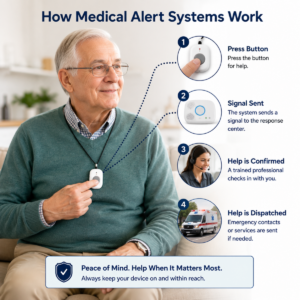
A medical alert system for seniors should be judged by what happens after the button is pressed, not by the number of features on the box. Write the sequence: who receives the signal, whether a response center answers, how the person is identified, when family is called, and when emergency services are contacted. Ask what happens if the person cannot speak, cannot hear, presses accidentally, or loses the connection. The best senior medical alert system is the one that fits this actual pathway and the wearer’s abilities.
Write the observation down, identify the responsible person, and set a date to review it. This keeps the broad Hub useful without turning one narrow question into a competing page.
Wearability is a safety requirement
A pendant left on the dresser cannot help during a fall. Discuss weight, clasp, shower use, sleep, clothing, skin comfort, dexterity, and the person’s willingness to wear the device. A mobile unit may need a charging habit; an in-home unit may depend on range and a base station. Test the routine at the times risk is highest, including overnight and outside the home. Record who notices when the device is not being worn and how that problem will be addressed respectfully.
Write the observation down, identify the responsible person, and set a date to review it. This keeps the broad Hub useful without turning one narrow question into a competing page.
Fall detection has boundaries
Automatic fall detection is a sensor judgment, not a guarantee. A slow slide, a soft fall, a fall behind furniture, an unusual body position, or a device worn incorrectly may not produce the expected alert. False alarms can also create frustration or cancellation. Ask the provider for current limitations, confirmation steps, testing instructions, and what the user should do after a fall. Never delay urgent care while waiting for a device to decide whether an event qualifies.
Write the observation down, identify the responsible person, and set a date to review it. This keeps the broad Hub useful without turning one narrow question into a competing page.
Coverage is more than a map
A service can show a strong coverage area and still fail in a basement, elevator, rural road, thick-walled home, or travel destination. Test the actual rooms and routes, then ask how outages, roaming, Wi-Fi dependence, and maintenance are handled. Keep the service number and account details accessible to caregivers. A medical alert systems seniors comparison should include connection behavior, not just advertised range. Document where the device is expected to work and where a second plan is required.
Write the observation down, identify the responsible person, and set a date to review it. This keeps the broad Hub useful without turning one narrow question into a competing page.
Privacy and consent belong in the purchase
Emergency services may receive location, voice recordings, contact information, health notes, or account history. Ask what is collected, who can access it, how long it is kept, and how the older adult can change or delete permissions. Explain the service in plain language and respect a refusal. Family enthusiasm cannot substitute for informed consent. If the person has cognitive changes, involve the appropriate decision-maker while preserving dignity and the narrowest necessary disclosure.
Write the observation down, identify the responsible person, and set a date to review it. This keeps the broad Hub useful without turning one narrow question into a competing page.
Costs continue after activation
Compare equipment fees, activation, monthly service, replacement, charging accessories, cancellation, trial periods, taxes, and caregiver add-ons. Some programs or private plans may cover part of a service, but eligibility and terms vary. NIA notes that Medicare does not pay for emergency medical alert systems, while other programs may differ; verify current individual coverage before relying on it. Do not hide an ongoing fee inside a “free” device claim. Keep the contract with the emergency plan.
Write the observation down, identify the responsible person, and set a date to review it. This keeps the broad Hub useful without turning one narrow question into a competing page.
Medical Alert Systems For Seniors: Caregiver routing needs maintenance
The contact list is part of the device. Remove a former caregiver, confirm phone numbers, identify who answers at night, and define what happens when nobody responds. A response center may follow one protocol while a family expects another. Write down the order, permission, language needs, and escalation threshold. Review it after a move, divorce, death, new diagnosis, or change in work schedule. A forgotten contact can be as serious as a dead battery.
Write the observation down, identify the responsible person, and set a date to review it. This keeps the broad Hub useful without turning one narrow question into a competing page.
Measure success honestly
A system does not need to prevent every emergency to be useful, but the family should decide what success means. It might reduce time to a known contact, provide a clear way to request help, or support independent living in a specific setting. Track false alarms, missed charges, confusion, and refusal to wear the device. Use those observations to adjust the plan or change categories. Reviews of medical alert systems for seniors should describe evidence and limits, not promise certainty.
Write the observation down, identify the responsible person, and set a date to review it. This keeps the broad Hub useful without turning one narrow question into a competing page.
Test the alert conversation
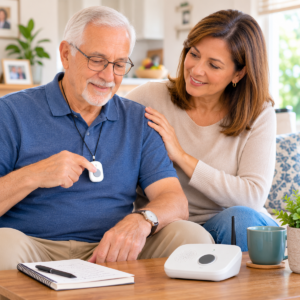
A response system is partly a conversation. The wearer may need to hear a person, answer identification questions, describe pain, unlock a door, or wait while a caregiver travels. Test volume, language, pace, and the person’s preferred name. Ask what happens if the wearer presses by mistake or cannot answer. Never stage an emergency in a way that confuses a real response center or risks dispatch; use the provider’s approved test process.
Review service changes
A company can change its response center, cellular partner, app, contract, equipment, or cancellation terms. Keep the original agreement and note when the service is reviewed. If the provider changes a material feature, repeat the coverage and usability test. A current comparison should distinguish verified facts from claims that may change. This is why the broad Hub avoids permanent model rankings and hard-coded affiliate promises.
Respect the older adult’s choice
Safety planning works better when the wearer understands the purpose and has a say in the routine. Ask what feels intrusive, embarrassing, confusing, or reassuring. Offer a small trial when available, but define the return date and the backup during the trial. If the person declines a medical alert system, document the conversation, strengthen check-ins or environmental changes, and revisit the decision without coercion.
Check the response promise
Ask the provider to explain the response in ordinary language: what the person sees or hears, who answers, what information is available to that responder, when family is called, and when emergency services are contacted. Clarify whether the device works in every room, outside the home, during a power outage, and while traveling. Record the date of the answer and the exact plan tier. A service claim that cannot be explained to the wearer and caregiver is not ready to support an emergency.
Review the plan after a false alarm, missed charge, new phone, changed cellular coverage, or change in the person’s ability to speak or press a button. The goal is not to collect the most features; it is to create a response pathway the older adult understands and the caregiver can maintain.
Published Medical Alert Guides
These focused guides are currently published and ready to open. New cluster links should be added only after the destination page is live and verified.
- How Do Medical Alert Systems Work?
- Personal Medical Alert System: A Practical Guide
- Personal Emergency Response Device: A Practical Guide
- Medical Alert Device for Seniors: A Practical Guide
- Medical Alert Device with Fall Detection: A Practical Guide
- Life Alert Bracelet with Fall Detection: A Practical Guide
- Iris Ally Medical Alert Device: A Practical Guide
- Alert1 Medical Alert Systems: A Practical Guide
- Top Rated Medical Alert System: Buying Guide for 2026
- Waterproof Medical Alert Systems: A Practical Guide
- Best Emergency Call Button for Elderly: Buying Guide for 2026
- Emergency Call Button for Seniors No Monthly Fee: A Practical Guide
- What Does the Emergency Call Button Do?
- Emergency Phone for Seniors: A Practical Guide
- Does United Healthcare Cover Medical Alert Systems?
- United Healthcare Coverage for Medical Alert Systems: What You Need to Know
- Medical ID and Emergency Information for Seniors
- Medical Id Bracelet Tags: A Practical Guide
- Medical Alert Bracelet: A Practical Guide
Sources used for this guide
NIA and MedlinePlus inform the safety framework; they do not endorse a company or guarantee detection.
- Services for Older Adults Living at Home — National Institute on Aging.
- Recognizing medical emergencies — MedlinePlus, U.S. National Library of Medicine.
- Unique Considerations in the Home — U.S. Food and Drug Administration.
- Aging in Place: Growing Older at Home — National Institute on Aging.
Build a safer plan
Return to the Safety & Alert Resource Center for broader planning; focused child pages remain inactive until reviewed.
3 comentarios en «🆘 Medical Alert Systems for Seniors: The Complete Guide»