
A successful caregiving for elderly parents plan begins with open communication and a realistic understanding of what each person needs. Some families provide occasional help, while others coordinate daily personal care, professional services, and long-distance support. The right arrangement depends on the older adult’s preferences, abilities, home environment, available caregivers, and financial resources.
This comprehensive guide explains how to care for aging parents, divide responsibilities among family members, establish daily routines, identify safety concerns, and prepare for changing care needs. It also covers caregiver stress, respite care, financial planning, communication, and ways to support independence without compromising appropriate safety.
Safety note: Family caregiving cannot replace professional medical evaluation, emergency services, or specialized care when needed. Sudden confusion, new weakness, serious injuries, breathing difficulties, chest pain, or significant changes in health require prompt medical attention. Caregivers should not perform unsafe transfers, change prescribed medications independently, or make medical decisions beyond their training or legal authority.
Quick Answer: How to Start Caregiving for Elderly Parents
Caregiving for elderly parents should begin with a respectful conversation about what your parent wants, which activities have become difficult, and what assistance would be welcome. Instead of immediately changing established routines, identify specific concerns and work together to develop practical solutions.
Begin by reviewing daily activities such as cooking, bathing, transportation, medication organization, household maintenance, and social contact. Determine which tasks your parent can manage independently, which require occasional help, and which may need professional assistance.
A practical family caregiving plan should include:
- Discuss your parent’s preferences and priorities.
- Identify specific activities that require assistance.
- Review the home for accessibility and safety concerns.
- Maintain an accurate medication and appointment list.
- Divide responsibilities among available family members.
- Establish reliable transportation and communication arrangements.
- Identify professional services and community resources.
- Create emergency contacts and backup caregiver plans.
- Schedule regular breaks for the primary caregiver.
- Review the care plan whenever health or family circumstances change.
The goal of caregiving for elderly parents is to provide useful assistance while preserving comfort, privacy, dignity, and as much meaningful independence as possible.

How to Begin Caregiving for Elderly Parents Without Taking Over
One of the biggest challenges in caregiving for elderly parents is finding the right balance between assistance and independence. Adult children may recognize problems before their parents are ready to discuss them, creating tension even when everyone wants a positive outcome.
Start with observations rather than assumptions. For example, explaining that carrying groceries upstairs has become difficult is more constructive than suggesting that a parent cannot manage living independently.
Start With a Respectful Conversation
Ask your parent which activities feel manageable, which have become frustrating, and what kind of support they would consider helpful. Listen to their concerns about privacy, unfamiliar caregivers, expenses, and changing household routines.
Caregiving conversations should involve the older adult whenever possible. Even when memory or communication challenges exist, preferences can often be expressed through simple choices, familiar routines, and supported discussions.
Identify Specific Caregiving Needs
Make a list of daily activities and the assistance each one requires. Consider bathing, dressing, meals, housework, transportation, medications, and communication.
Avoid interpreting one difficult activity as proof that every aspect of daily living requires supervision. Someone may need transportation assistance while remaining fully capable of managing meals, finances, and personal decisions.
Separate Immediate Needs From Future Planning
Create a simple list of priorities: what requires attention now, what should be arranged soon, and what can be evaluated later.
Immediate concerns may involve an unsafe entrance, missed medical appointments, or difficulty accessing the bathroom. Longer-term decisions may include home modifications, professional caregiving services, legal planning, or alternative housing.
Begin With Small, Practical Changes
A clear medication list, improved hallway lighting, organized transportation, or a weekly family check-in may provide meaningful assistance without changing the entire household.
Review each adjustment with your parent. A change that appears helpful to a caregiver may not fit the older adult’s preferences or actual routine.
Building a Daily Routine for Aging Parents
Daily routines are an important part of caregiving for elderly parents because they make responsibilities more predictable. Consistent arrangements for meals, personal care, appointments, and rest can help reduce unnecessary confusion for family members and professional helpers.
A good schedule should support the person’s usual lifestyle rather than replace it with a rigid institutional routine. Allow sufficient time for activities, changes in energy, and personal preferences.
Morning and Personal Care Routines
Discuss how your parent prefers to begin the day, including waking, dressing, grooming, breakfast, and morning activities.
Identify whether preparation, reminders, physical assistance, or environmental adjustments would help. Avoid rushing movements that require balance or coordination, particularly when the person has mobility limitations.
Meals, Nutrition, and Hydration
Meal planning should consider food preferences, dietary instructions, accessibility, and the person’s ability to prepare or obtain meals.
Some older adults may need assistance with grocery shopping, meal preparation, or eating. Persistent appetite changes, swallowing problems, or unexplained changes in weight should be discussed with a healthcare professional.
Medication Organization
Maintain a current medication list that reflects instructions confirmed by the pharmacist or prescriber.
Medication reminder applications, calendars, and certain pill organizers may support the routine, but they cannot determine whether a medicine is appropriate or whether a missed dose should be taken later.
Caregivers should never change prescribed doses independently or assume that an app notification proves medication was taken.
Appointments and Transportation
Keep appointments organized in a calendar accessible to the people responsible for transportation and follow-up.
Record appointment locations, necessary mobility assistance, relevant contact information, and who will help communicate instructions afterward.
Arrange a backup when the primary driver or caregiver becomes unavailable.
Meaningful Activities and Social Connections
Caregiving for elderly parents should leave room for activities that make daily life enjoyable. Conversation, music, reading, hobbies, religious activities, gardening, and familiar social connections may remain important parts of a person’s identity.
A schedule focused exclusively on tasks can become emotionally exhausting. Include activities your parent values rather than treating enjoyment as secondary to practical care.
Dividing Caregiving Responsibilities Among Family Members
Family caregiving becomes more sustainable when responsibilities are distributed according to availability, ability, and agreed commitments.
One adult child may live nearby and provide transportation, while another manages appointments, researches services, or contributes financially. These different forms of assistance can all be useful when responsibilities are clearly defined.
Create a Family Caregiving Task List
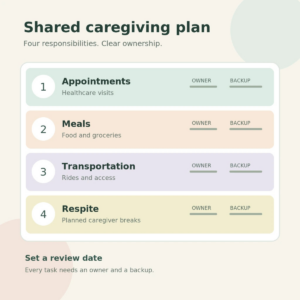
Begin with the tasks requiring regular attention. Identify one person responsible for each activity and another who can provide backup support.
Include specific commitments rather than vague offers to help. For example, assigning transportation for Tuesday appointments is more actionable than saying that someone will help whenever needed.
Assign Owners, Backups, and Review Dates
A clear task-sharing plan can reduce misunderstandings and prevent essential responsibilities from being overlooked.
| Caregiving responsibility | Primary responsibility | Backup arrangement |
|---|---|---|
| Medical appointments | Assigned family member | Another relative or approved transportation service |
| Grocery shopping | Local caregiver | Delivery service or trusted helper |
| Medication list updates | Authorized caregiver | Pharmacist or designated healthcare contact |
| Household maintenance | Responsible relative | Qualified service provider |
| Financial paperwork | Legally authorized person | Appropriate professional support |
| Respite coverage | Scheduled helper | Alternative trained caregiver |
Each responsibility should have a realistic deadline or review schedule. A backup arrangement is useful only when the person or service has agreed to provide it.
Communicate Without Creating Family Conflict
Use a shared calendar or organized communication channel for nonurgent updates. Describe what happened, when it happened, and which decision requires attention.
Avoid making assumptions about another family member’s intentions. Disagreements can arise because relatives observe different situations or have different abilities to contribute.
When conflicts involve medical decision-making, legal authority, or significant safety concerns, seek qualified professional guidance.
Include Family Members Who Live Far Away
Relatives who cannot provide hands-on care may still coordinate appointments, research services, maintain records, arrange deliveries, or contribute toward approved expenses.
A dependable remote responsibility is often more useful than an unrealistic promise to be available for every emergency.
Long-Distance Caregiving for Elderly Parents
Long-distance caregiving requires careful coordination because relatives cannot directly observe every change in the home or daily routine.
A practical remote care plan should combine regular communication, reliable local contacts, appropriate services, and a clear emergency response procedure.
Establish Reliable Local Contacts
With your parent’s permission, identify trusted people who can provide an accurate picture of everyday circumstances.
This may include nearby relatives, neighbors, friends, professional caregivers, or healthcare contacts who have agreed to a specific role.
Do not assume that a nearby person can provide unlimited unpaid care.
Schedule Regular Check-Ins
Agree on communication times that work for your parent. Phone calls or video conversations can help maintain relationships and identify concerns.
Include ordinary conversation rather than turning every call into an inspection. Ask about meals, activities, appointments, and comfort without making the person feel constantly evaluated.
Coordinate Medical Information Appropriately
Healthcare professionals may require consent or other authorization before discussing confidential information with adult children.
Ask your parent which information they want shared and how that permission should be documented.
Keep a current list of healthcare contacts and appointment questions for authorized caregivers.
Create a Local Emergency Plan
Identify who can reach the home if travel is delayed or an urgent problem occurs.
The plan should include relevant contacts, building access arrangements when appropriate, and clear instructions for seeking emergency help.
Technology can support communication, but it should not replace a reliable local response.
Home Safety and Accessibility for Aging Parents
A safer home environment can support caregiving for elderly parents by reducing unnecessary obstacles and making common activities more manageable.
Home safety decisions should address actual difficulties rather than relying on generalized assumptions about age.
Review Walking Routes and Flooring
Examine hallways, bedrooms, entrances, and frequently used paths for unsecured rugs, clutter, uneven flooring, and electrical cords.
Consider whether the person has adequate space for a walker, rollator, cane, or wheelchair when appropriate.
Changes should reflect the individual’s mobility needs and the actual home layout.
Improve Lighting and Visibility
Provide appropriate lighting near stairs, bathroom entrances, bedrooms, and nighttime walking routes.
Avoid excessive glare or confusing shadows that make obstacles difficult to recognize.
Accessible switches and suitable night lights may improve convenience when selected and installed correctly.
Evaluate Bathroom Accessibility
Bathrooms may require particular attention because bathing and toileting involve wet surfaces and changes in position.
Properly installed grab bars, appropriate shower seating, suitable flooring, and accessible fixtures may be helpful depending on individual needs.
An occupational therapist can help assess difficult transfers and recommend suitable modifications.
Review Stairs and Entryways
Steps, elevated thresholds, and uneven exterior pathways can create accessibility barriers.
A qualified professional can evaluate appropriate handrails, ramps, or other modifications when necessary.
Avoid installing structural equipment based only on generic online dimensions or product descriptions.
Managing Health Changes and Medical Appointments
Caregiving for elderly parents often includes noticing changes in physical function, communication, sleep, mood, or everyday activities.
Caregivers should record observable details and share concerns with the appropriate healthcare professional rather than attempting to diagnose conditions independently.
Maintain Accurate Health Information
Keep a current record of healthcare contacts, medication lists, allergies when relevant, appointments, and important instructions.
Store sensitive information securely and ensure authorized helpers know where to find it.
Avoid sharing unnecessary private information through informal family messages.
Prepare Questions Before Medical Visits
Identify the most important concerns before an appointment.
Use specific examples, such as difficulty walking after a recent illness or repeated confusion about medication instructions.
Ask the clinician what should be monitored, which changes require follow-up, and when to seek urgent care.
Recognize Meaningful Changes
New falls, worsening pain, significant changes in mobility, unexpected confusion, or difficulties managing everyday tasks should prompt appropriate evaluation.
Some changes may relate to temporary illnesses, medications, environmental barriers, or other conditions that require professional assessment.
Do not assume that every new difficulty is an inevitable part of aging.
Reassess the Care Plan After Hospitalization
Hospital discharge, surgery, or a new diagnosis can change the assistance an older adult needs.
Review medication instructions, transportation requirements, mobility limitations, follow-up appointments, and caregiver responsibilities.
A previously suitable routine may require temporary or permanent adjustments.
Caregiver Stress, Burnout, and the Importance of Respite Care
Caregiving for elderly parents can be emotionally meaningful while also involving substantial demands on time, health, employment, and relationships.
A sustainable plan should recognize that caregivers have limits. Regular rest and shared responsibilities help protect both the older adult and the people providing support.
Recognize Caregiver Strain
Caregiver stress may appear as persistent fatigue, sleep difficulties, irritability, difficulty concentrating, isolation, or trouble maintaining ordinary responsibilities.
These signs deserve attention rather than being dismissed as a normal requirement of family care.
Ask whether the current arrangement provides enough help and whether additional services or schedule changes are necessary.
What Is Respite Care?
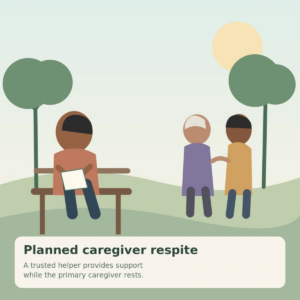
Respite care provides temporary assistance so a primary caregiver can rest, attend appointments, work, or manage other responsibilities.
Depending on the person’s needs and available resources, respite may be provided by relatives, trained in-home helpers, adult day programs, or other community services.
Availability, qualifications, cost, and coverage should be confirmed with each provider.
Prepare for a Respite Care Arrangement
Before another person assumes caregiving duties, review the older adult’s routine, communication preferences, emergency contacts, mobility requirements, and relevant care instructions.
Clarify which tasks the helper is qualified to perform and how concerns should be reported.
Whenever possible, introduce the helper to your parent before the arrangement begins.
Schedule Breaks Before Support Becomes Urgent
Planned breaks are generally easier to coordinate than last-minute arrangements made after the caregiver becomes overwhelmed.
Include time for rest, medical appointments, friendships, employment, and personal interests.
A caregiving plan is more sustainable when it protects the caregiver’s well-being as well as the older adult’s needs.
Professional Home Care and Community Support Services
Some caregiving responsibilities may exceed what family members can safely or consistently provide.
Professional services can address specific needs, including personal assistance, transportation, meal support, care coordination, and temporary supervision.
In-Home Care Services
In-home care providers may assist with certain everyday activities, depending on their qualifications and service agreements.
Ask what tasks are included, whether caregivers receive appropriate training, how workers are supervised, and what happens when someone is absent.
Distinguish nonmedical assistance from skilled clinical services that require licensed professionals.
Adult Day Services
Adult day programs may offer structured activities, social engagement, meals, or other support during scheduled hours.
Programs vary in eligibility, staffing, services, and transportation arrangements.
Confirm whether a specific program can accommodate the older adult’s mobility, communication, and health requirements.
Transportation and Meal Assistance
Community transportation and meal programs may reduce pressure on family caregivers.
Availability often depends on location, eligibility, scheduling, and program funding.
Local aging services organizations can help families identify appropriate resources.
Caregiver Support Groups
Support groups can provide opportunities to discuss caregiving challenges, learn practical ideas, and reduce isolation.
However, another family’s experience should not replace individualized medical, financial, or legal guidance.
Protect your parent’s privacy when discussing caregiving circumstances in a group.
Financial Planning for Caregiving for Elderly Parents
Caregiving expenses can include transportation, medical supplies, home modifications, professional services, and changes in household arrangements.
A realistic financial plan should identify expected expenses, available resources, and the people authorized to make financial decisions.
Create a Caregiving Budget
Record recurring costs such as transportation, home assistance, supplies, and service subscriptions.
Separate essential expenses from optional purchases and review the budget when care needs change.
Do not assume that a product or service is financially covered simply because it supports health or safety.
Understand Medicare and Medicaid Limitations
Original Medicare generally does not cover ongoing custodial care when that is the only care required, although eligible medical and skilled services have separate coverage rules.
Medicaid long-term services and supports vary by state and eligibility category.
Confirm the applicable benefits before relying on public assistance to pay for care.
Review Long-Term Care Insurance and Other Benefits
Some families may have access to long-term care insurance, veterans benefits, disability programs, or local support services.
Each program has different eligibility, documentation, and payment requirements.
A qualified benefits counselor may help identify suitable options.
Protect Financial Boundaries
Helping a parent with bills or accounts does not automatically establish legal authority to manage their money.
Use appropriate documentation, transparent records, and authorized arrangements.
Avoid mixing caregiver funds with a parent’s money or making undocumented financial decisions.
Balancing Caregiving, Employment, and Personal Responsibilities
Many adult children provide care while working, raising children, managing households, or living in another location.
A sustainable arrangement requires realistic commitments rather than assuming that one person can remain available at all times.
Discuss Workplace Flexibility
Ask an employer or human-resources representative about available leave, schedule adjustments, remote work, or employee assistance programs.
Employment protections and eligibility requirements vary, so confirm the applicable policies rather than relying on informal assumptions.
Establish Boundaries Around Caregiving Time
Create predictable arrangements for nonurgent communication and regular responsibilities.
Use a separate procedure for genuine emergencies so that ordinary family updates do not become constant interruptions.
Know When to Request Additional Help
If responsibilities interfere with sleep, health, employment, or safe caregiving, review the arrangement.
Additional family support, professional services, respite, or care management may be necessary.
Maintaining personal limits can help prevent a caregiving plan from becoming unreliable.
Caregiving for Elderly Parents With Memory or Cognitive Changes
Memory difficulties can affect medication organization, appointments, communication, and everyday household tasks.
The appropriate response depends on the person’s actual abilities and any clinical assessment, not simply whether they have received a particular diagnosis.
Use Clear Communication
Speak calmly, use familiar language, and provide one manageable instruction or choice at a time when appropriate.
Avoid unnecessary arguments or repeated corrections that do not affect safety.
Ask whether hearing, vision, discomfort, or the environment may be contributing to communication difficulties.
Keep Familiar Routines
Consistent surroundings and predictable activities may help reduce confusion for some people.
Familiar meals, personal belongings, music, and preferred activities can remain meaningful.
Adjust the routine when the person’s needs change rather than insisting on rigid compliance.
Evaluate Supervision Needs
A medication reminder or calendar may be useful for some individuals, but these tools cannot guarantee that medications are taken correctly or that someone remains safe.
When repeated errors, wandering concerns, or substantial difficulties with daily activities occur, request an individualized professional assessment.
Respect Capacity and Decision-Making Rights
Decision-making ability can differ across tasks and circumstances.
A parent may need help with complex paperwork while still making meaningful choices about meals, visitors, clothing, and daily routines.
Legal authority and medical decision-making arrangements should be clarified through appropriate professionals when necessary.
Technology That Can Support Family Caregiving
Technology can assist with reminders, communication, transportation, and certain home safety tasks.
However, it should solve a clearly identified problem rather than create new complications or unwanted surveillance.
Medication Reminder Applications
Medication reminder apps may help organize schedules, but entries must match verified instructions.
The app cannot confirm correct medication use or determine what to do after a missed dose.
A written list and suitable backup remain important.
Medical Alert Systems
Medical alert devices may provide a way to request assistance when a phone is not accessible.
However, system performance depends on connectivity, charging, activation, and the provider’s response process.
They do not prevent falls or replace necessary caregiving.
Video Calls and Family Communication
Video calls can support regular contact with relatives who live far away.
Use accessible devices and discuss privacy preferences before introducing connected services.
A remote conversation cannot always replace direct observation or a professional assessment.
Home Monitoring and Privacy
Motion sensors, cameras, and other monitoring equipment may provide certain information about household activity.
Discuss what is collected, who can access it, and how the data will be used.
Choose the least intrusive solution that adequately addresses the identified concern.
Handling Disagreements About Caregiving Decisions
Adult children and aging parents may disagree about driving, finances, outside help, home modifications, or future housing.
A productive conversation begins with specific observations and the older adult’s stated preferences.
Understand the Concern Behind Refusing Help
A parent may hesitate to accept assistance because of privacy, cost, unfamiliar people, or fear of losing independence.
Ask what feels uncomfortable and whether a smaller adjustment would be acceptable.
For example, assistance with one weekly grocery trip may feel more manageable than an immediate change to the entire household routine.
Avoid Making Decisions Through Family Arguments
Different relatives may have different information about the parent’s daily abilities.
Compare concrete observations and involve qualified professionals when questions concern health, consent, capacity, or significant risk.
Family agreement alone does not substitute for appropriate legal or clinical assessment.
Keep the Older Adult Involved
Explain options in understandable terms and invite participation whenever possible.
Supportive caregiving involves helping someone make appropriate decisions, not automatically replacing their choices.
Legal Planning and Future Care Decisions
Caregiving for elderly parents may involve legal documents, healthcare preferences, financial authorizations, and planning for situations in which additional support becomes necessary.
Families should address these matters through qualified professionals and according to the older adult’s wishes.
Advance Directives and Healthcare Preferences
Discuss whether your parent has documented healthcare preferences and which individuals are authorized to participate in medical decisions.
The relevant forms and requirements vary by jurisdiction.
Keep appropriate documentation available to authorized healthcare representatives.
Financial and Legal Authority
A power of attorney or other legal arrangement may authorize specific financial activities, but its scope depends on the actual document and applicable law.
Adult children should not assume automatic authority over a parent’s finances or property.
Seek qualified legal guidance when responsibilities are unclear.
Planning for Changes in Housing
Remaining at home may be appropriate when the environment and available care can meet the person’s needs.
Other options may include additional home assistance, assisted living, or specialized residential care.
Compare actual services, costs, and suitability instead of making housing decisions solely from age or family convenience.
Reviewing and Updating the Family Care Plan
Caregiving needs evolve. A plan created during a stable period may require changes following illness, hospitalization, a fall, a caregiver’s job change, or reduced family availability.
Regular reviews help identify whether responsibilities are still manageable.
Conduct a Monthly Family Review
Ask what has changed in the older adult’s abilities, the home environment, caregiver schedules, and available services.
Review tasks that were completed, missed, or became difficult.
Keep the conversation focused on decisions rather than assigning blame.
Update Emergency and Backup Contacts
Check that the listed people remain available and understand their roles.
A backup person who has moved, changed jobs, or developed their own health limitations may no longer be able to provide reliable assistance.
Review Home Safety and Equipment
Check frequently used routes, lighting, bathroom access, flooring, mobility equipment, and other practical arrangements.
Changes in the person’s physical abilities may require a professional accessibility assessment.
Reassess Caregiver Well-Being
Ask whether caregivers have enough time for rest, medical care, employment, and personal relationships.
If the current arrangement cannot be sustained, identify additional assistance before important responsibilities are missed.
Final Caregiving for Elderly Parents Checklist
A practical caregiving for elderly parents checklist should cover daily activities, decision-making, home safety, caregiver support, and future planning.
-
The older adult’s preferences and priorities are documented.
-
Daily tasks and assistance needs have been identified.
-
Family responsibilities have a primary person and backup.
-
A current medication list and appointment calendar are available.
-
Walking routes and household safety have been reviewed.
-
Transportation and meal arrangements are reliable.
-
Relevant healthcare contacts and permissions are understood.
-
Caregiver rest and respite arrangements are included.
-
Financial responsibilities and legal authority are clear.
-
Emergency contacts and backup plans are current.
-
Professional services have been considered when appropriate.
-
The care plan has a scheduled review date.
The most useful checklist is one that supports actual decisions and can be maintained by the people responsible.
Frequently Asked Questions About Caregiving for Elderly Parents
How Do I Start Caregiving for Elderly Parents?
Begin with a respectful conversation about your parent’s preferences, daily difficulties, and desired assistance. Identify immediate concerns, create a simple care plan, and involve qualified professionals when necessary.
What Are the Most Important Daily Caregiving Tasks?
Common responsibilities include meal preparation, personal care support, medication organization, transportation, household maintenance, appointments, and social engagement. The appropriate tasks depend on the individual’s abilities and needs.
How Can Siblings Share Caregiving Responsibilities Fairly?
Divide tasks according to availability, ability, and agreed commitments. Assign a primary person, backup, and review date for important responsibilities.
How Can I Care for Aging Parents From Another State?
Establish regular communication, identify reliable local contacts, coordinate services, maintain important records, and create a realistic emergency response plan.
What Is Respite Care for Family Caregivers?
Respite care provides temporary assistance so a primary caregiver can rest or attend to other responsibilities. Services may be provided by trusted relatives, qualified in-home caregivers, or community programs.
How Can I Prevent Caregiver Burnout?
Share responsibilities, establish boundaries, schedule regular breaks, and seek additional support when caregiving begins affecting health, sleep, work, or relationships.
Does Medicare Pay for Family Caregiving?
Original Medicare generally does not pay family members to provide ongoing custodial care. Certain covered medical or skilled services may be available under specific conditions, while other programs have separate rules.
When Should I Consider Professional Home Care?
Professional assistance may be appropriate when tasks exceed a family caregiver’s training, when reliable coverage is unavailable, or when personal care and supervision needs become difficult to manage.
What if My Parent Refuses Help?
Ask what concerns them and discuss smaller, acceptable changes. Respect their decision-making rights and seek qualified guidance when serious safety or capacity concerns exist.
How Often Should a Family Caregiving Plan Be Reviewed?
A monthly review can work for a stable arrangement. Review sooner after a fall, hospitalization, medication change, new care service, or significant change in family availability.
Can Technology Replace a Family Caregiver?
No. Reminders, medical alert systems, and connected devices can support specific activities, but they cannot replace professional judgment, direct care, or reliable human assistance when needed.
How Do I Know When My Parent Needs More Care?
Look for changes in daily function, mobility, communication, personal care, nutrition, or ability to manage important tasks. Discuss concerning changes with an appropriate healthcare professional and reassess the care plan.
Conclusion: Building a Sustainable Caregiving Plan for Elderly Parents
Caregiving for elderly parents works best when assistance is organized around the older adult’s actual needs, personal preferences, and changing circumstances. Thoughtful routines, clearly assigned family responsibilities, professional guidance, and appropriate home modifications can help support daily comfort and meaningful independence.
Caregiver well-being is equally important. A plan that depends on one person providing unlimited assistance may become difficult to maintain, even when the family has good intentions. Shared responsibilities, respite care, realistic financial planning, and reliable backup arrangements can make caregiving more sustainable.
The most effective caregiving for elderly parents strategy is not a perfect schedule or a collection of expensive products. It is a practical, respectful plan that identifies what matters, provides appropriate assistance, and adapts as the family’s needs change.
Official sources for caregiving for elderly parents
These sources provide general program, safety, or care-planning information. They do not endorse a provider, guarantee eligibility, or replace a professional assessment.
- National Institute on Aging: Caring for a Person with Alzheimer’s Disease — Communication, routines, safety, and caregiver support context.
- Administration for Community Living: National Family Caregiver Support Program — Federal caregiver-support context and local navigation.
- CDC: Caregiving for Family and Friends — Caregiver health and support context.
- Family Caregiver Alliance: Caregiver Resources — Caregiver well-being and planning context.
1 comentario en «Caregiving for Elderly Parents: A Practical Guide»