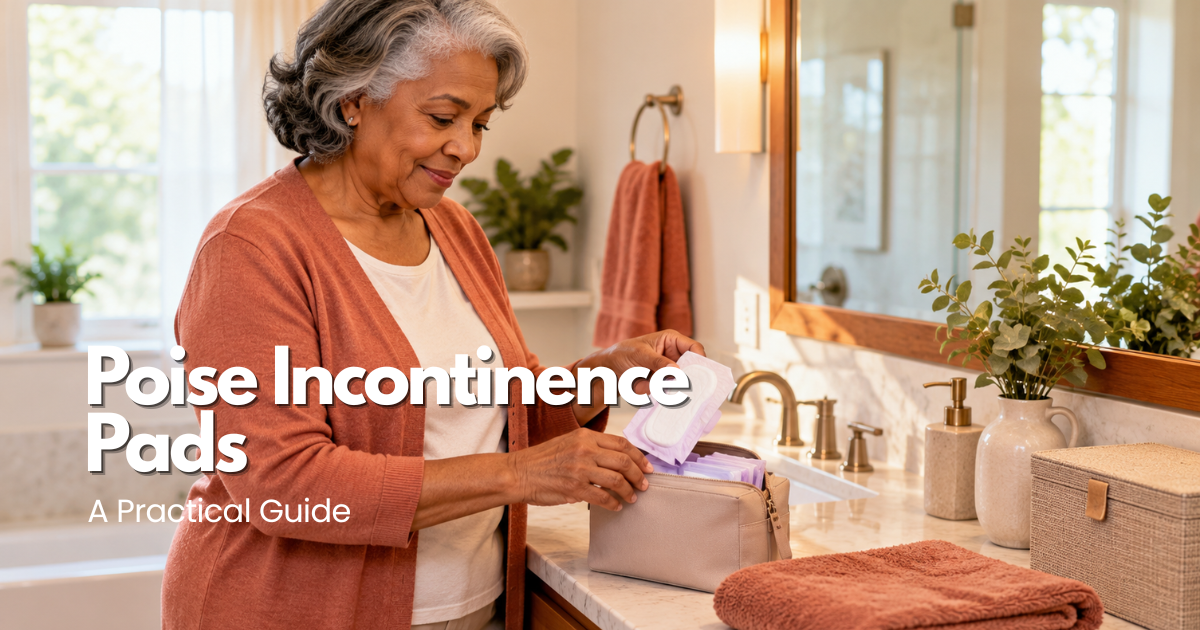
A practical Poise incontinence pads routine should consider the person’s leakage pattern, body fit, underwear, mobility, skin sensitivity, and access to a bathroom. A product that works comfortably during a short outing may not provide the same results overnight or during extended periods of activity. Proper placement, regular changes, and appropriate skin care are essential parts of everyday use.
This comprehensive guide explains how Poise incontinence pads work, how to compare pads and liners, choose absorbency levels, prevent common fitting problems, and plan changes at home or away. It also covers caregiver support, costs, skin protection, and situations that require medical advice.
Safety note: Poise pads absorb urine leakage but do not diagnose or treat urinary incontinence. New or worsening bladder symptoms, pain, burning during urination, blood in the urine, fever, or skin irritation should be discussed with a healthcare professional. Absorbent products should complement appropriate medical care rather than replace it.
Quick Answer: How Should Poise Incontinence Pads Be Chosen and Used?
Choosing Poise incontinence pads begins with identifying how much leakage occurs, when it happens, and which activities affect the person’s needs. The appropriate product should fit comfortably inside close-fitting underwear, stay positioned during movement, and provide sufficient coverage without unnecessary bulk or irritation.
Poise offers bladder leak liners, traditional pads, ultra-thin pads, and overnight options across different absorbency categories. The brand’s current U.S. absorbency guide uses an eight-level scale, ranging from lightest protection to extra overnight coverage. These categories can help narrow the selection, but they do not guarantee an individual fit or a particular safe wearing duration.
For everyday use, follow these essential steps:
- Select a pad or liner appropriate for the usual leakage pattern.
- Read the instructions on the exact product package.
- Attach the product to clean, close-fitting underwear as directed.
- Position the absorbent surface toward the body and smooth the pad flat.
- Check that the product remains comfortable while sitting and walking.
- Change the pad promptly when wet, soiled, or uncomfortable.
- Clean and dry the skin gently during changes.
- Keep spare supplies accessible for outings and travel.
- Reassess the product if leakage, discomfort, or skin irritation continues.
Poise incontinence pads should be treated as one part of a practical bladder care routine. A properly selected product may help manage leaks, but it should not delay evaluation of unexplained symptoms.
What Poise Incontinence Pads Are Designed to Manage
Poise incontinence pads are external absorbent products designed specifically for bladder leakage. They are worn inside underwear and help absorb urine that escapes between bathroom visits. Unlike products intended for menstrual flow, bladder leak pads are designed around the characteristics of urinary leakage.
The Poise product range includes traditional incontinence pads, ultra-thin options, lightweight liners, and specialized overnight designs. Individual products differ in length, absorbency, thickness, and features such as wings. The best choice depends on what the person actually needs rather than the most prominent marketing claim.
Poise Pads Versus Poise Liners
Poise liners are generally designed for lighter bladder leakage and tend to be smaller and less bulky than conventional pads. They may be suitable for occasional drips or small leaks when the person does not require extensive coverage.
Poise pads are available in additional absorbency categories and may provide more coverage for moderate or heavier leakage. However, choosing a larger pad is not automatically better. Excessive length or bulk can cause bunching, shifting, and discomfort.
Poise Ultra-Thin Pads
Poise ultra-thin pads are intended to offer bladder leak protection with a slimmer profile than certain traditional designs. Some versions include wings to help maintain positioning inside underwear.
When evaluating ultra-thin Poise incontinence pads, check the exact absorbency rating, length, and whether the product fits comfortably under regular clothing. A thin appearance does not establish how well it will manage an individual’s leakage pattern.
Poise Overnight Incontinence Pads
Overnight Poise pads are designed with coverage features intended for nighttime bladder leakage. Some options include extended coverage and wider sections to accommodate different sleeping positions.
An overnight label does not mean that a wet product should remain against the skin until morning regardless of circumstances. Product instructions, actual leakage, skin condition, and the individual’s care needs should guide changes.
Poise Incontinence Pads Versus Other Protective Products
Poise pads and liners are different from disposable protective underwear, absorbent bed underpads, and certain medical bladder support devices.
A pad is secured inside underwear, while protective underwear is worn as a garment. Bed underpads protect furniture or bedding rather than replacing an appropriate body-worn product. Each category has different advantages, limitations, and instructions.
Understanding Poise Incontinence Pads Absorbency Levels
Absorbency is one of the most important considerations when comparing Poise incontinence pads. A product that absorbs too little may allow leaks to reach clothing, while an unnecessarily bulky option can create discomfort without improving the person’s actual routine.
The current Poise U.S. guide identifies different absorbency levels using a drop-based scale. It includes lightest and very light liners, light and moderate pads, maximum and ultimate options, and additional high-coverage products.
Lightest and Very Light Absorbency
Poise microliners and daily liners are intended for relatively small bladder leaks. Their compact design may be appropriate when someone experiences occasional drips and wants minimal bulk.
However, these products may not provide enough coverage for sudden larger leaks. A liner should not be considered adequate solely because it feels comfortable during a short initial trial.
Light and Moderate Absorbency
Light and moderate Poise pads may be suitable for certain everyday leakage patterns. Options can include different lengths, standard designs, and ultra-thin versions.
Select the product according to actual leakage and fit. For example, a longer pad may improve coverage for some users but feel excessive for others. Testing a small package is preferable to assuming that one style fits everyone.
Maximum and Ultimate Absorbency
Higher-absorbency Poise incontinence pads are intended for more substantial leakage than lighter categories. They may provide additional absorbent capacity or coverage depending on the specific design.
More absorbency does not eliminate the need for changing. If the product becomes wet, uncomfortable, or repeatedly leaks, reassess the fit and routine instead of relying on the absorbency label alone.
Overnight and Extra Coverage
Poise overnight products may be considered when the usual leakage pattern occurs during sleep. Coverage, positioning, bedding protection, and bathroom accessibility all matter.
If nighttime leakage increases suddenly or is accompanied by new symptoms, medical evaluation may be necessary. Product absorbency should not be used to explain an unexpected change in bladder control.
Poise Absorbency Comparison Guide
| Leakage pattern | Product category to explore | Main consideration |
|---|---|---|
| Occasional small drips | Microliners or lightest liners | Minimal coverage and comfort |
| Light daily leakage | Daily liners or light pads | Fit during everyday activity |
| Moderate leakage | Moderate pads | Absorbency, length, and placement |
| Heavier leakage | Maximum or ultimate pads | Capacity and timely changes |
| Nighttime leakage | Overnight or extra coverage options | Sleeping position and skin care |
| Unpredictable larger leakage | Higher protection or another product type | Individual assessment and reliable coverage |
This comparison is a starting point, not a guarantee of performance. Product availability, design, and absorbency descriptions can change, so verify the exact package before purchasing.
Fit and Placement Matter for Poise Incontinence Pads
Correct placement helps Poise incontinence pads function as intended. Even a product with suitable absorbency may leak or feel uncomfortable if it shifts, folds, or sits too far from the area where leakage occurs.
Before placing a new pad, prepare clean underwear and follow the product’s instructions. Most adhesive-backed pads are intended to attach to underwear, not directly to the skin.
How to Position Poise Pads Correctly
Begin with clean, comfortable underwear that holds the pad securely. Remove the adhesive backing according to the package directions and place the pad inside the underwear.
Smooth the product so it lies flat without folding at the edges. If the design includes wings, secure them according to the manufacturer’s instructions.
Check whether the product stays positioned during ordinary sitting, standing, and walking. Reposition or change the product if it repeatedly shifts or bunches.
Use Close-Fitting Underwear With Poise Pads
Underwear plays an important role in maintaining the position of an absorbent pad. Loose garments may allow the product to move, while excessively tight underwear can create pressure or discomfort.
Choose clothing that is comfortable and practical for the person’s daily activities. If a pad moves repeatedly, review the combination of product shape and underwear fit before automatically choosing greater absorbency.
Common Poise Pad Fitting Problems
A pad may feel too long, shift during movement, fold at the edges, or cause friction. These problems can indicate that the shape, size, garment, or placement needs adjustment.
Do not attempt to correct repeated leaks by stacking multiple ordinary pads. Layering can create gaps, trap moisture, increase bulk, and interfere with the intended absorbent design.
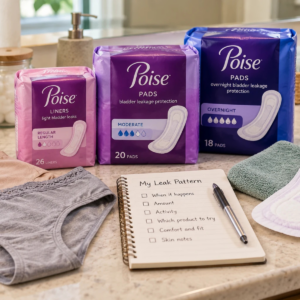
Keep a Simple Poise Pad Trial Record
During the first several days, privately note which product is being used, when leakage occurs, how the pad fits, and whether skin irritation develops.
This information can help identify whether the issue involves absorbency, positioning, bathroom access, or a change in symptoms. It can also provide useful context during a healthcare appointment.

Change Poise Incontinence Pads Promptly and Protect Skin
Routine changes are essential when using Poise incontinence pads. Although absorbent materials are designed to manage moisture, a wet or soiled product should not remain in place simply because its packaging advertises extended protection.
Comfort, skin condition, and the amount of leakage should guide the changing routine. People with fragile skin, reduced mobility, or difficulty communicating discomfort may need additional help monitoring the product.
When to Change a Poise Incontinence Pad
Change a pad promptly after it becomes wet, soiled, uncomfortable, or no longer provides suitable protection. Follow the exact manufacturer instructions and any individualized skin-care recommendations.
Avoid relying exclusively on a fixed number of hours. Leakage patterns and personal needs vary, and an absorbency claim does not establish the appropriate changing schedule for every individual.
Protect Skin During Pad Changes
During a change, remove the used product gently and follow the person’s established hygiene routine. Clean and dry the skin according to appropriate care instructions.
Avoid unnecessary friction, harsh scrubbing, or using fragranced products that may irritate sensitive skin. Persistent redness, itching, pain, or skin damage should be evaluated by a healthcare professional.
Prevent Moisture-Related Skin Irritation
Prolonged contact with moisture can contribute to skin discomfort and irritation. Proper fit, timely changes, gentle cleansing, and suitable products can help maintain comfort.
When skin irritation continues despite changes to the routine, consult a clinician rather than repeatedly switching products without understanding the cause.
Poise Pads Are Not a Substitute for Toileting
Absorbent pads can provide backup protection, but they should not replace convenient access to a bathroom.
People with limited mobility may need clear walking routes, adequate lighting, suitable clothing, and assistance with transfers. Restricting fluids without medical advice is not an appropriate substitute for managing bladder symptoms.
When Poise Incontinence Pads Are Not Working
Leaks, discomfort, shifting, odor, and irritated skin are reasons to reassess the product and routine. They do not mean that the individual has done anything wrong.
Begin by checking placement, underwear fit, product size, and changing frequency. If the usual leakage pattern has changed or the skin is not staying comfortable, seek healthcare guidance.
When Leakage Reaches Clothing
Repeated leakage onto clothing may indicate that the pad lacks coverage, is incorrectly positioned, or is not appropriate for the amount of urine being absorbed.
Try to identify when the problem occurs and whether it is associated with activity, urgency, or delayed changes. A different product category may be appropriate, but new or worsening symptoms also deserve attention.
When a Pad Shifts or Bunches
Shifting can occur when underwear is too loose, the adhesive does not hold as intended, or the product shape is unsuitable.
Check the instructions and fit before making changes. A properly selected pad should remain reasonably stable during ordinary movement without causing friction.
When Odor Becomes a Concern
Absorbent products may include odor-management features, but those features do not replace changing and hygiene.
A new or unusual odor accompanied by symptoms such as pain, burning, fever, or sudden urinary changes should be discussed with a healthcare professional rather than managed only by choosing a fragranced product.
When Skin Irritation Develops
Persistent irritation may relate to moisture, rubbing, material sensitivity, or another health issue.
Discontinue any product that appears to be causing significant discomfort and seek suitable professional advice, especially when the skin is damaged.
Planning a Poise Incontinence Pads Routine for Home, Travel, and Sleep
A successful Poise incontinence pads routine should fit naturally into everyday activities. Product selection is only one consideration; bathroom access, privacy, spare supplies, and changes during outings are also important.
Planning helps prevent situations where someone must remain in an uncomfortable product because supplies or a suitable changing location are unavailable.
Using Poise Pads During the Day
Daytime leakage may vary with movement, coughing, exercise, travel, and bathroom availability. Choose protection based on the actual pattern rather than assuming that one pad will work equally well during every activity.
Keep supplies in a convenient, private location and make sure clothing is practical for changes. Review the routine when work, activities, or mobility needs change.
Overnight Poise Pad Planning
Nighttime protection should consider usual leakage, sleep, bathroom access, and skin condition.
An overnight pad may offer additional coverage, but it should not encourage ignoring wetness or discomfort. If the person needs assistance during the night, establish a respectful and practical plan in advance.
Poise Pads for Travel and Outings
Carry individually wrapped spare pads, clean underwear when useful, and an appropriate disposal bag.
Before longer outings, consider restroom availability and the amount of time required for comfortable changes. A planned routine can make travel and social activities more manageable.
Organizing an Incontinence Change Kit
A discreet changing pouch can contain spare products, suitable personal-care supplies, and a disposal bag.
Keep the kit compact enough to carry comfortably and check supplies periodically. Avoid storing opened or damaged products where moisture or contamination may affect them.
Privacy, Consent, and Caregiver Support With Poise Pads
Incontinence management can involve sensitive personal care, making privacy and respectful communication essential. Older adults should be involved in choosing products and deciding how much assistance they want whenever possible.
Caregivers can support preparation, supplies, changes, and communication with healthcare professionals. However, help should never be based on unnecessary embarrassment or pressure.
Respect Personal Preferences
Ask which products, clothing, routines, and storage methods the person prefers. Some individuals may want supplies stored privately in a drawer, while others prefer a discreet bag for outings.
These choices can improve comfort without changing the essential safety requirements.
Encourage Independent Participation
A person may be able to prepare a clean pad, select supplies, or manage parts of a change even when assistance is needed with another step.
Offer appropriate choices and allow enough time. Independence can include making decisions about care rather than completing every physical task without assistance.
Protect Private Health Information
Keep records of symptoms, product changes, and care routines in a secure location.
Share details only with appropriate caregivers and healthcare professionals. Avoid discussing private continence needs unnecessarily with visitors or unrelated individuals.
Know When Caregivers Need Additional Help
Caregivers should pause when changes involve unsafe transfers, significant skin problems, unexpected pain, or an important change in symptoms.
Professional guidance may be necessary when the routine can no longer be performed comfortably or safely.
Make Poise Incontinence Pads Part of a Realistic Daily Routine
A useful routine considers when the person wakes, dresses, leaves home, uses the bathroom, and prepares for sleep.
Supplies should be accessible without creating clutter, and changes should take place in a private, comfortable environment. People with mobility limitations may require additional time or assistance.
Establish a Consistent Supply Location
Keep unopened products in a clean, dry place that is easy to reach. Avoid leaving packages on floors or in locations that require uncomfortable bending.
A small designated storage area can simplify daily preparation and make supplies easier to locate.
Coordinate Changes With Daily Activities
Review when bathroom access or changes are usually needed. Planned checks can be helpful, but they should remain responsive to actual wetness and comfort.
A regular routine should support the person’s day rather than dictate when social activities or outings are possible.
Notice Changes in Bladder Symptoms
Changes in leakage amount, urgency, nighttime frequency, discomfort, or mobility may indicate a need for reassessment.
Keep observations factual and share meaningful changes with the appropriate healthcare professional.
Do Not Rely on Odor-Control Marketing Alone
Odor-control claims can help describe product features, but cleanliness and regular changes remain essential.
Avoid using perfume or irritating personal-care products as substitutes for appropriate hygiene. Unusual symptoms should be evaluated rather than masked.
Poise Incontinence Pads and Practical Purchasing Decisions
The cost of Poise incontinence pads depends on the product type, absorbency, package size, retailer, and purchasing method. Comparing packages by price alone may overlook differences in fit and the number of changes required.
Begin with smaller quantities when trying a new style. Once the product has been evaluated during ordinary use, a larger package may offer greater convenience.
Compare Cost Per Pad
To compare package value, divide the total package price by the number of pads included.
This calculation is useful only when comparing products that adequately meet the person’s needs. A cheaper product that repeatedly leaks or causes discomfort may not represent good value.
Avoid Buying Large Quantities Before Testing
A pad that appears suitable from its packaging may not fit the person comfortably.
Purchase a modest supply first and assess leakage protection, comfort, clothing compatibility, and ease of changes before committing to a larger quantity.
Review Product Changes and Substitutions
Product designs, absorbency categories, packaging, and available sizes may change over time.
If a retailer substitutes another product, verify its features instead of assuming that a similar name or absorbency label means an identical fit.
Balance Convenience and Waste
Disposable products create ongoing waste, but avoiding necessary changes to reduce product use can compromise comfort and skin health.
A practical routine focuses on appropriate selection, avoiding unsuitable purchases, and changing products when needed.
Poise Incontinence Pads and Bladder Health Evaluation
Using Poise pads does not remove the need to understand why leakage occurs. Bladder control changes can have different causes, and management options may include behavioral, medical, or other treatments depending on the individual.
A healthcare professional can assess symptoms and discuss whether additional evaluation is needed.
Prepare for Appointments Without Losing Dignity
A brief symptom record can help make conversations more manageable. Include when leakage occurs, whether urgency is present, how symptoms affect ordinary activities, and whether any discomfort accompanies them.
The person can decide how much caregiver involvement is appropriate for the appointment, subject to relevant support and consent requirements.
Review the Routine After a Change in Care
Hospitalization, medication changes, surgery, new mobility equipment, or changes in caregiving arrangements can affect bathroom access and product needs.
Reassess the pad routine rather than assuming a previously suitable product will always remain appropriate.
Do Not Confuse Bladder Pads With Menstrual Products
Products intended for urine leakage and products designed for menstruation are not necessarily interchangeable. They may differ in absorbent construction, shape, and intended fluid management.
Follow the manufacturer’s instructions and choose the product intended for the actual need.
Symptoms That Need Medical Attention
Seek appropriate medical advice for new or worsening leakage, burning during urination, blood in the urine, fever, pelvic discomfort, difficulty emptying the bladder, significant skin irritation, or other unexpected changes.
Urgent or emergency symptoms require prompt medical evaluation. An absorbent pad should never be used to postpone necessary treatment.
Poise Incontinence Pads Checklist Before Buying
Before purchasing a large package, review the product against actual comfort and care requirements.
-
Identify the usual amount and timing of bladder leakage.
-
Choose the relevant Poise liner or pad category.
-
Check absorbency, length, and product style.
-
Verify compatibility with usual underwear.
-
Evaluate fit during ordinary sitting and movement.
-
Plan regular changes and convenient bathroom access.
-
Keep spare supplies and disposal options available.
-
Watch for rubbing, moisture, and skin irritation.
-
Confirm current manufacturer instructions.
-
Seek healthcare advice for new or worsening symptoms.
If a product consistently shifts, leaks, or causes discomfort, reassess the style and routine rather than assuming the person must tolerate the problem.
Frequently Asked Questions About Poise Incontinence Pads
What Are Poise Incontinence Pads Used For?
Poise incontinence pads are disposable absorbent products designed to manage bladder leakage. They are worn inside underwear and help protect clothing during ordinary activities.
Are Poise Pads and Liners the Same Thing?
No. Poise liners are generally smaller and intended for lighter bladder leakage, while pads are available in broader absorbency and coverage options.
The correct choice depends on fit and the person’s actual leakage pattern.
How Often Should Poise Incontinence Pads Be Changed?
Change pads promptly after they become wet, soiled, or uncomfortable. Follow the exact product instructions and any individualized skin-care plan.
Do not assume that an advertised absorbency or odor-control duration establishes a safe wearing time for everyone.
Can You Wear Two Poise Pads for Extra Protection?
Stacking ordinary incontinence pads is generally not recommended because it can interfere with fit and absorbency.
If protection is inadequate, review the product category, positioning, and leakage pattern rather than layering additional pads.
Can Poise Pads Be Used Overnight?
Poise offers overnight absorbency options intended for nighttime bladder leakage.
However, nighttime use should still account for skin condition, wetness, bathroom access, and the person’s usual care routine.
Are Poise Pads Better Than Menstrual Pads for Bladder Leaks?
Poise pads are specifically intended for urine leakage, while menstrual pads are designed for a different purpose.
Choose products according to their intended use and the person’s protection needs.
What Should I Do if Poise Pads Cause Itching or Irritation?
Change the product and gently clean and dry the skin as appropriate.
Persistent redness, itching, pain, or sores should be discussed with a healthcare professional. A different pad may not resolve an underlying skin condition.
Do Poise Incontinence Pads Treat Urinary Incontinence?
No. Poise pads manage leakage but do not diagnose or treat the underlying cause.
A healthcare professional can discuss appropriate evaluation and treatment options.
How Can I Choose the Right Poise Absorbency?
Begin with the usual leakage pattern and the manufacturer’s current absorbency guide.
Try a suitable product during ordinary activities, monitor comfort and changes, and reassess if protection remains inadequate.
Are Poise Pads Suitable for Travel?
Poise pads can be included in a travel routine when the selected product fits the person’s needs.
Carry spare individually wrapped products, plan bathroom access, and keep disposal supplies available.
Conclusion: Choosing Poise Incontinence Pads With Confidence
Poise incontinence pads can be a practical option for managing bladder leakage when the chosen product fits comfortably, provides suitable absorbency, and works with the person’s normal routine. The most important considerations are fit, timely changes, skin comfort, accessible bathroom facilities, and appropriate medical guidance when symptoms change.
Rather than choosing a product solely by absorbency claims or package size, begin with the individual’s needs and test a suitable option during everyday activities. Reassess when leakage, mobility, health conditions, or personal preferences change.
A successful Poise incontinence pads routine should support comfort, dignity, and participation in daily life while recognizing that absorbent products manage symptoms rather than replace bladder health evaluation.
Poise incontinence pads sources and verification
- Poise US product catalog — current product categories, including pads, liners, wings, and light through overnight absorbency labels; not an independent performance endorsement.
- MedlinePlus: Urinary incontinence products—self-care — product use, regular changes, skin-health and clinician-contact context.
- MedlinePlus: Urinary incontinence products — urinary-pad versus sanitary-pad distinction and skin-care context.
- NIDDK: Treatments for bladder control problems — protective products as a way to cope with leaks, not a substitute for treatment.
1 comentario en «Poise Incontinence Pads: A Practical Guide»