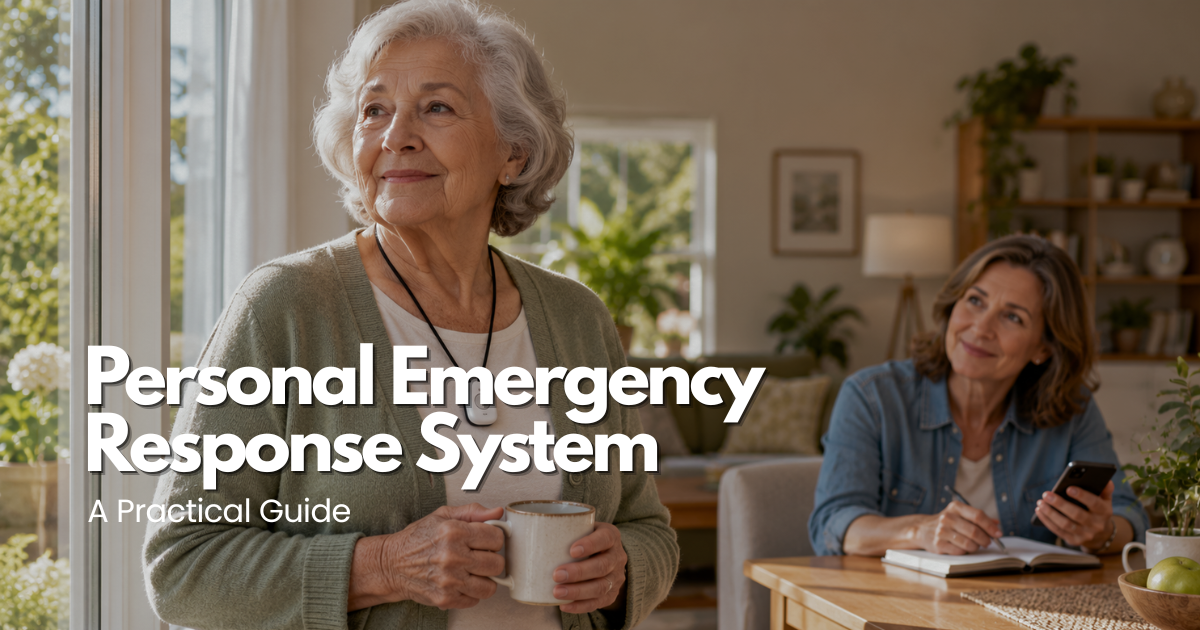
This comprehensive guide explains how personal emergency response systems work, how to compare home and mobile options, what to expect from professional monitoring, and how to create a reliable emergency response plan. It also covers costs, Medicare considerations, installation, testing, maintenance, and important limitations families should understand before choosing a service.
Safety note: A personal emergency response system does not prevent falls, diagnose medical conditions, guarantee automatic fall detection, or ensure a particular emergency response time. Devices must be properly configured, worn or kept accessible, charged, and connected. During an immediate emergency, contact local emergency services directly whenever possible.
Quick Answer: What Is a Personal Emergency Response System?
A personal emergency response system is an electronic device connected to a service or contact network that allows someone to request help during an emergency. The user typically presses a button worn around the neck or wrist, and the device sends a signal through a home base station or cellular connection.
Depending on the service, an alert may connect the person to a professional monitoring center, notify designated caregivers, or initiate communication with emergency services. Some systems also offer automatic fall detection, mobile location support, two-way communication, or caregiver applications.
The effectiveness of a personal emergency response system depends on the entire response process, not simply whether the device can transmit an alert.
Before selecting a system, verify:
- Whether the person can comfortably wear and activate the device.
- Who receives the emergency alert and what happens next.
- Whether the system works at home, outdoors, or while traveling.
- Which communication connection and power source it requires.
- Whether professional monitoring is included.
- What happens if the user cannot speak.
- Whether fall detection is available and what its limitations are.
- How the device is charged, maintained, and tested.
- The total equipment, activation, subscription, and cancellation costs.
- How personal information and caregiver notifications are managed.
A suitable PERS should provide an understandable way to request help while supporting the user’s independence and existing care arrangements.
Personal Emergency Response System Parts and Response Routes
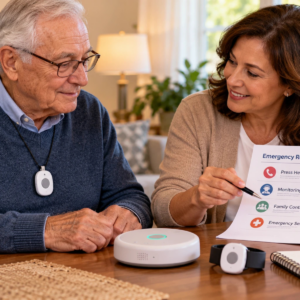
A personal emergency response system usually consists of several components that work together. Although individual providers use different technologies, most systems include an activation device, a communication method, a response service, and stored contact information.
Understanding these components helps families identify possible weaknesses before relying on the service. A wearable button may be easy to press, but that feature offers limited value if it cannot connect from the places where the user spends time.
Wearable Help Button for a Personal Emergency Response System
The wearable help button is the component the user activates when assistance is needed. Common designs include pendants, wristbands, clip-on devices, and other manufacturer-approved wearing options.
The most suitable design depends on the person’s grip strength, vision, dexterity, mobility, and preferences. Some people find a pendant easier to locate, while others prefer a wristband that remains in a predictable position.
The device should also be comfortable enough for regular use. A medical alert button left on a bedside table cannot provide its intended protection when the person is elsewhere in the home.
Base Station, Mobile Communicator, or Home Connection
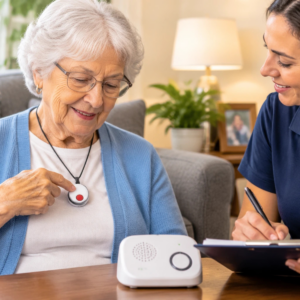
Traditional home medical alert systems often use a base station to receive a signal from a wearable button. The base station may contain a speaker and microphone that allow the user to communicate with a monitoring center.
Mobile personal emergency response systems may include the microphone, speaker, cellular communication, and location functions within the wearable device itself.
The type of connection matters. In-home systems may depend on a landline or cellular service, while mobile devices require suitable network coverage. Verify the provider’s exact requirements rather than assuming that every medical alert system works in the same way.
Monitoring Center, Contacts, and Emergency Services
Different PERS services follow different emergency response procedures. Some connect users to professional operators, while others notify family members or connect directly to emergency calling services.
A professionally monitored system may attempt two-way communication, review the user’s account information, and contact appropriate responders according to its procedures.
A family-only system depends on the availability of the designated contacts. A notification sent successfully does not guarantee that the recipient has seen it or can respond immediately.
Personal Information and Response Instructions
A monitoring service may request the user’s address, emergency contacts, communication preferences, relevant access instructions, and other information needed during an emergency.
This information should be accurate and updated whenever circumstances change. A new apartment number, caregiver, telephone number, or building access arrangement can affect the response process.
Families should also review the provider’s privacy policies and understand who can access or update the emergency response information.
How a Personal Emergency Response System Works From Button Press to Help
Understanding the emergency response process helps users and caregivers develop realistic expectations. The exact sequence depends on the provider and device, but most systems follow a similar communication pathway.
When a help button is activated, the system sends a signal through its supported connection. A monitoring operator or designated contact may then receive the alert and follow the configured response procedures.
Activation, Confirmation, and Two-Way Communication
A personal emergency response system may confirm activation through a light, sound, vibration, or spoken message. This feedback can help users understand that the system has received the button press.
Some devices allow direct two-way communication through the wearable, while others rely on a speaker in the base station.
Ask whether the person can hear and communicate with the operator from common locations such as the bedroom, bathroom, living room, and outdoor entrance.
Human Monitoring, Direct Emergency Calling, and Family Notification
Professional monitoring centers, direct emergency calling, and family notifications serve different purposes.
Monitoring operators may follow documented instructions and communicate with emergency contacts or responders when needed. Direct-call devices may connect the user to an emergency dispatcher, while family notification devices may depend entirely on relatives receiving an alert.
Before enrollment, ask who decides when emergency services should be contacted and what happens if the first contact does not respond.
When the User Cannot Speak or Explain the Emergency
A person may be able to activate a medical alert button without being able to describe what happened.
The provider’s no-response procedure is therefore important. Ask whether the monitoring center uses the registered address, attempts to reach emergency contacts, or follows another protocol when two-way communication fails.
Do not assume that a silent alert will automatically produce the same response with every service.
False Alarms and Accidental Activation
Accidental alerts can happen during practice, dressing, or ordinary movement. Users should know how to explain an accidental activation and follow the provider’s cancellation procedure.
A false alarm should not become a reason to discourage someone from requesting help when they genuinely need it.
If accidental activations happen repeatedly, review the button’s placement, sensitivity, and suitability rather than simply ignoring future alerts.
Who May Benefit From a Personal Emergency Response System?
A personal emergency response system may be useful for an older adult living alone, someone recovering from an illness, or a person who wants a direct way to request assistance during certain activities.
The system may also be considered when a person lives with family but spends meaningful portions of the day alone. Suitability depends on whether the user can operate the device and whether the connected response service matches their needs.
Living Alone, Recovering, or Managing Mobility Changes
Older adults living independently may value having an accessible method of requesting help when a telephone is out of reach.
A personal emergency response system may also support an individualized recovery plan following certain health events, provided the device is appropriate to the person’s abilities.
Ask whether the button can be reached from a chair or floor position, whether mobility equipment interferes with its placement, and whether the user understands the activation process.
Hearing, Vision, Speech, Memory, and Dexterity Needs
Communication and physical abilities affect how well a personal emergency response system works.
People with hearing difficulties may need stronger audio output or alternative confirmation methods. Individuals with limited hand movement may benefit from a larger button or another accessible activation design.
For users with memory changes, caregivers should determine whether the device will be worn consistently and whether the person understands its purpose.
Caregivers Who Need a Shared Response Plan
Caregivers may use a medical alert service as part of a broader support arrangement.
However, the system does not replace direct assistance, scheduled check-ins, or appropriate professional care. Families still need to decide who maintains the device, updates contacts, reviews alerts, and responds when help is requested.
When a PERS May Not Be the Right First Step
A personal emergency response system may be unsuitable when the person cannot reliably activate it, refuses to wear it, or cannot maintain the necessary connection and charging routine.
It may also be insufficient when the primary concern involves wandering, medication management, continuous monitoring, or an urgent change in health.
In these situations, ask an appropriate healthcare or care professional about a more comprehensive safety arrangement.
Choose a Personal Emergency Response System by Routine, Not by Headline Feature
The best personal emergency response system is the one that matches the user’s environment, abilities, communication preferences, and available support.
Rather than starting with product rankings, identify the situations where the user may need assistance. Then compare device types, monitoring arrangements, coverage, accessibility, and ongoing responsibilities.
Home-Only Versus Mobile Personal Emergency Response System
In-home PERS devices are designed for use within a specified range of their base station or communication equipment. They may be suitable for someone who spends most of their time at home.
Mobile systems may provide additional flexibility for people who visit family, attend appointments, or spend time outdoors.
However, cellular coverage, device charging, location services, and the provider’s geographic service area can affect mobile performance. Confirm that the system supports the locations the person regularly visits.
Button Style, Placement, and Accessibility
Pendant, wristband, clip-on, and wall-mounted medical alert buttons have different practical advantages.
A pendant may be convenient for some users, while a wristband may stay closer to the hand. A wall button can offer support in a specific location but cannot replace a portable device elsewhere.
Ask about button size, activation pressure, feedback signals, comfort, water resistance, and replacement availability.
Fall Detection and Automatic Alerts
Some personal emergency response systems offer automatic fall detection using movement sensors.
This feature may provide an additional way to generate an alert, but it cannot reliably identify every fall. Certain ordinary movements may also trigger false alarms.
Manual activation remains important whenever the user is able to press the button. Families should understand the manufacturer’s limitations and the provider’s alert procedures.
Voice, Text, App, and Caregiver Notification Options
Modern systems may provide two-way voice communication, caregiver text notifications, mobile applications, or device-status updates.
These features can be useful, but they create additional responsibilities. An app notification is only helpful when the designated caregiver receives and responds to it.
Review whether the user or caregiver needs a smartphone, whether an internet connection is required, and which information is shared through the application.
Questions to Ask Before Selecting a PERS Service
Before choosing a provider, ask:
- Who receives an emergency alert?
- What happens if the user cannot speak?
- Where is the device designed to work?
- What communication network does it require?
- How are batteries charged or replaced?
- What happens during a power or network outage?
- Is fall detection included or optional?
- Can emergency contacts be updated easily?
- What costs apply to monitoring, replacement, and cancellation?
- How does the provider protect personal information?
Document the answers so they can be compared across services.
Personal Emergency Response System Costs, Contracts, and Coverage Checks
Personal emergency response system costs vary according to the equipment, response service, features, and contract terms.
Some providers charge monthly monitoring fees, while others may add equipment, activation, installation, shipping, or replacement costs.
A fair comparison should include both the initial expense and the ongoing amount the household expects to pay.
Separate Equipment Cost From Ongoing Monitoring
Ask whether the device is purchased, rented, or included with a subscription.
A low introductory price may not reflect the full cost of monitoring, optional fall detection, mobile connectivity, or additional accessories.
Obtain written information about the total first-year expense and expected recurring costs before enrolling.
Coverage and Benefit Questions Belong to the Plan or Program
Original Medicare generally does not cover personal emergency response systems as a standard benefit.
Some Medicare Advantage arrangements, Medicaid programs, long-term care policies, or other benefit programs may provide assistance under specific conditions.
Coverage depends on the actual program and eligibility rules. Verify whether the exact system, supplier, and subscription are covered before making a purchase.
Contract and Cancellation Questions
Read the provider’s cancellation, renewal, return, and replacement terms.
Ask whether the service renews automatically, whether a device must be returned after cancellation, and what charges apply if the contract ends early.
Keep account and service records in a secure location that an authorized caregiver can access when needed.
Set Up a Personal Emergency Response System Before Relying on It
A personal emergency response system should be configured and tested before being treated as an active part of an emergency plan.
The initial setup should confirm that the device works, the monitoring service has accurate information, and the person understands how to request assistance.
Prepare the Address and Access Information
Confirm the complete address, apartment number, building entrance, access instructions, and any details needed to locate the home.
Ask the provider how this information is communicated during an emergency.
Mobile location services should not be assumed to correct outdated account information automatically.
Program Contacts and Emergency Preferences
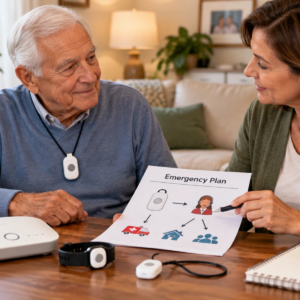
Select emergency contacts who agree to participate and understand what they should do when an alert arrives.
Review their telephone numbers and identify a backup contact when possible.
The user’s preferences regarding communication, assistance, and information sharing should be considered throughout the setup process.
Place the Base Station and Charge the Wearable
Follow the manufacturer’s recommendations for positioning the base station and charging the device.
Avoid locations that obstruct speakers, create cord hazards, or make maintenance difficult.
Choose a consistent charging routine that works with the person’s daily activities and the device’s battery requirements.
Teach the Alert Sequence in Plain Language
Explain the emergency procedure using simple, familiar instructions.
The user should understand how to activate the button, what confirmation to expect, and how to communicate with the monitoring service when possible.
Practice should follow the provider’s approved test procedure rather than generating an unannounced emergency alert.
Test and Maintain a Personal Emergency Response System
Regular testing helps confirm that the personal emergency response system remains usable and that the response information is accurate.
A device may appear to be powered while still experiencing connection, speaker, or account configuration problems.
Follow the manufacturer’s testing instructions and any schedule recommended by the monitoring provider.
First Test: Activation and Response Center Connection
Conduct the initial test using the provider’s approved method.
Confirm that activation is recognized, communication works, and the monitoring service has the correct location and emergency contact information.
If the test fails, contact the provider and use the household’s backup communication plan until the problem is resolved.
Battery, Power, Connection, and Range Checks
Inspect the charging setup, battery indicators, and connection status according to the provider’s instructions.
Test the relevant rooms and locations, including the bedroom, bathroom, living room, and outdoor areas when covered.
Ask how the system behaves during power outages, weak cellular signals, or low-battery conditions.
Update the Response File After Life Changes
Update the provider when the user moves, changes emergency contacts, replaces a phone, or develops new communication needs.
Review the device’s suitability after significant changes in mobility or daily routines.
Do not assume that changes shared with a family caregiver have also been updated in the monitoring service’s records.
Cleaning, Water Exposure, Damage, and Replacement
Follow the manufacturer’s cleaning and water-resistance instructions.
A water-resistant wearable does not automatically mean its charger or base station can be exposed to water.
If the device is damaged, lost, or behaving unexpectedly, contact the provider and arrange appropriate service before relying on it.
Personal Emergency Response System Safety, Privacy, and Consent
Personal emergency response system safety involves reliable communication, responsible data practices, and respect for the user’s preferences.
A device may increase access to assistance, but it should not create a false impression that emergencies will always be detected or resolved automatically.
Use the Minimum Information Needed for a Response
Provide accurate information necessary to locate and assist the user.
Avoid sharing passwords, Social Security numbers, or unrelated personal details through ordinary emergency contact cards.
Ask the provider what information is collected and why it is necessary.
Privacy, Location, and Caregiver Access
Some mobile medical alert systems collect location information, device status, or alert history.
Review the provider’s privacy notice to determine who can see this information, how long it is retained, and whether the user can change sharing preferences.
HIPAA privacy rules do not automatically apply to every consumer medical alert company. The applicable obligations depend on the organization’s role and relationship to covered healthcare entities.
Consent and Dignity
Older adults should understand the purpose of a personal emergency response system and participate in decisions about its use.
If someone does not want to wear a device, discuss the reason. Concerns may involve discomfort, cost, privacy, stigma, or difficulty operating the equipment.
A different device style or clearer explanation may help, but important care decisions should remain respectful and person-centered.
Do Not Treat the System as a Guarantee
A personal emergency response system cannot promise that a person will never experience an undetected emergency.
Device availability, battery level, connection quality, human response, and the user’s ability to activate the system all affect performance.
Clear limitations help families build more reliable backup arrangements.
Limitations and Backup Plans for Personal Emergency Response Systems
A PERS should be one part of a broader household safety and communication plan.
Families need an alternative when the wearable is unavailable, the connection fails, or the designated response contact cannot be reached.
What a PERS Cannot Replace
A personal emergency response system cannot replace medical treatment, direct emergency services, appropriate caregiving, regular check-ins, or home safety measures.
It also cannot guarantee automatic detection of falls or sudden health changes.
The device should complement existing support rather than replace essential assistance.
Backup When the Device, Service, or Power Fails
Possible backup arrangements include an accessible charged phone, a reachable landline, trusted contacts, and agreed check-in routines.
The appropriate option depends on the person’s mobility, communication abilities, and living environment.
A backup should be simple enough to use during a stressful situation.
When Repeated Failures Mean the Plan Needs Redesign
Repeated problems with charging, wearing the device, hearing the response, or understanding alerts may indicate that the current arrangement is unsuitable.
Reassess the device, positioning, caregiver support, and communication method.
A different PERS design or broader care assessment may be more helpful than repeatedly adding features.
Practical Personal Emergency Response System Readiness Checklist
Before relying on the system, verify that the device and household response plan are prepared.
| Area | What to verify |
|---|---|
| Device fit | User can comfortably wear or reach the button |
| Activation | User understands how to request assistance |
| Coverage | Connection works in relevant locations |
| Communication | User can hear or otherwise interact as needed |
| Response service | Household understands who receives the alert |
| Emergency contacts | Information is accurate and current |
| Power | Batteries and charging arrangements are reliable |
| Privacy | Information sharing and consent are understood |
| Maintenance | Testing and service responsibilities are assigned |
| Backup | Another suitable communication method is available |
Before Enrolling in a Personal Emergency Response System
Identify the situations the device must cover and the user’s preferred wearing arrangement.
Compare professional monitoring, connectivity, accessibility, fall detection, recurring costs, privacy practices, and cancellation terms.
After Installation or Activation
Test the device using the provider’s procedure and verify the monitoring service’s response information.
Practice the basic activation sequence and confirm that caregivers understand their responsibilities.
During a Monthly Readiness Review
Check device condition, charging, fit, coverage, emergency contacts, and backup arrangements.
Follow the provider’s test procedure and record problems that require support. Repeat checks after meaningful changes rather than relying exclusively on a monthly schedule.
Frequently Asked Questions About Personal Emergency Response Systems
What Is a Personal Emergency Response System?
A personal emergency response system is a device connected to an emergency communication service or designated contacts. It allows a user to request assistance through a wearable button, base station, or compatible mobile device.
How Does a Personal Emergency Response System Work?
The user activates a help button, or an available automatic feature generates an alert. The device sends a signal through its supported connection, and the configured responder follows the service’s procedures.
Does a Personal Emergency Response System Call 911 Automatically?
Not every system contacts 911 directly. Some connect to professional monitoring centers, while others alert family members or provide direct emergency calling.
Verify the exact response process with the provider.
Can a Personal Emergency Response System Work Without Wi-Fi?
Some systems use cellular service or a landline instead of Wi-Fi. The answer depends on the device and service plan.
Confirm the required connection and what happens during outages.
Can a Personal Emergency Response System Detect Every Fall?
No. Automatic fall detection is not perfect and may fail to identify some falls or generate an alert during ordinary movement.
Manual activation remains important whenever the user can operate the button.
Can a PERS Replace a Caregiver or Regular Check-Ins?
No. A medical alert system can provide an additional way to request help, but it does not replace direct care, medical supervision, or regular contact with family and caregivers.
Is a Personal Emergency Response System Covered by Medicare?
Original Medicare generally does not pay for personal emergency response systems.
Other insurance or public assistance programs may have different policies, so coverage should be verified with the appropriate plan.
Does HIPAA Automatically Protect PERS Information?
No. Whether HIPAA applies depends on the provider’s legal role and the information involved.
Review the company’s privacy terms and information-sharing practices.
How Often Should a Personal Emergency Response System Be Tested?
Follow the manufacturer’s or monitoring provider’s instructions. Test after initial setup, relocation, equipment replacement, or meaningful changes in the user’s routine.
Regular maintenance checks can help identify battery, communication, or account information problems.
What Is the Safest Backup if a PERS Fails?
The most useful backup is one the person can actually access and operate, such as a charged phone, reachable landline, or a trusted contact arrangement.
Review and test the backup rather than assuming it will work during an emergency.
Conclusion: Choosing a Reliable Personal Emergency Response System
A personal emergency response system can provide an accessible way to request help when reaching a phone or contacting another person is difficult. The most suitable option depends on the user’s physical abilities, preferred wearing style, home environment, connectivity, monitoring service, and daily routine.
Families should evaluate the complete response process rather than selecting a device based on fall detection claims or advertised monitoring features alone. Proper installation, testing, maintenance, privacy decisions, and clear emergency contacts are essential to reliable use.
The strongest personal emergency response system plan combines appropriate technology with realistic expectations and dependable human support. By choosing a device the person understands and will use, maintaining accurate response information, and establishing backup arrangements, older adults and caregivers can build a more practical approach to emergency preparedness.
Official sources used for personal emergency response system guidance
- National Institute on Aging: Services for Older Adults Living at Home — emergency medical alert system purpose, setup, limits, caregiver check-ins, and general cost/coverage boundaries.
- National Institute on Aging: Falls and Fractures in Older Adults — emergency response systems as one fall-response option and the importance of broader prevention.
- 911.gov: Frequently Asked Questions About Calling 911 — direct emergency contact is distinct from a consumer alert service.
- HHS: Health App Use and HIPAA — why HIPAA coverage depends on the organization and service context.
- HHS: Summary of the HIPAA Privacy Rule — covered entities, protected health information, and privacy principles.